.png)

Marketing Automation Trends: 7 Shifts That Will Define the Industry in 2026
.png)

.png)

Marketing automation in 2026 uses AI and connected tools to deliver personalized campaigns across multiple channels. Systems such as Customer Data Platforms (CDPs) and real-time data pipelines automatically collect customer activity and help businesses improve customer experiences with minimal manual effort.
Key Takeaways
- Marketing automation in 2026 blends traditional, human-centric channels with automated data engines and Customer Data Platforms (CDPs) to create a seamless customer experience.
- Due to cookie deprecation and stricter privacy laws, brands are transitioning to transparent value exchanges—like quizzes and chatbots—to capture explicit consumer choices directly.
- Autonomous AI agents are replacing rigid, legacy rules-based pathways with fluid workflows that automatically adjust based on real-time behavior and multi-platform buying signals.
- Organizations are formatting content for AI Answer Engines (AEO), using cryptographic tools to protect user profiles, and restructuring teams into cross-functional AI pods.
- To combat the risks of overautomation—such as context loss and repetitive messaging—brands use human checkpoints called Human-in-the-Loop to maintain control and creative quality.
How Traditional and Automated Marketing Work Together
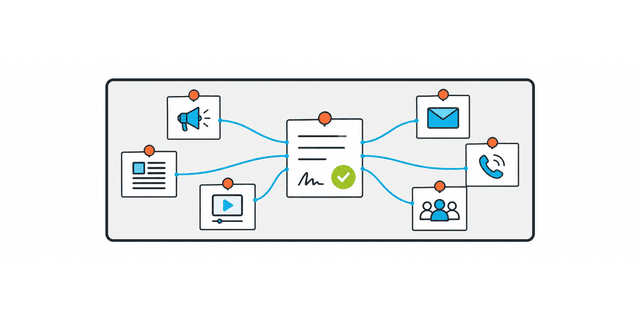
In 2026, high-performing enterprises do not isolate traditional marketing from digital technology. Instead, successful strategies balance traditional, human-centric channels with automated data engines to create a unified customer experience.
Broad brand campaigns, physical storefronts, and human relationships work in tandem with machine learning to maximize market impact.
Overview of Traditional Marketing Approach and Automated Marketing Enhancements
7 Industry-Defining Shifts in 2026 Marketing Automation
Marketing automation shifts focus to zero-party data, autonomous AI agents, and privacy-enhancing technologies (PETs) to manage customer journeys safely. Platforms integrate customer data platforms (CDPs) and centralized intent ledgers to maximize visibility on AI answer engines (AEO), track buying signals, and power hybrid AI roles.
1. Collecting Zero-Party Data
Brands collect zero-party data by establishing explicit value exchanges across touchpoints using interactive quizzes, preference centers, and chatbots to capture direct consumer preferences. Gathering transparent consumer intent directly allows organizations to bypass the tracking limitations of deprecated cookies, strict compliance regulations, and unindexed private messaging networks.
- Offer personalized product suggestions, exclusive discounts, or loyalty points to incentivize voluntary data sharing.
- Deploy automated diagnostic questionnaires and choice interfaces to capture explicit consumer choices without guesswork.
- Utilize dark social platforms, where user choices are captured across private channels like WhatsApp or Slack.
- Process data via clear user consent pathways to automatically satisfy strict state privacy rules, the GDPR, and the 2026 enforcement of the EU AI Act.
Case Study: L'Oréal UK
L'Oréal UK utilized the Wyng platform to gather zero-party data via targeted diagnostic quizzes. This process allowed the beauty brand to capture explicit consumer preferences directly. The transparent architecture successfully resolved poor audience insight limitations, boosting website conversion rates by 21% and increasing average order value by 134%.
2. Using Autonomous AI Agents to Manage Customer Journeys
Organizations deploy self-directed AI tools inside journey-building modules to process real-time website behavior data and automatically adjust active marketing tracks. Replacing rigid, hardcoded rules with adaptive decisioning software ensures context persists across handoffs and boosts conversion velocity without manual administration.
- Replace static, rules-based paths with fluid workflows that automatically pivot based on current customer engagement.
- Process website events like signup success, screen views, and search counts simultaneously to place users into optimal engagement cohorts.
- Link live database catalog shifts directly to push notifications to alert trailing buyers instantly when favored items are restocked.
Case Study: Luxury Escapes
Luxury Escapes deployed an automated tool that processed ten distinct website event signals simultaneously to categorize incoming users. This adaptive execution resolved rigid rules-based logic bottlenecks, lifting the transaction value by 7% and total revenue per user by 10%.
3. Optimizing Brand Visibility on AI Answer Engines
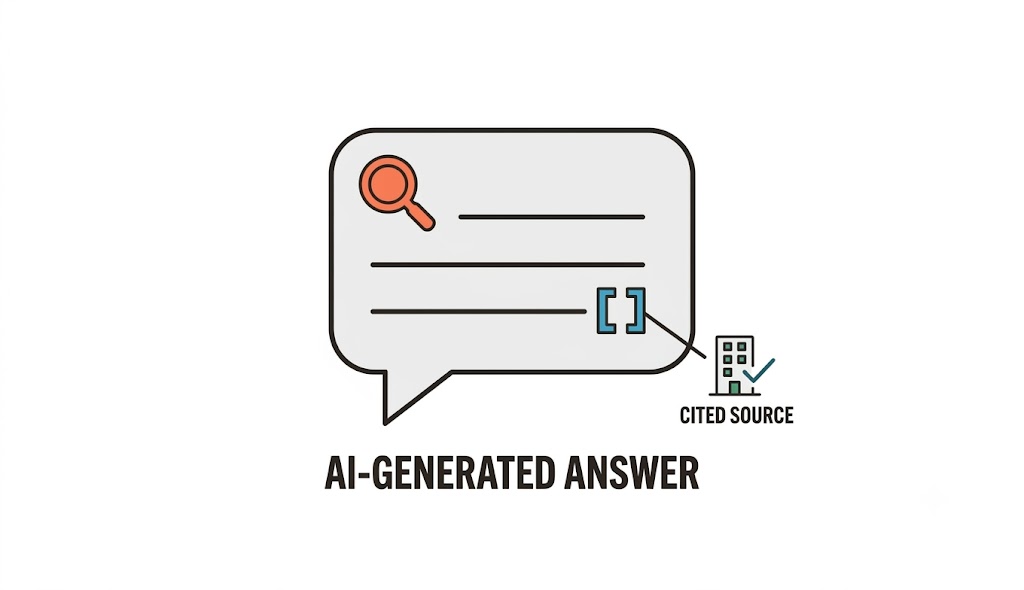
Enterprises format digital content using structured, verifiable facts and monitor citation trends through a connected visibility stack. Yext Reviews consolidates customer-review signals, Brandwatch tracks brand and competitor conversations across social and web sources, and BrightEdge Generative Parser (alongside BrightEdge AI Catalyst) measures how brands, prompts, and citations surface in AI-generated search experiences. This strategy helps teams identify where their brand is being referenced and optimize content for shoppers who bypass traditional search result pages in favor of conversational recommendations.
- Track brand mentions, recommendation frequency, cited sources, sentiment, and prompt-level visibility across major answer engines through centralized dashboards.
- Prioritize co-marketing partnerships with third-party industry publishers that generative models consistently cite for recommendations.
Case Study: Fresha
Fresha implemented prompt tracking to maximize category visibility across major answer engines. The software analyzed indexing data and third-party citation patterns automatically. This managed channel framework resolved manual query constraints, securing a top 68.3% AI Visibility Score and ranking first across all tracked models.
4. Deploying Privacy-Enhancing Technologies to Protect Customer Profiles
Organizations embed cryptographic protocols and distributed computing methods natively inside marketing technology infrastructures to safeguard data. Utilizing advanced privacy tech allows operations to extract high-level performance metrics and optimization insights without exposing sensitive personal records to security risks.
- Add mathematical noise to telemetry datasets to allow aggregate trend analysis while guaranteeing individual identity safety.
- Create secure computing spaces to process data pipelines safely without unauthorized access or exposure to anomalies.
- Train machine learning models across separate local nodes without transferring or centralizing raw consumer information.
Case Study: Wyndham Hotels & Resorts
Wyndham Hotels & Resorts implemented Okta Single Sign-On and Auth0 to protect 100M user profiles. The cryptographic infrastructure securely consolidated authentication protocols across 160 applications.
This data minimization process resolved legacy on-premise vulnerability risks, slashing development labor costs by 85% through automated Okta Workflows.
5. Tracking Real-Time Buying Signals for Targeted B2B Sales
Teams can consolidate external business movements, hiring shifts, and leadership turnover into a single, automated intent ledger. Linking live corporate changes directly to sales workflows removes generic messaging templates, helping representatives engage prospects with much higher relevance.
- Aggregate funding alerts, technographic additions, and corporate earnings transcripts into a unified interface to end tool sprawl.
- Map account movements automatically to role-specific challenges to feed sales outreach with relevant hooks.
- Coordinate real-time buying signal metrics with paid traffic generation architectures to capture warm pipelines efficiently.
Case Study: Analytic Partners
Analytic Partners integrated Salesmotion into its centralized Salesforce workflow to track live account movements. The platform monitored executive transitions and automated earnings alerts natively.
This signal-based system resolved fragmented research bottlenecks, cutting baseline account preparation time by 85% and boosting qualified sales pipeline opportunities by 40%.
6. Organizing Marketing Teams Around New Hybrid AI Roles
Management transitions traditional marketing departments into cross-functional, human-led pods equipped with generative software tools to drive efficiency. Automating routine asset production compresses content creation timelines and shifts employee bandwidth from repetitive busywork to strategic orchestration.
- Use generative applications to draft initial text copy, design landing pages, and summarize performance data in minutes.
- Appoint dedicated Customer Journey Architects, Brand Model Trainers, and Agent Orchestrators to manage AI ecosystems.
- Group creative strategists, data analysts, and software engineers into integrated squads focused on human experience design.
Case Study: Workday
Workday established cross-functional AI Pods using Adobe Express and Adobe Workfront to scale operational content output. The structured layout allowed non-technical marketers to deploy assets independently via brand-approved template libraries. This transition resolved deep creative bottlenecks, cutting overall content production costs by at least 50%.
7. Unifying Customer Data
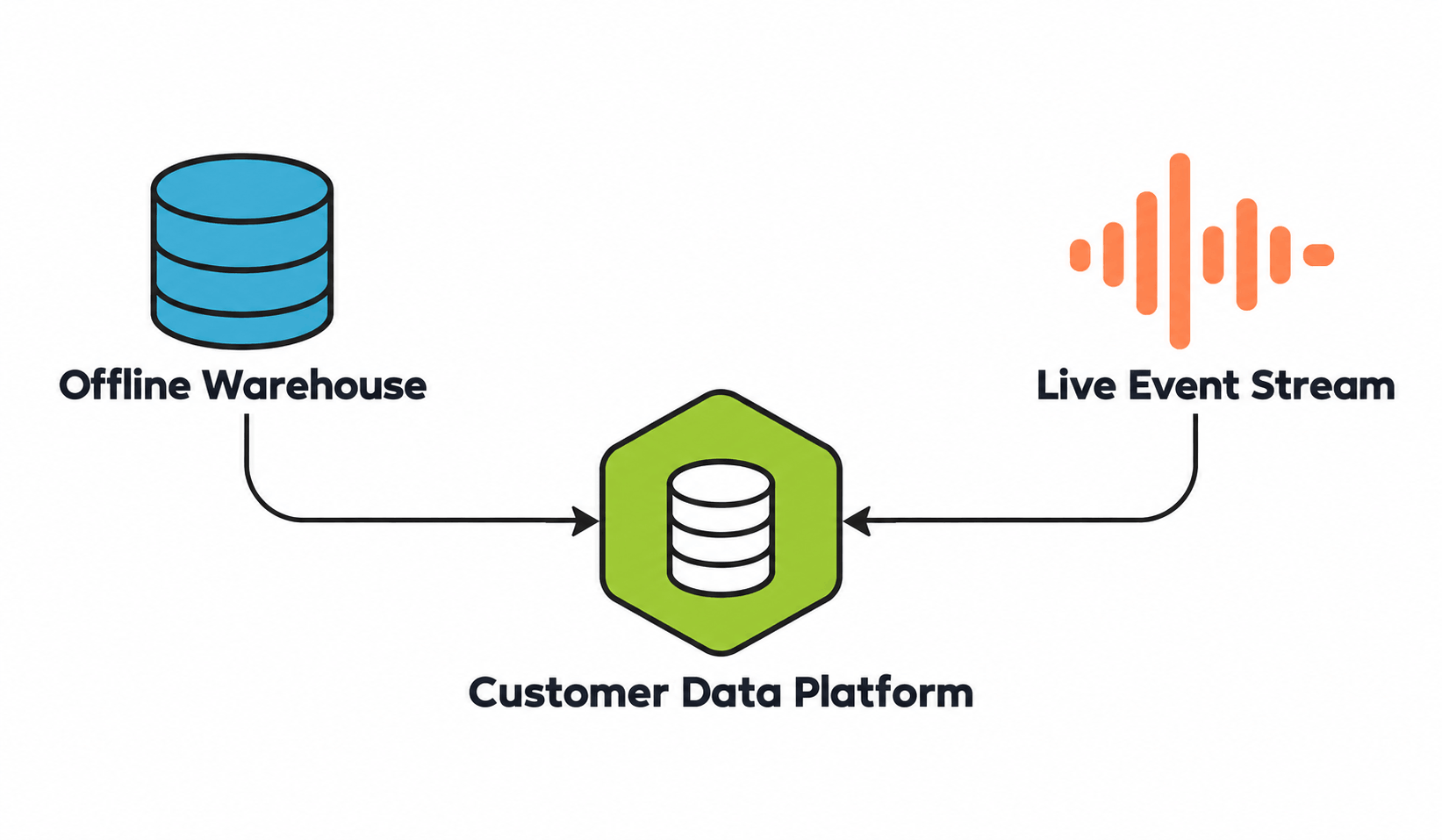
Platforms unify unstructured data streams across all digital and physical shelves inside an enterprise Customer Data Platform (CDP). In a common dual-zone architecture, Snowflake or Google BigQuery serves as the offline warehouse layer for historical analytics, identity resolution, and deep segmentation, while Apache Kafka or Redis Streams powers the live event layer for clickstream, inventory, and session signals. Connecting these layers allows marketing software to combine historical context with live behavior and alter the active shopping experience automatically during consumer sessions.
- Synthesize interaction logs, metrics, and traces from all online and offline storefronts into single customer identities.
- Separate data storage into two layers: an offline data warehouse, such as Snowflake or BigQuery, for customer segmentation and historical analysis, and a real-time event layer, such as Apache Kafka or Redis Streams, for personalized experiences based on live customer activity.
- Deploy custom predictive software loops to modify active banners, menu layouts, and item suggestions during live consumer sessions.
Case Study: Dollar General
Dollar General unified customer data streams using an integrated Data Warehouse and Customer Data Platform infrastructure. The system parsed slow analytics data alongside fast real-time event telemetry. This consolidated environment resolved disconnected department silos, allowing machine learning models to adjust shopping experiences dynamically during live user interactions.
Summary of Marketing Automation Shifts
Resolving Marketing Automation Risks with Human-in-the-Loop Strategies
Overautomation happens when a business lets software handle too many communication and data tasks without human oversight. Trying to automate every single part of a campaign turns a helpful tool into a messy and broken system. When software runs completely on its own, marketing efforts become rigid, errors go unnoticed, and brand trust suffers.
- Disconnected systems cause severe context loss: Using too many separate automation tools means customer information gets lost during handoffs between departments. This forces teams to hold long, unproductive meetings just to rebuild basic customer history.
- Rigid tech setups cause major project delays: Complex, older automation setups are very hard to adjust on the fly. Whenever data formats or marketing environments change, the system requires time-consuming overhauls by technical experts.
- Repetitive mass messaging drives down user engagement: Blasting generic, automated emails across multiple separate channels ignores customer intent. This annoys buyers with irrelevant product offers and creates a disjointed brand experience.
- Unverified machine mistakes generate hidden costs: Relying blindly on automated scripts to build analytics reports or capture leads can result in unqualified data and major tracking errors.
Balancing Machine Speed and Human Oversight
Automated software works best as a helpful workspace advisor rather than a total replacement for human staff. Shifting the operational balance back to a system that blends machine speed with human proofing keeps marketing campaigns accurate and legally compliant.
The Human-in-the-Loop (HITL) model provides a safe way forward by adding human checkpoints to automated journeys. Under this strategy, automated software handles the repetitive, high-volume tasks like background data collection and initial file sorting. However, human employees remain in control to review the data, approve major strategic shifts, and make final judgment calls.
This balanced approach successfully cuts down on administrative busywork while freeing team capacity so human workers can focus entirely on creative writing, complex troubleshooting, and building real customer relationships.
Final Thoughts
To successfully capitalize on these trends, organizations can take the following actionable steps:
- Audit current automation systems to locate where rigid, rules-based logic causes customer friction or data bottlenecks.
- Establish interactive value exchanges, such as digital preference centers or quizzes, to incentivize voluntary zero-party data sharing.
- Implement a Human-in-the-Loop model by inserting dedicated human review checkpoints into automated marketing tracks to safeguard brand trust.
- Unify disconnected data streams within a dual-zone Customer Data Platform, pairing Snowflake or Google BigQuery for historical analytics with Apache Kafka or Redis Streams for live behavioral inputs.
- Restructure marketing departments into cross-functional AI pods to scale content output and shift employee focus toward high-level orchestration.
Frequently Asked Questions (FAQs)
What is zero-party data?
Zero-party data is information that customers voluntarily and explicitly share with brands through interactive tools like diagnostic quizzes, preference centers, or conversational chatbots.
How do autonomous AI agents improve customer journeys?
AI agents process live behavior data simultaneously to dynamically adjust active marketing tracks, replacing rigid, pre-programmed rules with fluid, real-time re-engagement.
What is the Human-in-the-Loop model?
The Human-in-the-Loop (HITL) model is an operational strategy where automated software handles repetitive background data sorting, while human employees retain ultimate control over strategic choices and creative outputs.
Read These Next
B2B Marketing Attribution: A Complete Guide for Modern B2B Teams