.png)
What Is Marketing Automation and Why Every Business Needs It?
.png)

.png)

What Is Marketing Automation?
In 2026, marketing automation uses AI, machine learning, and real-time customer data to automatically run and optimize campaigns across channels. By combining zero-party data (information customers intentionally share) and first-party data (data collected from customer interactions) in a Customer Data Platform (CDP), businesses can personalize marketing, improve conversions, and reduce manual effort.
Key Takeaways
- Modern marketing automation uses machine learning and live behavioral data to optimize campaigns as customer behavior changes, moving beyond rigid, manually configured rules.
- Moving to a centralized Customer Data Platform (CDP; a system that combines customer information from multiple channels into shared profiles) can help businesses manage customer acquisition costs, reduce fragmented technology systems, and support data privacy compliance.
- Future marketing strategies may require infrastructure that supports autonomous AI agents and Answer Engine Optimization (AEO; the practice of structuring digital content so AI-powered search and answer tools can understand, reference, and recommend it) as consumers increasingly use zero-click AI shopping assistants.
Traditional Marketing Automation Versus Modern AI Marketing
Traditional marketing automation relies on fixed, manual rules and static lists, whereas modern AI marketing uses live behavior data and machine learning to automatically adapt campaigns in real time.
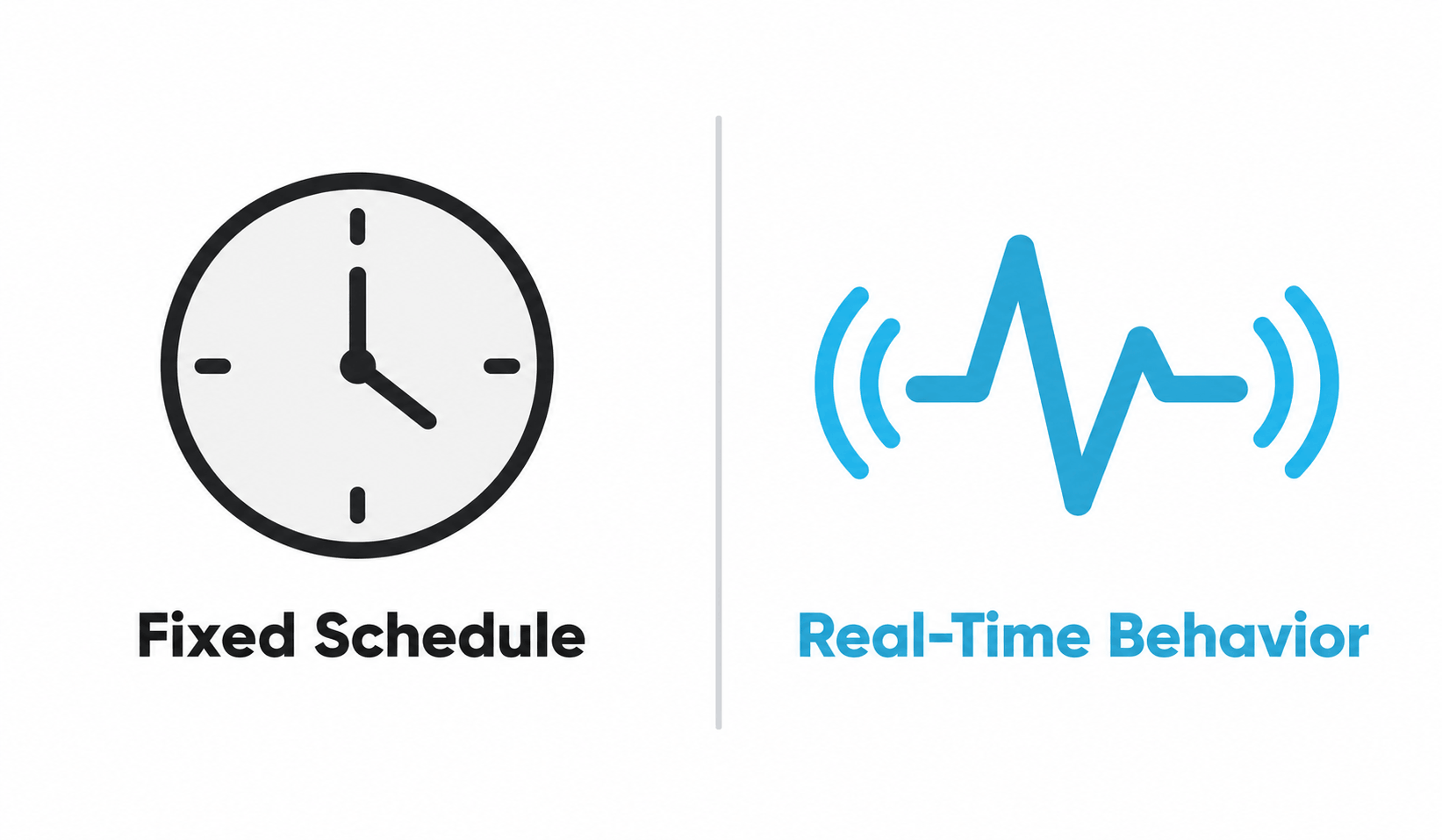
Understanding this technological evolution from rigid rules to adaptive data environments clarifies why upgrading infrastructure is essential to withstand shifting market demands.
Why Marketing Automation is Crucial for Businesses in 2026
In 2026, marketing automation can help businesses manage customer acquisition costs, capture more revenue opportunities through personalization, and connect fragmented marketing tools. Integrating marketing, sales, and support data can also streamline execution and improve visibility into performance across channels.
Mitigating Increasing Customer Acquisition Costs and Budget Pressures
Marketing automation can help offset rising acquisition costs and budget pressures by replacing selected manual tasks with intelligent workflows. When implemented effectively, these systems can shorten execution timelines, reduce inefficient spending, and help teams use marketing resources more strategically.
Deploying automated systems can streamline repetitive tasks such as scheduling, campaign tracking, and performance reporting. Reducing the delay between strategic planning and campaign execution allows teams to increase their output without requiring the same level of additional manual work.
How to Win
Transition from rigid manual content processes to automated, trigger-based workflows that help small teams manage greater client capacity more efficiently.
Maximizing Digital Revenue Conversion via Real-Time Personalization
Real-time personalization can support stronger conversion performance by replacing rigid rules with adaptive intelligence. Automated platforms can use live behavior and intent signals to deliver more relevant individual interactions, which may contribute to increased engagement and revenue.
Traditional segmentation relies on limited parameters and predefined templates that may not capture sudden shifts in user behavior. In contrast, dynamic automation can respond to live interaction signals, purchasing history, and preferences customers have explicitly shared.
Replacing mass broadcasts with more individualized communications can produce timely and relevant interactions that support customer loyalty and improve revenue-conversion opportunities.
How to Win
Replace static calendar broadcasts with live conversations triggered by direct customer intent and channel affinity signals.
Reducing Workflow Sprawl Through A Unified Data System
Unifying customer data across channels can reduce workflow fragmentation and dependence on disconnected tools. Centralizing marketing, sales, and support data within a shared system gives teams a more consistent view of customer activity and supports real-time behavioral personalization.
Managing customer relationships across scattered tools can create data gaps and tracking challenges. Important customer context may be lost during manual team handoffs, contributing to operational silos and slower execution.
How to Win
Consolidate disconnected messaging tools into a shared Customer Data Platform where every department triggers outreach from one live profile.
Top Marketing Automation Trends Shaping 2026
Modern trends focus on using AI copilots for message personalization, moving toward autonomous campaign orchestration, and adopting privacy-first frameworks. Combining zero-party and first-party data can help businesses improve engagement across their omnichannel touchpoints.
- Artificial Intelligence as a Campaign Copilot
AI copilots—advanced machine learning systems integrated into marketing platforms—handle heavy operational lift by automatically building communication flows, testing content variations, and personalizing messages at scale.
- Autonomous Campaign Orchestration
Campaign orchestration is the automated coordination of customer touchpoints across multiple digital channels to ensure a cohesive experience. Built-in predictive models evaluate customer context to independently personalize message layouts, timing, and channel mix.
- Privacy-First Consent Models
Modern businesses must adapt to stricter global privacy regulations and the deprecation of tracking cookies by relying entirely on permission-based data. Compliance requires strict adherence to frameworks like the General Data Protection Regulation (GDPR)—the European Union's comprehensive data privacy law—which mandates that companies secure explicit, informed consent before collecting or processing any personal information from citizens within the European Economic Area (EEA).
To navigate this landscape, brands are collecting zero-party data, deploying interactive tools like preference quizzes and surveys to convert voluntary consumer identification into precise, fully compliant customer journeys.
- Omnichannel Strategy
An omnichannel strategy unifies separate marketing channels into a single, synchronized consumer experience. Connecting disparate platform touchpoints into a unified customer database instead of treating channels as isolated islands.
This infrastructure delivers a consistent, seamless experience as buyers shift across email, text messages, application feeds, and physical retail spaces.
Common Automation Pitfalls & Mistakes
Overcoming automation obstacles requires eliminating isolated pilot tests and legacy workflows. Consolidating software into a single source of truth and enforcing human-in-the-loop quality checkpoints prevents critical errors and protects domain deliverability metrics.
Future-proofing Your Business with Marketing Automation
Future automation prepares for an agentic web where AI shopping assistants execute client choices. Businesses optimize for model comprehension, manage brand semantics infrastructure, and apply Answer Engine Optimization (AEO) to maximize visibility scores.
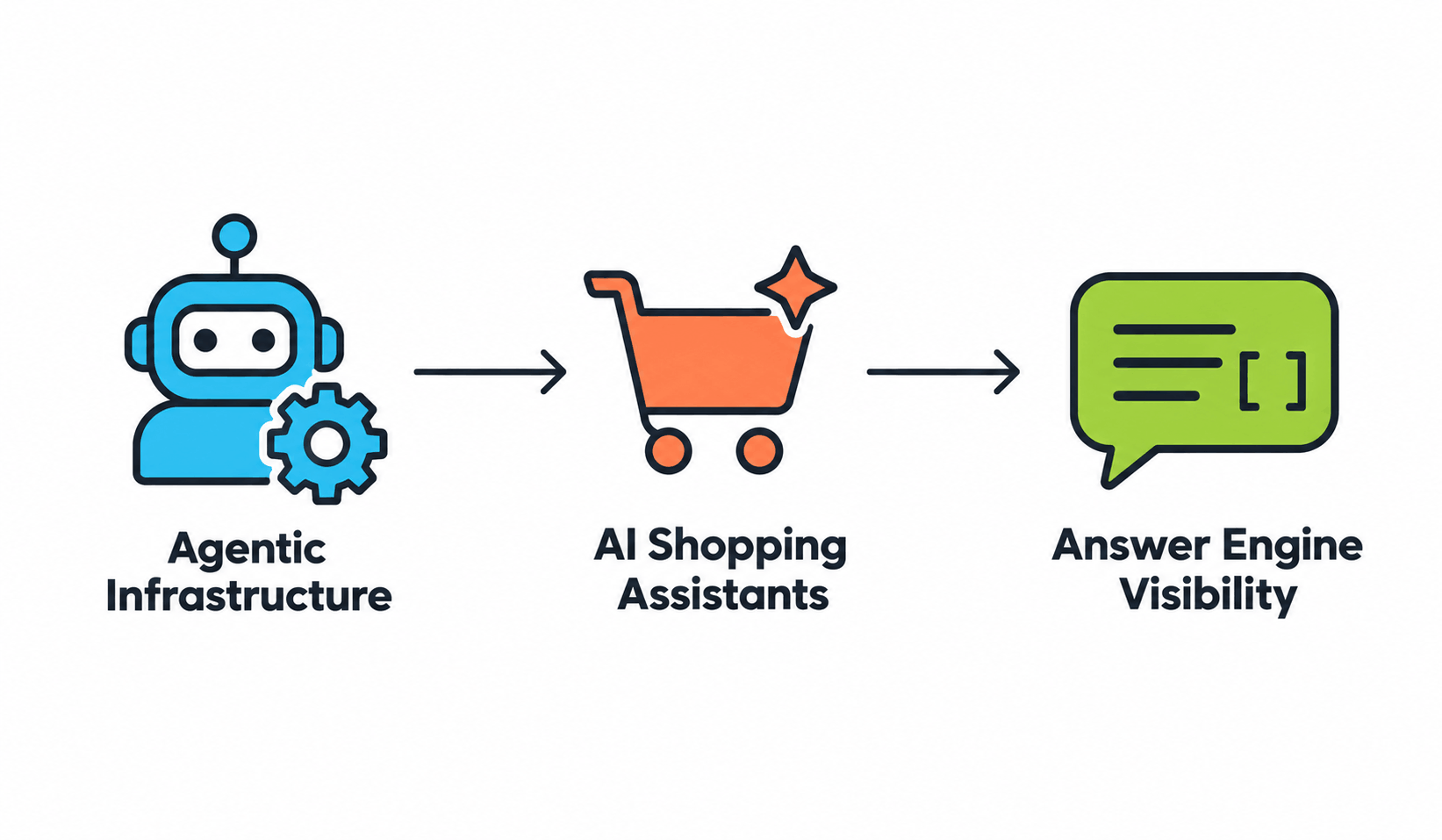
1. Preparing Infrastructure for the Agentic Web Era
The agentic web shifts enterprise automation from traditional chat-based tools to computer-using AI agents that execute multi-step workflows. AI agents use advanced vision and human-like reasoning to interact directly with user interfaces across proprietary internal networks and vendor portals.
Transitioning to an agentic model can reduce the need to modernize every legacy backend platform before introducing automation.
Organizations may be able to deploy these tools across standard corporate applications while maintaining oversight through environment isolation, execution logs, and human review.
- Case Study: Graebel
Graebel struggled to process complex talent relocation orders arriving as unstructured, free-form emails because their internal platform lacked an open API, and legacy automation was too rigid.
To resolve this, the enterprise built a custom service agent in Microsoft Copilot Studio that parses email text and inputs data directly into the user interface. This process eliminated manual workflow strain, elevated data quality, and sped up order turnaround times.
2. Navigating Consumer AI Shopping
Consumer artificial intelligence is shifting beyond basic text lookup to become active shopping partners that advise and execute purchases for humans. Voice interactions are increasing across both in-store and online environments as consumers explore brands through personal assistant applications.
As shoppers rely on digital assistants to compare options and verify utility, engineered scarcity tactics like limited-time product drops are losing consumer appeal. Marketing strategies must expand the definition of omnichannel to remain completely visible and "answer-ready" when consumer AI engines evaluate purchases.
- Case Study: HungryHungry
HungryHungry noticed that busy hospitality venue clients were time-poor and losing revenue to missed phone calls during peak service windows. To scale operations on a tight budget, the brand leveraged HubSpot Marketing Hub to build custom AI agents trained directly on historical customer data and support tickets.
This process automated phone orders via a voice assistant, resulting in a higher campaign click-through rate and an increase in conversions.
3. Shifting Focus to Answer Engine Optimization and Zero-Click Environments
Transitioning to zero-click environments requires moving away from traditional click-through metrics toward tracking comprehensive visibility scores within answer engines. Brands use specialized prompt-tracking technology to measure how frequently generative models cite, rank, or exclude their corporate assets.
When search journeys begin with conversational prompts rather than standard page links, traditional on-site indexing alone cannot protect market positioning.
- Case Study: Fresha
Fresha discovered that prospective salon partners were querying tools like ChatGPT and Gemini directly to find software recommendations instead of navigating traditional search engine results. To this shift, the company integrated HubSpot AEO to track real-time visibility scores and evaluate model citation sources.
By restructuring landing pages for AI indexing and driving targeted coverage with heavily cited external publishers, the business successfully secured a dominant overall AI Visibility Score and captured pre-qualified sales loops.
Final Thoughts
To stay competitive in the 2026 marketing ecosystem, businesses can transition forward using several actionable operations:
- Outlining current systems helps eliminate isolated tools and rigid legacy setups before new software adoption.
- Merging fragmented marketing, sales, and support data into a shared Customer Data Platform tracks real-time intent safely.
- Establishing human-in-the-loop verification ensures operators supervise and approve AI-generated outputs to prevent brand errors.
- Restructuring digital assets for AI indexing protects visibility scores as consumers migrate to conversational search tools.
Frequently Asked Questions (FAQs)
What is the main difference between traditional and modern marketing automation?
Traditional systems rely on static data and pre-scheduled, rigid rules. Modern automation leverages real-time AI to continuously adapt campaign content, timing, and channels based on live customer behavior.
How does marketing automation help lower business costs?
Marketing automation can replace selected time-consuming manual tasks with automated workflows, shortening execution delays and reducing avoidable spending. This may allow smaller teams to manage more campaigns or clients without increasing resources at the same rate.
What is Answer Engine Optimization (AEO)?
AEO is a strategy focused on restructuring digital content so generative AI models can easily index, cite, and rank a brand's assets in conversational, zero-click search environments.
Read These Next
B2B Marketing Attribution: A Complete Guide for Modern B2B Teams