.png)

SaaS Marketing Automation: How to Generate and Nurture Leads at Scale
.png)

.png)

In 2026, SaaS marketing automation uses AI and Customer Data Platforms (CDPs) to connect customer data and run campaigns automatically. Instead of relying on fixed rules, it uses real-time insights to improve customer acquisition, lead scoring, onboarding, retention, and re-engagement across multiple channels.
Key Takeaways
- SaaS marketing automation is moving beyond fixed, rule-based workflows.
- AI agents can plan, run, and improve omnichannel campaigns in real time.
- CDPs create a central context layer by combining customer and campaign data.
- Effective lead management combines AEO, CRM cleaning, lead scoring, personalization, and email reactivation.
- Automation can create privacy, data quality, and brand safety risks.
- Human-in-the-Loop validation helps teams review and control important automated actions.
- The marketing automation market could reach $36.97 billion by 2035.
- Software pricing will increasingly use credits, tokens, and consumption-based billing.
How to Transition from Manual Workflows to AI Agents
AI agents replace rigid, rule-based workflows with autonomous software workers. AI agents use machine learning and computer-use tools to analyze performance, manage campaign logic, and complete complex business processes.
- Marketing automation is moving from rule-based, scheduled workflows to self-optimizing systems that plan, execute, and adjust campaigns across channels in real time.
- Modern software platforms shift AI from a creative shortcut to an independent marketing copilot that proactively handles performance analysis and strategy adjustments.
- The widespread deployment of AI agents allows organizations to re-engineer complete operating systems rather than executing one-off digital marketing tasks.
Why Customer Data Platforms (CDPs) Matter for AI Context
%20Matter%20for%20AI%20Context.jpg)
Customer Data Platforms (CDPs) give marketing automation systems a single source of customer information. They combine first-party data (information collected from customer interactions) with data customers share directly, such as preferences, interests, account details, and communication preferences.
The combined data gives AI agents clear operating boundaries. It also improves accuracy and protects the company’s reputation.
General-purpose language models often lack visibility into previous campaigns. Manually updating their context is also slow and unreliable.
A CDP solves this problem by creating a single source of truth. It can connect customer traits with several years of campaign performance data.
Companies may store this information in data clouds such as Snowflake or Databricks. These platforms can support large customer datasets and connected analytics workflows.
Teams should also apply strict security and privacy controls. Examples include SOC 2-aligned access controls, GDPR data filters, and consent-management rules.
These safeguards help AI systems use customer data safely and consistently.
How to Generate and Nurture Leads with Marketing Automation
Scaling SaaS acquisition requires more than automating email delivery. Companies must connect content discovery with behavior-based lead management.
This process includes automated CRM ingestion, predictive scoring, and personalized communication across several channels.
1. Optimize Content for AI Search Engines
Answer Engine Optimization (AEO) prepares website content for AI search systems.
Clear formatting helps these systems find, understand, and recommend product information. It can also improve visibility in tools such as ChatGPT and Perplexity.
AEO becomes especially important when buyers ask detailed questions in natural language.
Strong AEO content presents clear product facts and trusted third-party sources. This information can build credibility before a buyer visits the company’s website.
That early trust helps move potential customers into the acquisition pipeline.
- Case Study: Fresha
Fresha struggled to measure its visibility across ChatGPT searches. The company integrated HubSpot’s automated AEO module. The tool optimized specialized landing pages using dynamic prompt monitoring.
Fresha achieved an 85.1% visibility score. It also ranked first across eight major AI platforms.
2. Automate Lead Capture and Clean CRM Data
Automated lead capture moves customer information directly into the CRM. Data-cleaning tools then standardize, validate, and organize each record.
This process reduces manual entry errors. It also allows outbound campaigns to begin soon after a prospect shows interest.
Connected pipelines can move records between web forms, product databases, and CRM platforms. Snowflake or Databricks can serve as the central data layer.
Background tools can check formatting, remove duplicates, and identify missing fields. These checks should run before records enter active campaigns.
Teams should also apply GDPR consent filters during data ingestion. These filters prevent restricted contacts from entering unauthorized marketing workflows.
SOC 2-aligned permissions can limit who accesses or changes customer records. Audit logs can also document important data actions.
- Case Study: Marc Fisher Footwear
Marc Fisher Footwear faced a heavy manual workload. Its previous platform could not sync Shopify metadata automatically.
The company moved to Klaviyo’s B2C CRM. It automated data flows and rebuilt dynamic customer segments.
The new process reduced execution time by 20%. It also increased portfolio SMS revenue by 46%.
3. Build a Behavior-Based Lead Scoring System
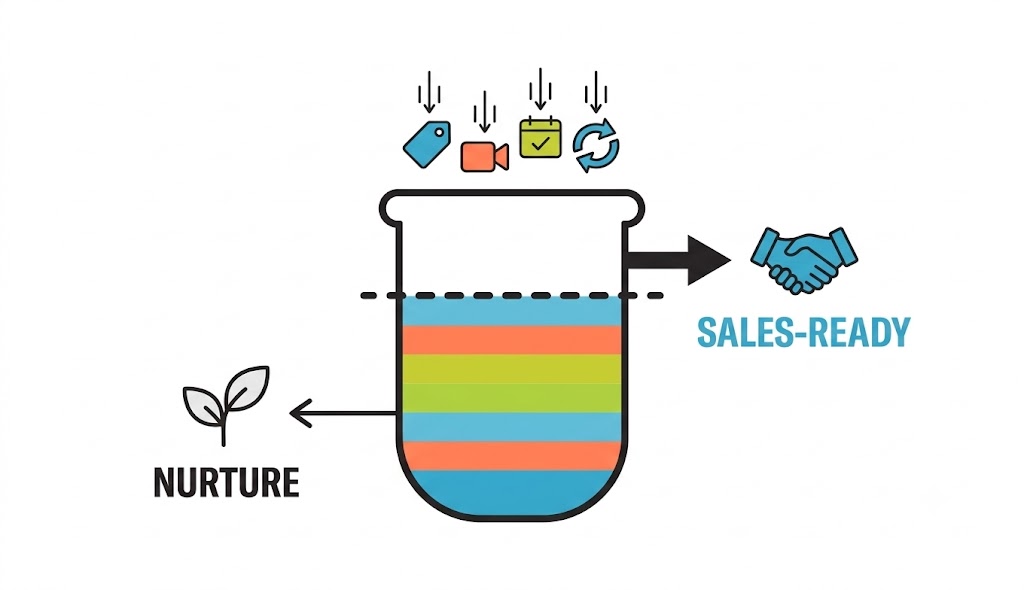
Behavior-based lead scoring tracks the actions taken by website visitors. It assigns each visitor a score based on buying intent.
The system separates casual engagement from high-intent behavior. For example, visiting a pricing page may result in a higher score.
Other useful signals include webinar attendance, product usage, demo requests, and repeated visits.
Automated scoring improves lead nurturing by changing how each account is handled.
Low-scoring accounts can remain in educational campaigns. High-scoring prospects can move directly to an account executive.
- Case Study: TrustRadius
TrustRadius used an outdated email service provider. The system could not manage complex automated campaigns.
The company integrated Ortto with Salesforce. The platforms grouped users according to their site-rating behavior.
The system then sent personalized review requests automatically. This approach increased monthly new-user conversions by 375%.
4. Personalize Automated Omnichannel Campaigns
Omnichannel campaigns coordinate messages across email, SMS, WhatsApp, and other customer channels.
Each interaction becomes part of one customer timeline. This structure reduces conflicting or repetitive communication.
In 2026, personalized campaigns use native database metrics to identify each segment’s strongest engagement window.
Klaviyo, the WhatsApp Business API, and Twilio SMS can then deliver customized messages automatically.
Teams can use CDP records from Snowflake or Databricks to guide personalization. These records may include purchase history, product usage, channel preferences, and previous responses.
The campaign can select a message based on those signals. It can also choose the best platform and delivery time.
For example, Klaviyo may send an onboarding email after product registration. Twilio SMS may deliver a reminder before a trial expires.
The WhatsApp Business API may provide support updates for customers who prefer messaging apps.
This level of detail makes the workflow clear to both readers and AI search systems. It also explains which technologies perform each action.
- Case Study: Sequence
Sequence experienced disconnected onboarding and low trial conversion rates.
The company connected Ortto with Segment. It created a 45-day campaign based on user behavior.
The workflow divided users into branches using sign-up and activation data. Each branch received a different educational sequence.
This automated journey increased subscription rates by 20%.
5. Reactivate Leads with Automated Email Campaigns
Automated reactivation campaigns target contacts who have stopped engaging with a company.
These campaigns usually include several messages. Each message gives the contact a new reason to return.
The process starts by filtering historical CRM records. Teams may target prospects who requested consultations but never completed the next step.
Reactivation campaigns can also target inactive trial users or previous customers. Product behavior and engagement history can guide the message.
Consent status should be checked before any campaign begins. GDPR filters can remove contacts without valid marketing permission.
- Case Study: Thalgo
Thalgo faced fragmented customer communication and weak retention.
The company used Brevo to create automated email flows. These workflows targeted inactive shoppers through behavioral lifecycle campaigns.
The strategy successfully re-engaged dormant customer segments. It increased Thalgo’s total retail turnover by 30%.
Common Risks with Automating Lead Gen and Nurturing
Automation can improve speed and scale. It can also create serious operational and customer risks.
Common problems include database corruption, privacy failures, excessive messaging, scoring bias, and uncontrolled AI agents.
Human-in-the-Loop (HITL) validation helps reduce these risks. Human operators review important automated decisions before execution.
HITL validation remains a major safeguard for autonomous marketing systems.
Machine learning can manage execution at scale. Human reviewers provide strategic judgment, cultural awareness, and final quality control.
Teams should add mandatory reviews to critical data, scoring, and content workflows.
These checkpoints help protect customer relationships. They also improve accuracy and support compliance with changing privacy requirements.
Future Predictions for SaaS Marketing
According to Precedence Research, the marketing automation market could reach $36.97 billion by 2035.
Computer-using agents will help drive this expansion. These agents can operate software interfaces and complete tasks across connected platforms.
Software pricing will also change. Many vendors will move from seat-based licenses to usage-based models.
- Credit-based Billing
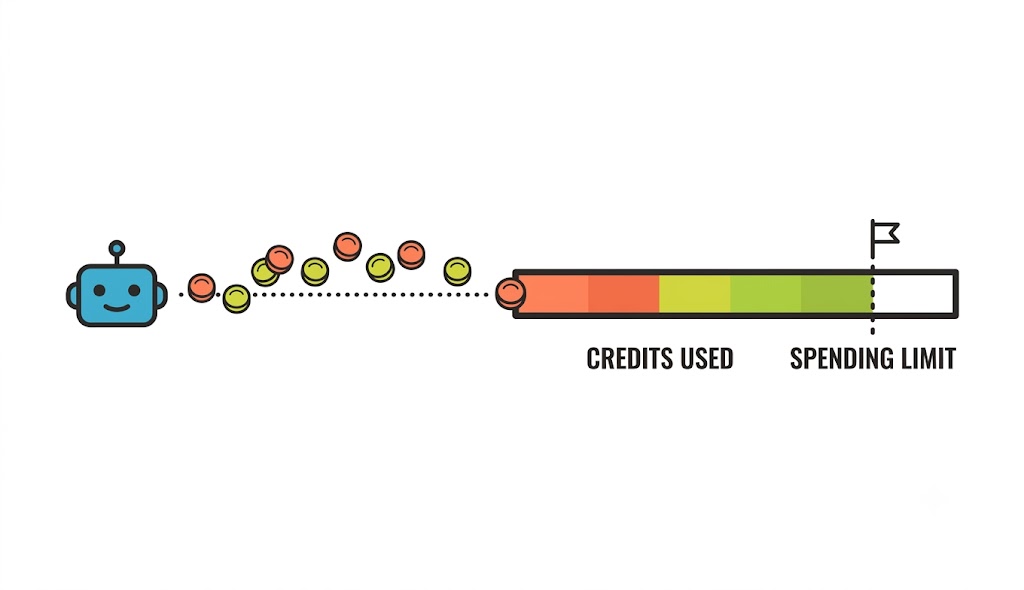
Software companies will increasingly charge for credits, tokens, or completed automated actions.
This approach differs from traditional pricing based on user seats. Costs may rise quickly when autonomous systems perform many tasks.
Financial and operations teams will need usage-monitoring dashboards. These dashboards can track consumption and flag unexpected cost increases.
Clear spending limits will help companies prevent billing volatility.
- Agent-to-Agent Communication
AI tools will move beyond standard text assistants. Computer-using agents will navigate applications, local files, and browser interfaces.
These systems will use vision and reasoning to complete multistep tasks. They may also exchange information with other specialized agents.
Operational teams will need to update internal training materials. Documentation should explain agent instructions, permissions, and escalation rules.
Manual click-by-click instructions will become less important. Clear process definitions and approval boundaries will become more valuable.
- Voice Search Inquiries
More buyers will use conversational voice tools to research products.
Some AI systems may also compare products or complete purchases for the buyer. SaaS companies must prepare their product information for these automated journeys.
Technical marketing teams should use clear database schemas and structured product descriptions.
This information must be easy for independent AI systems to read. Accurate pricing, features, limitations, and compatibility details will become especially important.
Final Thoughts
To scale SaaS marketing automation effectively, organizations can implement the following actionable next steps:
- Build a centralized data-cloud foundation using platforms such as Snowflake or Databricks.
- Connect CRM and CDP records to give AI agents accurate customer context.
- Reformat website content for AI search engines and conversational queries.
- Apply GDPR consent filters and SOC 2-aligned access controls.
- Add HITL reviews to critical content, scoring, and data workflows.
- Monitor token, credit, and usage-based software costs automatically.
Frequently Asked Questions (FAQs)
Why is Human-in-the-Loop (HITL) validation necessary?
HITL validation adds human judgment and quality control to automated workflows.
Reviewers can identify database problems, privacy risks, and off-brand content. They can also stop incorrect actions before those actions affect customers.
How will SaaS software billing change in the future?
Software pricing is moving beyond traditional seat-based licenses.
More vendors will use consumption models based on tokens, credits, usage, or completed outcomes. Companies will need tools that track these costs in real time.
What is an autonomous AI agent in marketing automation?
An autonomous AI agent acts as an independent digital worker.
It can analyze performance, manage campaign logic, and adjust actions across several channels. Unlike fixed workflows, the agent can respond when customer behavior or campaign results change.
Related Content
Read These Next
What is Retention Marketing? - The 2026 Guide to Customer-First Growth