Why Growth Tools Fail: Closing the Data Integration Gap in 2026




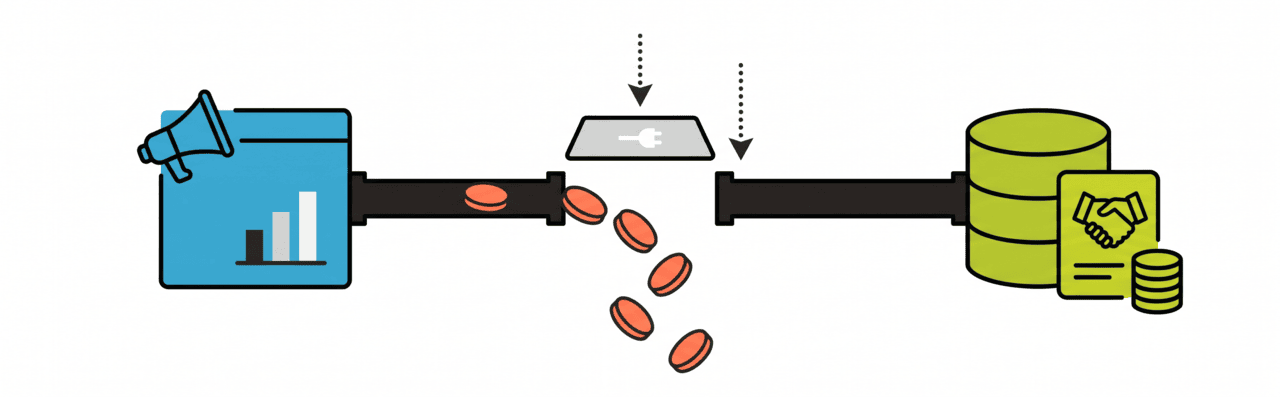
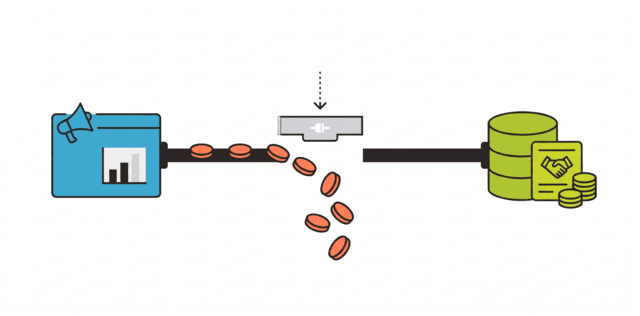
Growth tools fail primarily due to data silos, which are pockets of trapped information that prevent AI from seeing the full customer journey. When data is fragmented, AI tools receive confusing signals, leading to wasted ad spend, inaccurate insights, and a failure to recognize what actually makes a customer buy.
Key Takeaways
- Information trapped in isolated software prevents leadership from seeing a complete customer view, which increases acquisition costs and leads to decisions based on incomplete data.
- For AI tools to work effectively, they need a unified source of truth. Without integrated behavioral signals, automated systems cannot accurately determine which customer actions actually lead to purchases.
- As traditional search engine use declines, businesses must transform their data into formats that AI agents can easily process to remain discoverable by modern consumers.
- Success requires treating automation as a system that needs constant human oversight and continuous optimization rather than a one-time setup.
Article Overview
This article examines why modern growth tools often fail due to disconnected data systems. It explores how data silos prevent AI models from generating accurate insights, leading to wasted ad spend and stagnant sales. By looking at real industry examples, the guide shows how centralizing data helps businesses achieve growth in 2026.
What is a Data Silo?
A data silo occurs when information is trapped within one specific department or piece of software. This disconnect prevents lead generation tools from aligning with actual sales data. When your information is incomplete, your business decisions are based on fragmented views and inconsistent metrics, which makes finding new customers much more expensive.
Why Data Silos Hurt Your Strategy
Many organizations fail to scale because they treat automation as a one-time setup rather than a system that requires continuous optimization. To succeed, tools must be aligned with the Ideal Customer Profile (ICP) and maintain human oversight.
An Ideal Customer Profile (ICP) is a detailed description of the perfect customer who would get the most value from your product and provide the most value to your business.
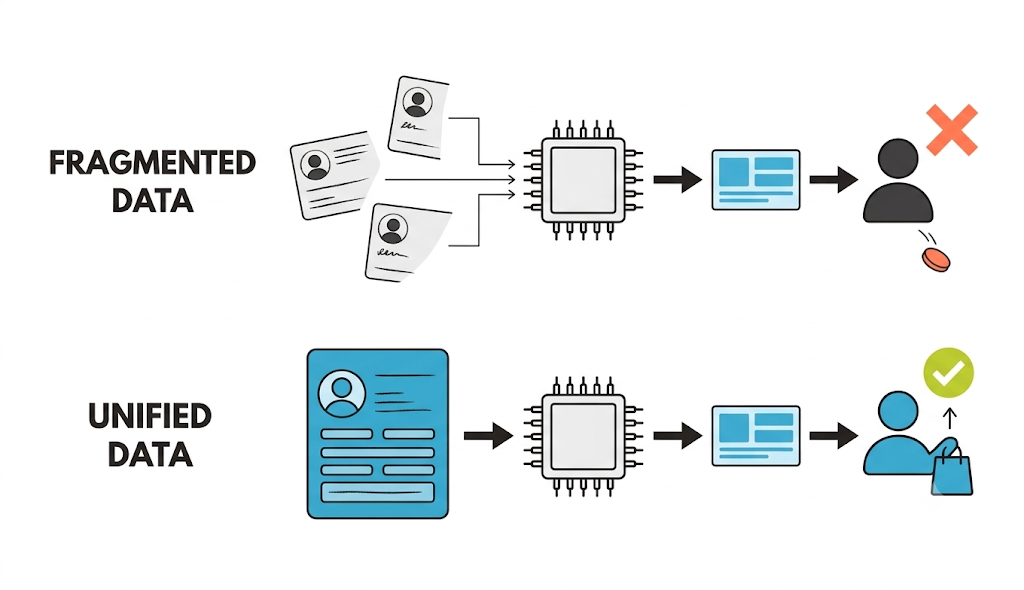
If data is siloed, AI models cannot accurately link customer behavior to purchases. This leads to misaligned ad spend because your tools cannot see the full customer journey. By organizing your data in a centralized system, you have a single source of information, which ensures consistent data across your technical and marketing teams.
The following real-world examples illustrate how these specific data failures happen and how companies fixed them:
Case Studies: From Tool Failure to Growth Success
Here are case studies showing connecting disconnected systems solved growth problems. Whether it was finding new customers, speeding up work, or improving shopping experiences, these businesses succeeded with a centralized system for their data:
A mid-market B2B SaaS platform invested heavily in content marketing, achieving over 50,000 monthly organic visitors while their conversion rate remained stagnant at 2%. The team realized they were chasing raw traffic volume while their actual prospects were using AI tools to conduct research, leaving the brand absent from AI-generated recommendations.
To fix this, they transformed existing assets into AI-readable formats to optimize for search and automate customer nurturing though customized prompts. This pivot allowed them to capture 10% of their organic traffic from AI engines, with 27% of those visitors converting into sales-qualified leads and generating $1.2M in revenue after the first 120 days.
Atera and Claroty both faced operational bottlenecks because essential information was buried in disconnected systems and different time zones. At Atera, US-based sales teams often waited a full day for answers from engineers, while Claroty’s employee information was scattered across multiple platforms. Both companies deployed dynamic AI agents to aggregate information across disparate departments like Slack and Zendesk.
This fix allowed Atera to reduce response times for 60% of internal questions to nearly zero, while Claroty improved cross-departmental collaboration by eliminating the time spent searching for information.
Fashion brands NA-KD and Vogacloset both struggled to scale because fragmented tech stacks and scattered customer data forced them to rely on generic, low-margin coupon campaigns. This disconnect made it impossible to predict customer intent or maintain a consistent brand experience across new marketing channels. To fix this, both brands migrated their siloed data into a centralized Customer Data Platform (CDP) that kept consumer profiles organized.
NA-KD leveraged these profiles to launch automated, personalized mixed channel campaigns that resulted in a 72x ROI, while Vogacloset successfully integrated its data in just eight weeks to achieve a 30x ROI on WhatsApp marketing.
Catalina Crunch faced significant growth ceilings because their digital marketing efforts were completely disconnected from their physical store data and third-party marketplace signals. The brand struggled to hit revenue goals while managing fragmented data across Amazon and physical outlets.
The solution involved bridging the physical-digital divide by integrating offline Membership ID data and Amazon first-party signals into a central strategy. This alignment drove $1.3 million Catalina Crunch in incremental retail revenue by aligning paid media with actual audience purchase data.
A specialized textured hair brand saw its profitability collapse on Amazon because their paid ads were bidding on search terms they already owned. This meant the company was paying for sales they would have gotten organically (without cost), which drove up their spend. The brand switched to a more precise tracking model to separate new shoppers from existing fans. By reallocating their budget to untapped audiences, their total ad costs dropped from 29% to 15%, and increased monthly revenue by 53%.
Retailer HipVan faced high drop-off rates because generic discovery tools failed to capture the intent of visitors arriving from Google Ads. When users landed on a page without finding relevant products, the lack of tailored suggestions caused immediate exits and wasted ad spend. HipVan solved this by implementing AI-powered recommenders and an omnichannel strategy that adapted to each user’s stage in the buying journey. Moving from static pages to dynamic, AI-driven personalization closed the discovery gap and increased conversion rates by 46.7%.
Data integration has moved from a technical preference to a requirement for business survival. Gartner 2026 Market Trends report shows that 60% of companies now use AI agents to handle customer interactions. As traditional search engine use drops, businesses must ensure their data is readable by AI models, or they will lose their primary way of reaching new customers.
With most marketing leaders facing major changes to their roles by 2027, the main challenge is no longer just picking the right software, but ensuring leadership can fix the disconnected systems that prevent AI from working correctly.
Common Challenges in Implementation of Growth Tools
Integrating data is necessary for growth, but it is rarely a simple task. Leaders often struggle with messy information, technical skill gaps, and isolated tools. By identifying these common hurdles and applying specific fixes, you can turn a disconnected system into a centralized engine for growth.
How to Organize Your Business Information for 2026
Establishing a clear data map is essential for standardizing naming conventions and identifying where customer identifiers live across all platforms. This process prevents duplicate errors and bridges the technical skill gap in leadership.
To build a unified data architecture, you must select software based on the specific technical gap you need to close. The following table aligns common growth obstacles with tools to illustrate purpose:
Choosing the Right Growth Tools
Final Thoughts
Data integration has evolved from a technical preference to a core requirement for business survival in 2026. To avoid the common pitfalls of tool failure, prioritize data hygiene over simply buying new software.
- Identify where customer identifiers live across all platforms to standardize naming conventions and prevent duplicate errors.
- Use a selection matrix to identify if the current bottleneck is data consolidation, predictive analysis, or real-time support.
- Ensure existing assets and content are formatted so AI agents can easily discover and recommend the brand.
Frequently Asked Questions (FAQs)
What exactly is a data silo and why is it a problem?
A data silo is information trapped within a single platform. This disconnect prevents lead generation tools from aligning with actual sales data. For a business, this means making decisions based on incomplete views, which often results in inconsistent metrics and higher costs to acquire customers.
How does integrated data improve AI performance?
AI models rely on patterns. When platforms are disconnected, the AI model receives inconsistent or skewed data. Integrating data provides the AI with clear behavioral signals, allowing it to accurately identify which customer actions correlate with a purchase and generate more reliable insights.
Why are traditional marketing tools failing in 2026?
Many tools fail because they are treated as static systems rather than ones requiring constant optimization. Furthermore, many companies now use AI agents for customer interactions, tools that cannot access data become obsolete and provide generic or incorrect outputs.
Read These Next
How to Build Automated Growth Hacking Tools in 2026