A/B Testing for Conversion Rate Optimization: How to Run Experiments That Increase Your Revenue




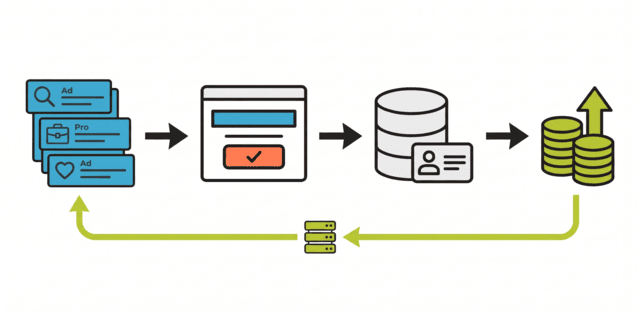
Conversion Rate Optimization (CRO) is the data-driven process of increasing the percentage of website visitors who take a desired action.
In 2026, traditional CRO has evolved into conversion intelligence, which is a system that uses artificial intelligence to analyze user behavior, run experiments, and automatically improve website performance.
Conversion Intelligence uses first-party and zero-party data, machine learning, automated testing, and real-time personalization to improve conversions. It can reduce reliance on third-party cookies through session-based tracking, server-side analytics, and consent management, but privacy compliance and data accuracy depend on implementation.
Key Takeaways
- In 2026, CRO is evolving into Conversion Intelligence, using AI to improve website performance and anticipate user needs.
- A/B testing remains a reliable way to measure the impact of changes, while multivariate testing suits more complex experiments.
- AI can automate monitoring and testing, but human oversight remains essential.
- Run valid tests with a clear hypothesis, one primary metric, balanced traffic, and enough time to account for behavioral changes.
- Avoid A/B testing on low-traffic sites or for urgent fixes, compliance updates, and major redesigns.
- Use heatmaps (visual maps of user interactions) and session recordings (videos of user behavior) to identify friction points.
- Prioritize mobile-friendly design, simple forms, clear buttons, and easy-to-find information.
- Use AI testing tools to optimize performance and connect them to a CRM (a system for managing customer data) to track conversions.
- Follow privacy regulations such as GDPR and CCPA when collecting and using customer data.
What is A/B Testing in 2026?
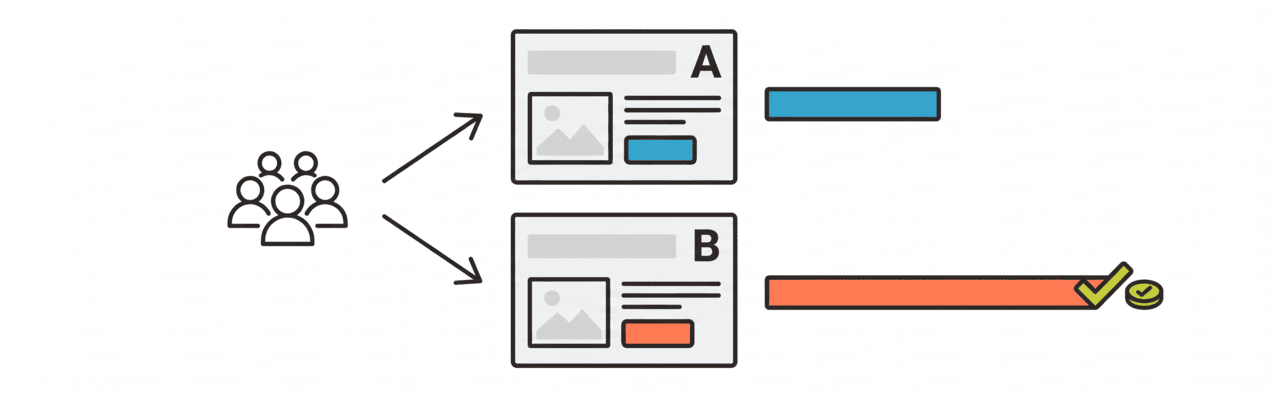
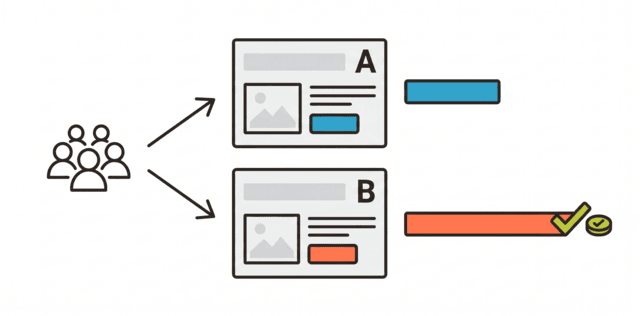
A/B testing compares two versions of the same webpage to see which one gets better results. One group of visitors sees Version A, while another sees Version B, so businesses can measure which change leads to more conversions or sales.
For example, an online store might test "Start My Free Trial" against "Get Premium Access" to see which button gets more sign-ups.
In 2026, A/B testing is more effective because it focuses on removing friction, such as confusing layouts or long forms, one change at a time. Many businesses also use Agentic Automation, where AI helps monitor tests and adjust them using live user data while people still make the final decisions.
Improving A/B Experiment Reliability with Agentic Automation
Agentic Automation uses independent AI programs to manage the technical parts of A/B testing. These AI agents handle data collection, monitor for errors, and ensure tests run consistently without human fatigue.
In 2026, this approach reduces technical errors by up to 60% compared to manual testing, according to UIPath in 2026. These systems can detect failing experiments early and suggest improvements, such as new headlines based on real-time search behavior. This allows teams to focus more on strategy rather than on repetitive tasks.
However, human oversight remains essential. While AI is effective at processing data, it cannot fully understand brand voice or emotional tone. Without human review, websites risk becoming a mix of high-performing but disconnected elements.
A successful workflow combines both:
- AI for speed, accuracy, and automation
- Humans for clarity, trust, and brand consistency
This balance improves both performance and credibility, which are important for modern search and user trust.
The A/B Testing Guide: What to Test and How to Start
How to Set Up and Measure A/B Test Performance
A successful A/B test starts with identifying a problem, setting a clear goal, and tracking the results correctly. Follow these steps to run an experiment and determine whether a change improves conversions.
Step 1: Identify the Problem and Write a Hypothesis
Review heatmaps and session recordings using tools such as Microsoft Clarity to identify where visitors encounter difficulties or leave a page.
Write a hypothesis that identifies the problem, proposed change, and expected result.
Example: "Because visitors are leaving the checkout page, removing the header menu may increase completed purchases."
Step 2: Create a Variation and Define the Primary Metric
Change one element at a time, such as a headline, button text, or form length. Choose one primary metric to measure success.
Examples include:
- E-commerce: Conversion rate or completed purchases.
- SaaS/B2B: Trial sign-ups or demo requests.
- Media: Click-through rate or newsletter subscriptions.
Step 3: Configure Tracking and Check the Setup
Configure the testing tool and connect conversion tracking to analytics or a CRM system, such as HubSpot, if needed. Track meaningful outcomes such as purchases, sign-ups, or qualified leads.
Check that both versions display correctly, traffic is assigned as intended, and the testing script does not noticeably slow down the website.
Step 4: Determine the Required Sample Size
Use an A/B test calculator with the current conversion rate, the minimum detectable effect (the smallest improvement worth detecting), and appropriate statistical settings. A common starting point is 95% confidence and 80% statistical power.
Step 5: Check for Sample Ratio Mismatch (SRM)
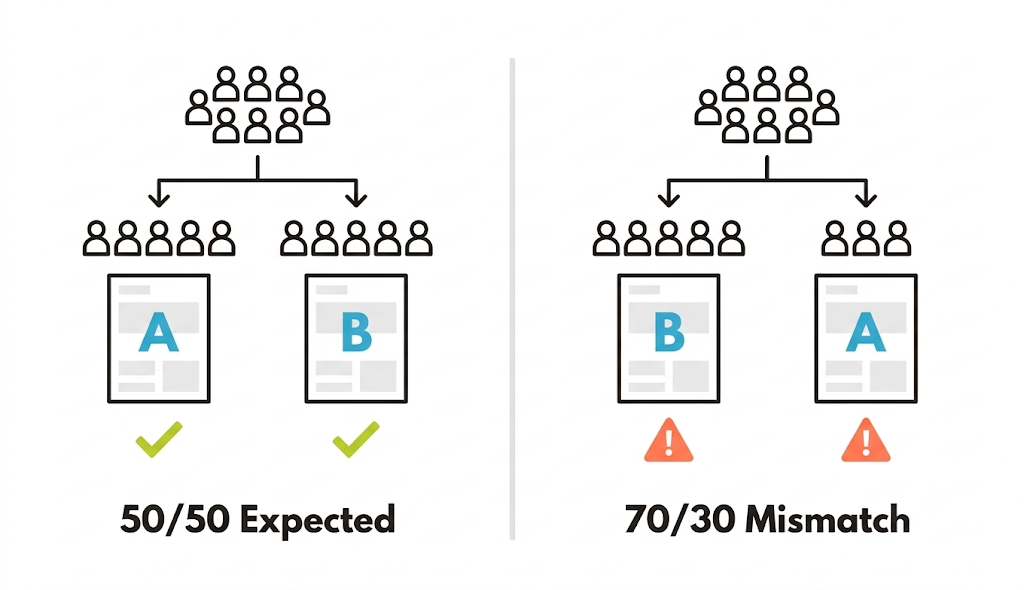
Check whether the traffic split matches the experiment's intended allocation. A 50/50 split is common for standard A/B tests. If the split is unexpectedly uneven, investigate tracking, eligibility, and technical issues before interpreting the results.
Step 6: Run the Test for an Appropriate Duration
Run the test until the required sample size is reached and relevant behavior patterns are accounted for. Two full weeks can be a useful starting guideline, but the appropriate duration depends on traffic, conversion volume, and weekly or seasonal patterns. You must include weekdays and weekends because user behavior changes by the day. People might browse on phones on Sunday but buy on desktops on Tuesday. Once the two weeks have ended and you have reached your required sample size, compare the average performance across all these different days to get a true result.
Step 7: Analyze the Results and Implement the Findings
Revisit your hypothesis. If your winning version shows an improvement, check the p-value in your results. If the p-value is less than 0.05, it means there is a 95% chance that the result is real and not just due to chance. If the improvement is clear and the p-value is low, this indicates significant performance differences between the two tests, and the top performer may be deployed on your website.
If the results are reliable and the winning version supports the hypothesis, implement the change and document the findings. If the results are inconclusive, consider whether more data or another test is needed.
When is A/B Testing the Wrong Choice?
A/B testing is not always the best tool for every situation. In some cases, running an experiment can lead to incorrect conclusions that could be spent on better strategies.
- Low Traffic Websites
If a page only gets 100 visitors a month, it would take years to reach a valid sample size. In this case, qualitative research, such as user interviews, is more effective than A/B testing. - Major Brand Overhauls
When changing a company’s entire identity or business model, A/B testing small elements is useless. These large shifts require leadership decisions rather than small changes based on data. - Urgent Technical Fixes
If a checkout button is physically broken, do not test a fix against the broken version. Fix the error immediately to stop losing money. - High-Risk Legal Changes
If a recent regulation requires a specific privacy checkbox, you cannot test whether or not to include it. Compliance always takes priority over conversion optimization. - Lack of a Clear Hypothesis
Running a test just to see what happens is a waste of resources. Without a specific reason for the change, any "win" might just be a random fluctuation in data.
When Does A/B Testing Fail? Avoiding Data Overload
A/B testing fails when the person running the test ignores the rules of math or tries to do too much at once. When a test is set up poorly, it produces data noise, which is information that looks helpful but is actually wrong.
- Testing too many things at once.
If a marketer changes the headline, the colors, and the price all at once, they will not know which change helped or hurt. Only change one element per test to keep the results clear. - Stopping the test too early.
It is tempting to pick a winner after three days if the numbers look good. However, small bits of data are often wrong. You must wait until the calculated sample size is reached. - Ignoring the Flicker Effect.
Sometimes a website glitch shows the old page for a split second before the new one loads, called a flicker effect. This confuses users and ruins the experiment results. Use fast-loading tools to prevent this. The solution is to use Anti-flicker snippets (small scripts that hide the page until the variant is ready) and prioritize Synchronous loading for testing scripts to ensure the experiment loads before the visitor sees the page. - The Sample Ratio Mismatch
This happens when the testing tool fails to split traffic evenly. If 70% of people see Version A and only 30% see Version B, the results cannot be trusted because the groups are not equal. - Disregarding external factors.
If a company runs a massive holiday sale during a test, the results will be skewed. Avoid running important tests during major holidays or events that change normal shopping habits.
How A/B Testing Moved from Desktop to Mobile-First Design
Mobile drives most traffic, so testing must focus on smaller screens, fast load speeds, and easy thumb navigation. Key information should stay visible, and forms must be simple to complete on a phone.
Most users now browse on mobile, so testing must focus on:
- Large tap targets (at least 44x44 pixels)
- Simple navigation menus
- Fast-loading pages
- Easy-to-fill forms
Comparing Desktop versus Mobile-first Optimization
How Leading Brands Increased Revenue with A/B Testing
Leading organizations use data to solve specific user friction points. Friction refers to any part of a website that makes it difficult for a customer to complete a task.
- Going Doubled Sign-Ups by Changing Button Text
Going in 2025 encountered a value perception problem where users felt a Free Trial was a difficult commitment. They tested the phrase "Get Premium Access" against "Start Free Trial" to emphasize the service's benefits rather than the process, doubling their conversion rate.
- PayU Increased Checkout Completion by nearly 6%
PayU, a fintech company, found that its checkout forms had high abandonment rates because users had to fill out too many fields. They reduced drop-offs by removing extra form fields, including the phone number, and simplifying the layout to reduce user effort.
- New Balance Chicago Increased Sales by 200% with Mobile Navigation
New Balance Chicago struggled to convert mobile visitors because store location details were buried at the bottom of the page. They improved mobile conversions by adding a “Find a Store” button that stayed on top of the screen, making location details easier to access.
Comparing the Best CRO Platforms for A/B Testing in 2026
Choosing a CRO platform in 2026 requires matching software capabilities to specific business goals, such as lead generation or e-commerce sales. Modern platforms now prioritize AI-driven automation, server-side execution for speed, and deep integration with customer databases.
How to Choose CRO Platforms for A/B Testing
A proper platform must integrate with existing databases and maintain fast site speeds. Use this checklist to ensure a tool meets performance and data standards for 2026.
- Does the tool connect directly to your CRM (Customer Relationship Management) system?
- Does the testing script slow down your page load speed or INP?
- Does it include qualitative tools like heatmaps or session recordings (videos of user actions)?
- Do you have enough monthly visitors to reach statistical significance (the point where results are proven not to be accidental)?
- Can the tool automatically shift traffic to the winning variant using bandit algorithms?
- Does it meet GDPR/CCPA compliance requirements (for collecting and using user data safely) and consent management requirements?
Common A/B Testing Mistakes
Even with enough traffic, poor execution can still hurt performance:
- Testing too many changes at once → You won’t know which change caused the result
- Stopping tests too early → Results may be random and misleading
- High setup cost → Spending more time and money than the test is worth
- Data silos (tools not connected) → Teams miss important insights about users
- Only making small improvements → You may miss bigger growth opportunities
Final Thoughts
To succeed in 2026, businesses must combine SEO (getting found on search engines) and CRO (turning visitors into customers) into one strategy. Focus on understanding user intent, not just keywords, and delivering fast, relevant experiences.
Next Steps:
- Improve page response to avoid delays
- Use AI tools to automate testing and route leads to the right team
- Add social proof (reviews or real-time activity) to build consumer trust
- Personalize content so it matches what users are searching for
Frequently Asked Questions (FAQs)
What is the difference between CRO and Conversion Intelligence?
While traditional CRO focuses on turning visitors into customers through data, Conversion Intelligence is the 2026 evolution that uses AI to understand intent in real time. It uses live data to resolve website friction before users even notice a problem.
When should a business avoid A/B testing?
A/B testing is ineffective for websites with low traffic (under 100 visitors per month) because it takes too long to reach a sufficient sample size. It should also be skipped for urgent bug fixes, mandatory legal changes, or massive brand identity shifts.
How long should an A/B test run to be accurate?
Tests should run for at least two full weeks. This ensures the data captures different user behaviors across weekdays and weekends, such as users browsing on mobile on weekends but purchasing on desktops during the week.
What is "Agentic Automation" in testing?
This involves using independent AI programs to manage the technical aspects of a test. These agents monitor for errors and can identify failing tests early, which reduces human fatigue and technical glitches.
Related Content
Read These Next
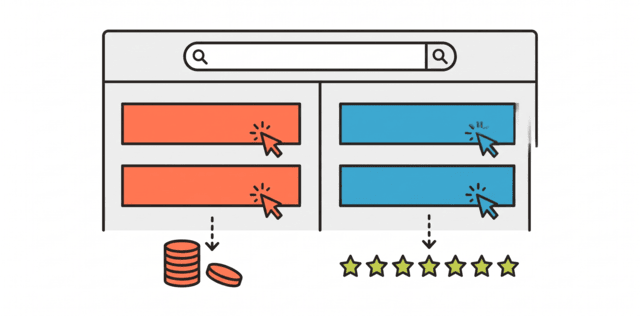
Search Engine Optimization vs Pay Per Click: The Honest Truth About Building Traffic