.png)


B2B Growth Hacking: 7 Unconventional Tactics for Enterprise Sales
.png)

.png)

Maximize B2B sales in 2026 by running fast experiments instead of traditional models. Deploy automated communication tools, format content for artificial intelligence search engines, scale live website changes, and connect databases with visual software layers to lower client acquisition costs.
Key Takeaways
- Traditional B2B sales pipelines stall due to rigid procurement cycles, static campaign planning, and disconnected data tracking.
- Organizations can scale enterprise pipelines and lower client acquisition costs without expanding human resource budgets by deploying a modern growth stack.
- The modern framework relies on automated outbound messaging, generative engine optimization (GEO), and multi-variable experimentation.
- Successful execution requires maintaining data integrity, aligning sales and marketing via a unified revenue operations division, and complying with modern privacy laws like GDPR.
- Future enterprise growth will prioritize modular application integration, compounding customer retention loops, and autonomous multi-agent workflows.
Why Legacy B2B Sales Pipelines Fail
Traditional B2B sales methods often fail because they move too slowly. Modern business buyers change quickly, but many companies still rely on old systems, slow approvals, and disconnected data.
- Long buying cycles slow deals down.
Enterprise sales often involve many approvals, legal checks, and vendor reviews. When this process is not tracked clearly, leads can get stuck for weeks or months.
- Fixed campaign plans become outdated quickly.
Some companies still build marketing plans months in advance and rarely adjust them. This makes it hard to respond to changes in buyer behavior.
- Disconnected data creates confusion.
Sales, marketing, and customer success teams often store information in different tools. When these systems do not share data, teams miss important buying signals and waste time on manual updates.
Comparing Traditional Sales Lifecycles Against Modern Growth Frameworks
Corporate deal execution varies by framework. Legacy methods depend on manual tasks, while modern growth frameworks utilize automation software to uncover the pipeline faster.
Bridging the Gap Between Legacy Sales and Growth Hacking
Moving from traditional sales to modern growth hacking helps companies replace slow, manual prospecting with faster systems that find and respond to buyers at the right moment.
This shift requires a clear plan. Companies need to fix data problems, connect their tools, improve their content, and test their sales pages more often.
A modern growth stack is simply the group of tools a company uses to attract, qualify, and convert customers. When these tools work together, sales teams can grow their pipeline without needing to hire a much larger team.
The 7 Unconventional Enterprise Growth Tactics
Companies can grow their enterprise sales pipeline by using automated outreach, improving content for AI tools, testing website changes, connecting software systems, and tracking issues before they become serious problems.
Tactic 1: Use Automated Outreach and Inbox Management
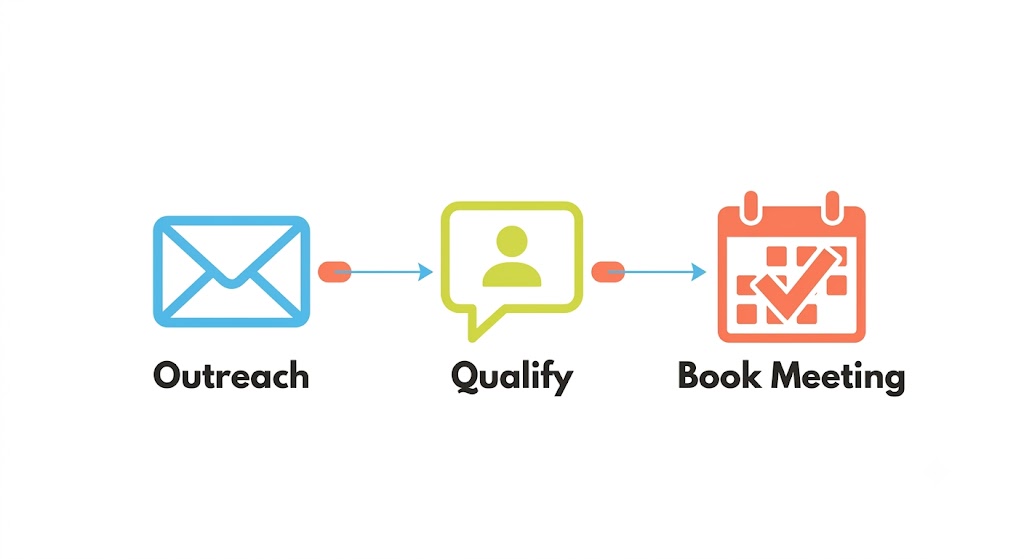
Automated outreach helps sales teams contact the right companies faster. Instead of manually sending every message and sorting every reply, teams can use tools to send personalized outreach, manage responses, and send serious prospects directly to sales calendars.
The goal is to reach the right decision-makers with relevant timing, clear intent, and enough context to make the message useful.
Enterprise teams can also use multiple channels, such as email and LinkedIn, to reach target accounts. The goal is not to send more spam. The goal is to reach the right decision-makers with messages that are timely and relevant.
Teams should also manage inboxes carefully. This helps make sure emails reach the main inbox instead of being marked as spam, improves deliverability resilience, and reduces the chance that strong prospects never see the message
- Case Study: Monizze
Monizze lacked a strong outbound sales process and relied heavily on cold calling. The company worked with Devlo to create email and LinkedIn outreach workflows, along with proactive inbox management.
The system filtered incoming replies and sent strong leads to sales calendars. As a result, Monizze booked 120 qualified enterprise appointments from 7,000 target accounts.
A simple way to improve this process is to connect outreach tools directly to live calendar slots. This lets qualified prospects book a meeting without a long email exchange.
Tactic 2: Optimizing Content for Generative Engine Optimization (GEO)
More buyers now use AI tools such as ChatGPT and Perplexity to research products and vendors, so companies need to make their content easier for AI systems to understand, retrieve, and cite. Generative Engine Optimization (GEO) is the practice of structuring website content so AI search tools can clearly identify what a company does, who it helps, and why it is relevant.
This is where semantic search matters. AI crawlers and retrieval systems increasingly look for contextually related chunks of information, not just exact keyword matches. Content that explains buyer problems, product categories, use cases, integrations, pricing considerations, and proof points in clear, connected language is more likely to surface in AI-generated answers.
Companies can improve AI visibility by using concise answers, comparison tables, structured data, schema markup, and FAQ sections that directly address buyer questions.
For larger content libraries, teams can also use vector databases to organize internal knowledge and identify missing topical relationships before publishing.
- Case Study: GreenBananaSEO
GreenBananaSEO helped an enterprise contract management software company that had no visibility in AI search results. The agency reorganized the company’s technical content into clearer answers, tables, and structured website data.
As a result, 27% of AI-driven traffic converted into a sales-qualified pipeline.
Pro Tip: A useful rule to follow is to turn important business answers into short, clear explanations of fewer than 50 words. This makes them easier for AI tools and buyers to understand.
Tactic 3: Scaling Modern Multivariate Product Experiments Beyond A/B Testing
Traditional A/B testing compares two versions of one webpage element, such as two headlines or two buttons. Moving beyond this basic model to scale multivariate experiments evaluates dozens of element combinations simultaneously.
Modern testing looks at several page elements at once. For example, a company might test different headlines, page layouts, button placements, and form designs together. This helps teams understand which combinations work best.
Modern testing tools can also send more visitors to the best-performing page version automatically. This helps companies improve conversion rates without risking too many lost leads.
Some teams also use server-side testing, which means the test happens before the page loads in the visitor’s browser. This can prevent slow loading, page flickering, and layout issues.
- Case Study: L'Oréal
The L'Oréal Luxe Division struggled with slow manual optimization processes and restrictive legacy tools. The company integrated Optimizely Web Experimentation to test multiple page variations across several pages at the same time.
This helped the company run more than 200 experiments in one year and better understand what users preferred.
Pro Tip: A smart approach to testing is to send a small portion of website traffic to new page ideas on an ongoing basis. This allows companies to find new growth opportunities without hurting current performance.
Tactic 4: Unifying Disparate Stacks via Secure Visual Automation Hubs
Many companies lose time because their sales and marketing tools operate on siloed data. Teams copy information from one system to another, records fall out of sync, and follow-up slows down when ownership is unclear.
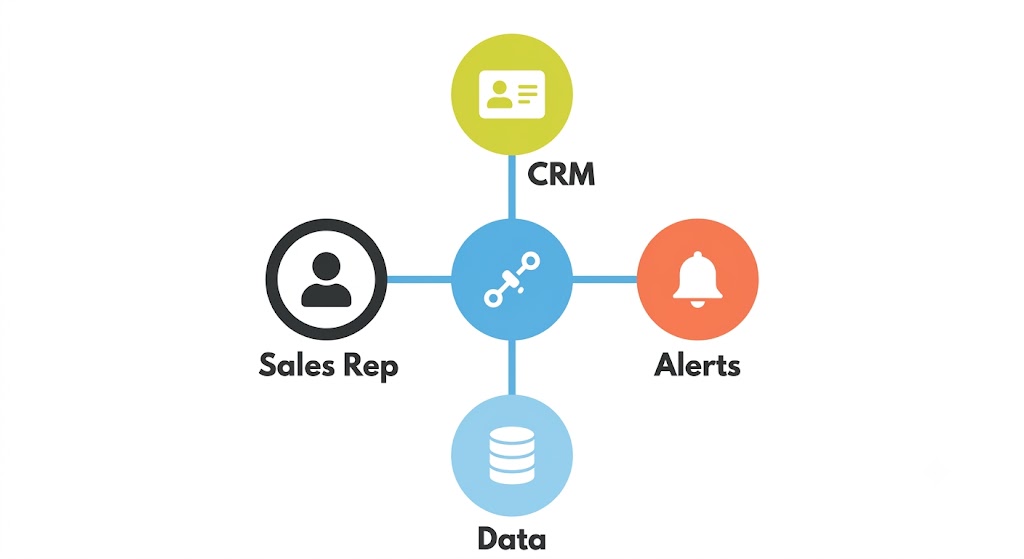
Visual automation hubs reduce this friction by connecting tools without requiring heavy custom coding. In a modern RevOps stack, platforms such as n8n, Zapier Enterprise, and Make.com can move lead data, trigger alerts, update CRM records, and keep sales, marketing, and customer success aligned. These workflows usually rely on webhooks for real-time event triggers and REST APIs for structured data exchange between systems.
For example, when a prospect fills out a form, an automation can update the CRM, notify the right sales rep, enrich the account record, and add the prospect to the correct follow-up sequence. This helps mitigate the risk of human data entry errors, although teams still need error handling, audit logs, and human review for sensitive workflows.
- Case Study: TMNZ
TMNZ experienced severe data transfer limits and isolated workflow bottlenecks inside its older integration tools. The company moved to n8n Enterprise to connect language models, databases, and internal workflows.
This helped remove back-office delays and saved 400 hours of staff time each month.
Pro Tip: Companies should also build error alerts into their automation systems. If lead data fails to move between tools, the operations team should know right away.
Tactic 5: Automating Social Lead Scraping and Event-Driven Personalization
Social lead scraping, the collection of publicly available profile signals from social platforms, can help sales teams identify people who recently showed interest in a topic, event, or industry conversation. For example, if someone attends a LinkedIn event about cybersecurity, that action may suggest interest in related products or services.
However, this tactic carries real compliance and platform risk. LinkedIn and other platforms often restrict automated scraping, browser extensions, and robotic activity. Even when public data is legally accessible in some jurisdictions, platform Terms of Service may still prohibit automated extraction and can result in account warnings, throttling, or suspension.
The safer version of this tactic is to use consent-based signals wherever possible: webinar registrations, newsletter replies, event opt-ins, first-party CRM activity, and zero-party data that prospects intentionally share with the company.
Outreach is more effective when it happens soon after a relevant action, while the topic is still fresh in the buyer’s mind.
When social signals are used, teams should limit volume, avoid deceptive personalization, respect opt-outs, and review local privacy rules before launching automation.
Case Study: Nytro Marketing
Nytro Marketing needed a better social selling framework to replace static email search tools. The agency used PhantomBuster workflows to collect profiles from LinkedIn events.
This helped the team capture 11,000 qualified business leads and reduce manual tracking time by one day per week.
Pro Tip: A good practice is to wait at least 48 hours before sending automated social messages or emails. This makes the outreach feel more natural and helps reduce account restrictions.
Tactic 6: Implementing Mobile-First Optimization and Thumb Zone Layouts
Many enterprise buyers research products on their phones, even during busy workdays. If a landing page is hard to read or the buttons are difficult to tap, buyers may leave before taking action.
Mobile-first optimization means designing for smartphones before designing for desktops. This helps companies make sure their most important pages are easy to use on smaller screens.
Thumb zone design means placing important buttons and forms where users can easily tap them with one hand. This ensures that complex options remain fully readable and interactive before customers trigger an exit.

Case Study: Materials Market
In 2023, Materials Market had low funnel activation because the company did not fully understand where customers were dropping off online.
The team used Hotjar session recordings to watch how visitors moved through the site. These recordings revealed mobile layout problems. After fixing them, the company tripled its baseline conversion rate within 30 days.
Companies should test important page elements on mobile screen sizes first. Key buttons, forms, and navigation links should be easy to see and tap.
Tactic 7: Fixing Software Messes and Tracking Automated System Drift
As companies grow, their software systems often become messy. Settings change, old automations remain active, and teams forget why certain workflows were created.
This creates system drift — the slow buildup of hidden software issues over time. These issues may not seem serious at first, but they can eventually break lead routing, reporting, sales follow-up, or campaign tracking.
Companies can prevent this by using tools that track system changes, map dependencies, and alert teams when something breaks.
Tracking automated system drift (the silent distortion of software settings over time) safeguards enterprise revenue channels by using automated metadata tools to catch.
Case Study: Brex
In 2026, Brex, noticed that its go-to-market systems were becoming harder to manage because of growing complexity in its Salesforce setup.
The company used Sweep to create a visual map of its system configuration and dependencies. This helped reduce internal investigation time for system errors by 70% to 90%.
Pro Tip: A practical habit is to schedule a monthly system review. During this review, teams should remove inactive automations, archive unused fields, and clean up outdated workflows.
Common Mistakes in Optimizing B2B Sales with Growth Hacking
Avoiding common B2B sales optimization errors protects corporate profit margins, prevents severe regulatory compliance fines, and stops campaign collapse by ensuring that internal teams focus on data integrity rather than fragmented software updates.
- Over-Relying on Generic AI Writing Assistants
Generic AI writing tools often produce bland content that sounds like every other company. Enterprise buyers need messaging that reflects real customer pain, specific proof, and a recognizable point of view.
A better approach is to build a controlled brand model using a strong foundation model such as GPT-4.0 or Claude 3.5 Sonnet, then ground it in approved case studies, call transcripts, product documentation, competitive positioning, and brand voice rules. The goal is not to let AI invent the strategy. The goal is to help subject-matter experts turn verified insight into clearer, faster, more consistent content.
- Adding More Software Tools Before Fixing Data Problems
Buying new tools will not solve the messy data. If customer records are incomplete, outdated, or duplicated, even the best software will produce poor results.
High-performing teams fix their data first. They create clear rules for data quality, keep records updated, and make sure all major systems use the same source of truth.
- Ignoring Privacy Reform and Consent Laws
Companies must follow privacy laws when collecting and using customer data. GDPR, for example, protects people in the European Economic Area and sets strict rules for data collection, consent, and tracking.
Instead of relying on hidden tracking or unclear consent, companies should build around first-party and zero-party data: information prospects intentionally provide through forms, product interactions, preference centers, surveys, webinars, and sales conversations. This also aligns with Google’s Privacy Sandbox direction, where brands have to rely less on hidden third-party tracking and more on consent-based customer relationships.
In the teams I’ve seen succeed, compliance is not treated as a legal afterthought. It is built into the RevOps workflow through consent fields, suppression lists, data retention rules, enrichment limits, and clear ownership of customer data.
- Allowing Misalignment Between Sales and Marketing Units
When sales and marketing teams have different goals, different messages, and different data, campaigns become less effective.
Companies can solve this by creating a shared revenue operations function. Revenue operations brings sales, marketing, and systems together around the same pipeline, dashboards, and growth goals.
Future Trends Shaping Sustainable Enterprise B2B Growth Systems
Future enterprise growth depends on combining modular applications, maximizing client retention loops, and adopting agentic workflows to secure scalable corporate revenue without software sprawl.
- Prioritizing Integration Over More Unnecessary Tools
Many companies already have too many tools. Adding more software can create confusion, extra costs, and disconnected data.
Instead, enterprise leaders should choose tools that connect easily with their main CRM and data systems. They should also review their software stack twice a year and remove tools that no longer support the business.
- Building Stronger Customer Retention Loops
As customer acquisition becomes more expensive, companies need to focus more on keeping and growing existing customers.
Customer Data Platforms, or CDPs, can help by combining customer data from multiple sources into one profile. This makes it easier to understand customer behavior and send the right message at the right time.
Companies can also use RFM analysis, which looks at how recently customers bought, how often they buy, and how much they spend. This helps teams identify valuable accounts and create better retention campaigns.
- Transitioning to Agentic Systems
Agentic systems use AI workflows to complete specific tasks with less manual input. For example, an AI workflow might qualify leads, update records, or route prospects to the right sales rep.
Companies should start small. It is safer to use AI for simple lead qualification first, check that the process works, and then expand into more complex sales workflows.
Human teams should still own strategy, relationships, and messaging. AI should support the process, not replace the human parts of enterprise sales.
Final Thoughts
To implement these modern growth frameworks, enterprise leaders can adopt the following actionable steps:
- Connect automated outreach tools directly to live calendars so qualified prospects can book meetings faster.
- Organize important website content into short, clear answers that AI search tools and human buyers can understand.
- Use semantic search principles to connect related topics, proof points, and buyer questions across the content library.
- Create strong data quality rules before adding new software.
- Build a shared revenue operations team to align sales, marketing, systems, and compliance.
- Use visual automation hubs such as n8n, Zapier Enterprise, or Make.com only after defining ownership, error handling, and audit rules.
- Review the company’s software stack twice a year and remove tools that do not connect well with the main CRM.
Frequently Asked Questions (FAQs)
Why do traditional B2B sales pipelines fail?
Traditional B2B sales pipelines usually fail because buying approvals take too long, campaigns are too rigid, and customer data is spread across disconnected systems.
What is Generative Engine Optimization (GEO)?
Generative Engine Optimization, or GEO, means organizing website content so AI tools can understand it, use it, and cite it in answers.
How does tracking automated system drift protect revenue?
Tracking system drift helps companies find hidden software errors, broken automations, and data issues before they disrupt active sales processes.
Read These Next
AI Marketing Automation: How to 10x Your Output with Machine Learning