.png)
Email Marketing Automation Strategy: How to Build High-Converting Email Funnels
.png)

.png)

What is an Email Marketing Funnel?
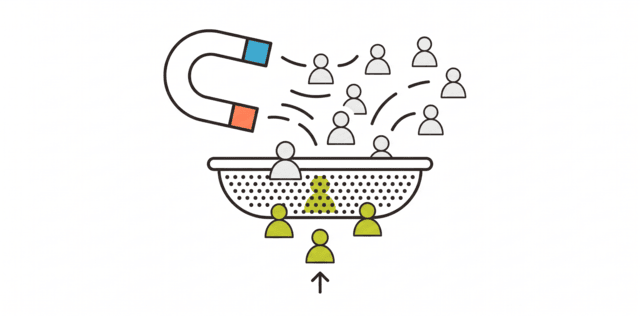
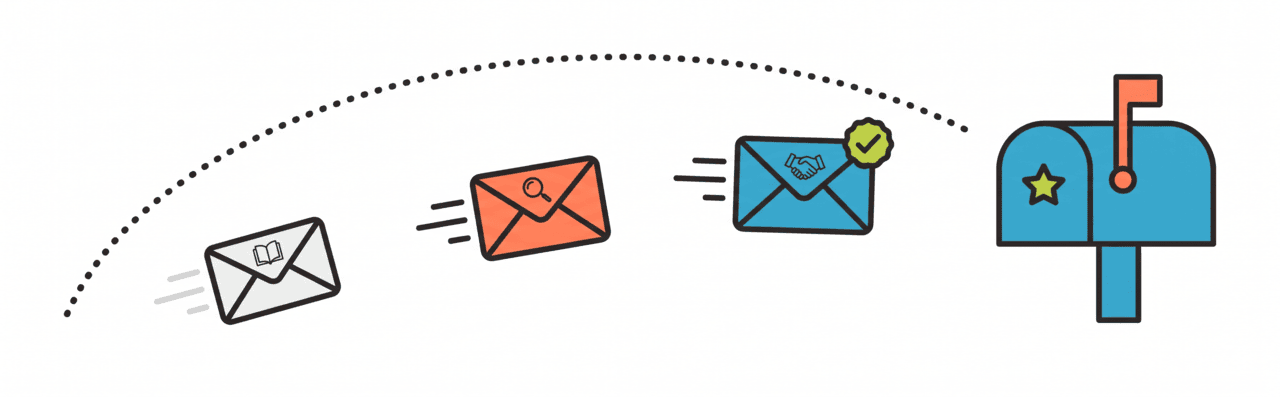
An email marketing funnel is a series of automated emails designed to guide potential customers from awareness to purchase. Modern funnels use customer data and real-time behavior to send relevant, personalized messages at the right time. This helps businesses build trust, increase engagement, and improve conversions while ensuring emails reach customers' primary inboxes.
Key Takeaways
- Modern marketing automation replaces rigid, rule-based batch messaging with adaptive machine learning, predictive analytics, and real-time behavioral tracking.
- High-converting funnels map the entire customer journey. Senders must separate welcome tracks by purchase status, nurture prospects using live behavior-based triggers, and utilize algorithmic lead scoring to filter out low-intent noise.
- Maintaining visibility against automated AI inbox summaries requires coding structured schema markup directly into promotional templates and deploying Brand Indicators for Message Identification (BIMI).
- Connecting Customer Relationship Management platforms such as Salesforce or HubSpot with Customer Data Platforms such as Segment or Tealium creates a shared customer data foundation for real-time personalization.
How Traditional Email Marketing Improved with Modern Automation
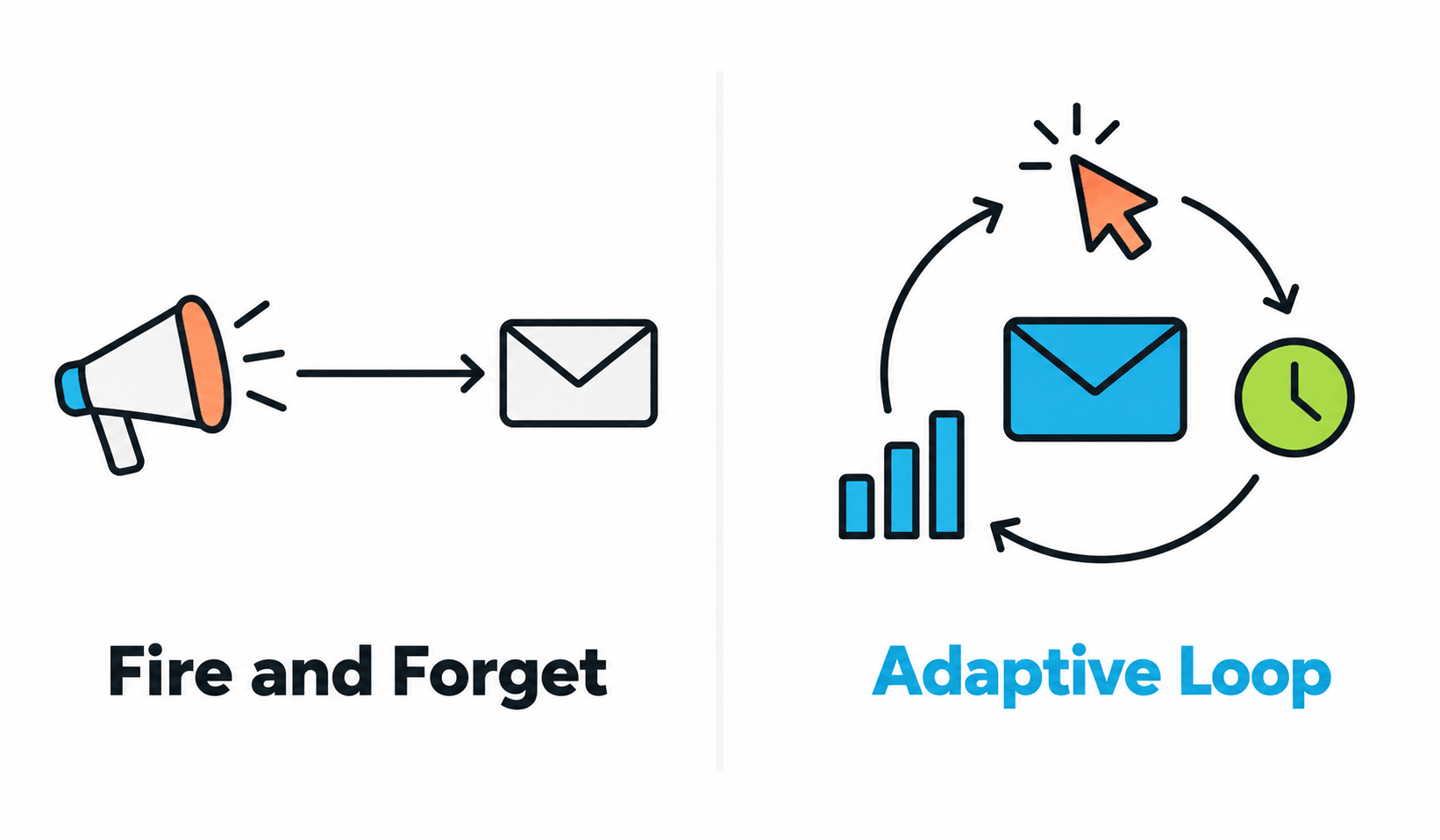
Modern marketing automation uses machine learning, predictive analytics, and real-time customer behavior data instead of fixed rules. This helps businesses respond faster to customer actions, automate decisions, and continuously improve campaigns based on performance and engagement data.
- Transition from Static Rules to Machine Learning: Modern marketing platforms move beyond rigid, scheduled broadcasts to adaptive systems that personalize, optimize, and execute messages in real time.
- Elimination of the "Fire and Forget" Model: Rule-based batch messaging is replaced by context-driven lifecycle strategies that match communications to individual journey stages.
- Operational Efficiency and Campaign Velocity: Advanced platform workflows automate repetitive tracking, content testing, and reporting, reducing campaign assembly cycles from days to minutes.
Building a High-Converting Email Funnel Framework
An optimized email marketing funnel maps the customer journey from lead capture to conversion. It uses automated email sequences to guide prospects through each stage, helping businesses identify, nurture, and convert high-quality leads more efficiently.
Top-of-Funnel (ToF): Lead Capture and Onboarding
The top of the funnel focuses on attracting new leads and building trust. Businesses use simple, mobile-friendly sign-up forms and automated welcome emails to introduce their brand, engage new subscribers quickly, and encourage further interaction.
Splitting Welcome Sequences by Purchase Status
Separating welcome email journeys based on a customer's purchase status helps ensure they receive relevant messages. CRM data can automatically direct new subscribers to educational content, while existing customers receive onboarding and product adoption emails.
- Funnels for New Subscribers: Welcome tracks for unconverted profiles eliminate early buying friction by clearly establishing core product benefits, highlighting customer validation reviews, and utilizing targeted content to build initial purchase momentum.
- Funnels for Verified Buyers: Communication paths for active customers adjust immediately post-purchase to deliver transaction confirmations, outline product care or shipping expectations, and present tailored cross-sell options without relying on reflexive discounts.
Middle-of-Funnel (MoF): Intent Tracking and Nurturing
The middle of the funnel focuses on nurturing leads by tracking engagement across websites, emails, and apps. Automated educational emails, gated content, and personalized follow-ups help keep prospects engaged and move them closer to a purchase decision.
Behavior-Based Trigger Sequences
Behavior-based triggers use customer actions, such as website visits or resource downloads, to automatically send relevant emails. These triggers help deliver the right message at the right time and adjust a customer's journey based on their interests and engagement.
- Gated Content and Resource Workflows: Capture systems track digital downloads and apply conditional tags based on the exact resource accessed.
- High-Intent Commercial Alerts: Automation monitors explicit browser behavior to generate and send targeted alerts for price drops or low-inventory milestones when a user demonstrates high buy intent.
- Event-Driven Transactional Pipelines: Specialized transactional paths manage live-event timelines by mapping out an automated progression of real-time confirmation notices, timed reminders, and post-event feedback queries.
Bottom-of-Funnel (BoF): Conversion and Qualification
The bottom of the funnel focuses on converting qualified leads into customers. Using lead scoring, targeted messaging, and timely sales follow-ups, it helps businesses prioritize high-intent prospects while filtering out less-engaged leads.
- Algorithmic Lead Filtering: Scoring models aggregate behavioral points across web and email networks to identify highly qualified profiles for direct sales outreach.
- Systematic Consultation Triage: Automated handoff protocols push hot lead metrics directly to sales representatives to accelerate closing speed and pipeline conversion efficiency.
- Dormant Profile Reactivation: Senders pull silent, historically qualified accounts into localized value-driven campaigns to recover revenue from unclosed opportunities.
Key Components of an Optimized Email Funnel
Building an effective email marketing funnel in 2026 requires a connected CRM that brings customer data into one place. Businesses use AI tools, first-party data (information collected directly from customers), lead scoring, email enhancements, and performance dashboards to personalize campaigns and better understand the customer journey.
1. Leverage Personalization and AI Orchestration
Unifying central profiles across sales, support, and marketing touchpoints creates a data foundation for AI orchestration. Deploying machine learning copilots trained on historical customer context accelerates message variation testing and maximizes personalization accuracy over generic prompting models.
Connecting central CRM platforms, such as Salesforce or HubSpot, with Customer Data Platforms, such as Segment or Tealium, consolidates siloed tools into a shared, real-time communication repository.
This integration gives marketing, sales, and customer support teams a consistent view of each customer. Automation systems can then send messages based on recent purchases, website activity, support interactions, and other current behavior.
Training AI tools on this first-party customer data also improves message relevance. Instead of relying on generic prompts, teams can create content that matches each customer’s stage in the buying journey.
- Case Study: MyMDAdvocate
MyMDAdvocate used ActiveCampaign and Active Intelligence to fix sporadic 4% open rates and a lack of event promotion infrastructure. Senders mapped multi-step registration funnels and deployed AI send-time optimization features.
This process automated administrative tasks, driving average email open rates up to 67%.
2. Utilize Optimization Techniques and Audience Health
Intent-based lead scoring helps identify interested prospects by assigning points to actions such as repeated visits to pricing pages. Combined with regular re-engagement campaigns and easy unsubscribe options, it keeps contact lists healthy, protects email deliverability, and helps improve conversions.
Lead scoring automatically identifies engaged prospects and moves them into personalized campaigns. This helps small teams focus their time and resources on the leads most likely to become customers.
Regular re-engagement campaigns can help win back inactive subscribers and generate additional revenue from dormant accounts. At the same time, clear unsubscribe options keep email lists clean, improve engagement quality, and reduce spam complaints.
- Case Study: Landyachtz
Landyachtz connected WooCommerce with Klaviyo to resolve manual outreach limits and expensive, rigid multi-site Shopify constraints. Senders automated data-driven cart abandonment loops and welcome tracking based on real behavioral signals. This behavioral optimization minimized list fatigue, lifting flow open rates to 59% and capturing 11% of total revenue.
3. Meet Technical Requirements for Inbox Presentation, Authentication, and Trust
Modern inbox performance depends on two separate technical layers. Schema markup helps inboxes understand and present email content. Domain authentication and BIMI help verify the sender and strengthen visual trust.
Treating these requirements separately makes them easier to implement, test, and maintain.
Add Schema Markup for Rich Inbox Presentation
Email schema markup adds structured data to promotional and transactional email templates. Supported inboxes can use this information to display offer details, images, expiration dates, reservations, and suggested actions.
Structured data also helps automated inbox tools interpret the email accurately instead of generating incomplete or misleading summaries.
Schema Markup Requirements:
- Add supported structured data directly to the email’s HTML.
- Mark up important details such as the offer name, image, price, expiration date, and action URL.
- Validate the markup before launching the campaign.
- Test how the message appears in supported email clients.
- Include clear standard email content for inboxes that do not support the markup.
Schema markup improves presentation, but support differs across email providers. Teams should test both the enhanced version and the standard fallback experience.
Configure Domain Authentication and BIMI
Domain authentication helps receiving email providers verify that a message came from an approved sender. The main controls include Sender Policy Framework, DomainKeys Identified Mail, and Domain-based Message Authentication, Reporting, and Conformance. These are commonly known as SPF, DKIM, and DMARC.
Brand Indicators for Message Identification (BIMI) builds on this authentication foundation. It allows an approved brand logo to appear beside messages in supported inboxes, helping recipients recognize the sender more quickly.
BIMI can strengthen brand recognition and trust, but it does not guarantee inbox placement or prevent every delivery failure.
- Case Study: Figaro Classifieds
Figaro Classifieds used Brevo’s Email API to protect transactional email performance as its sending volume increased. The company separated business units into distinct subaccounts and followed a technical domain warm-up plan.
This setup protected its sending reputation and helped the company deliver 800 million emails at a 99.38% deliverability rate.
4. Adapt Performance Metrics to Zero-Click Environments
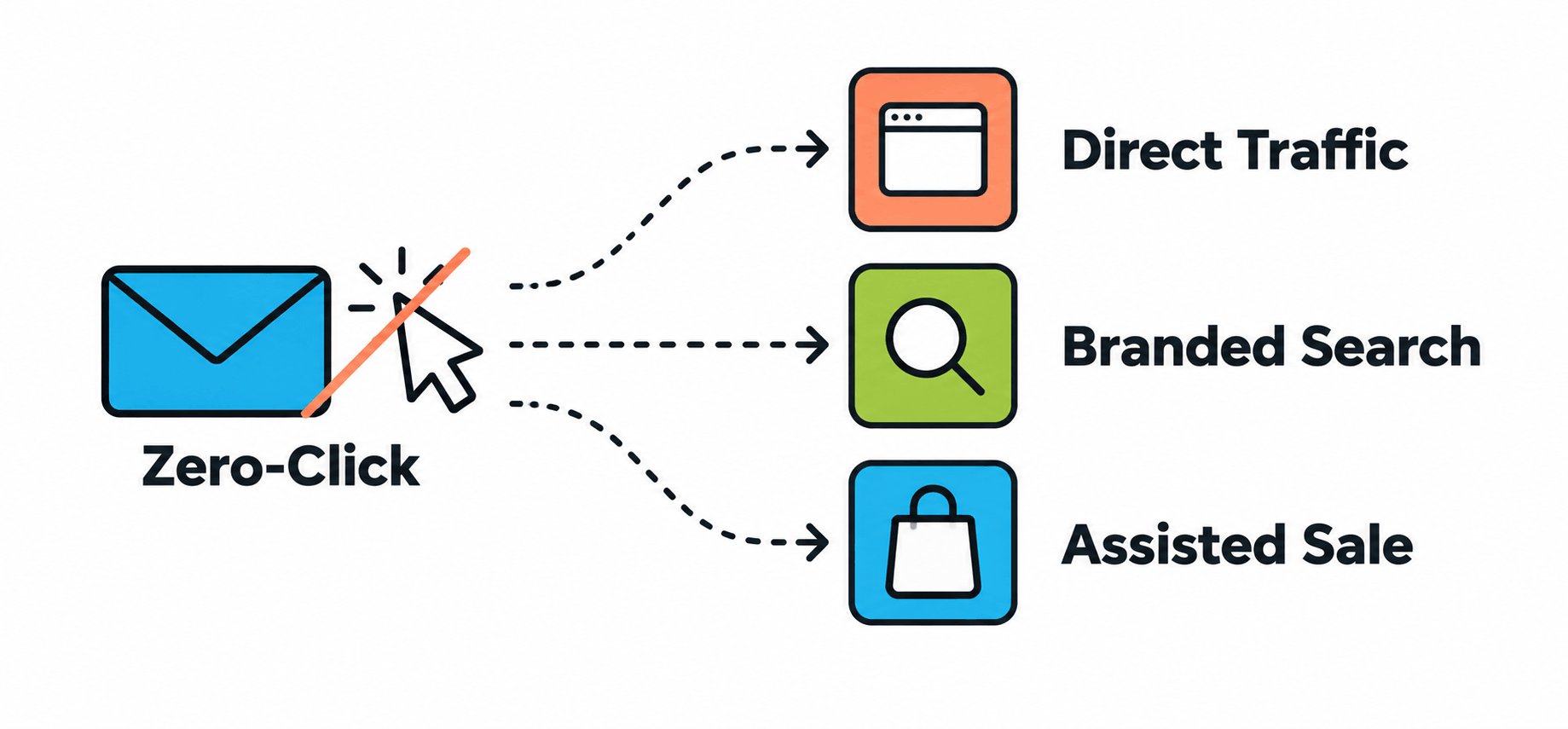
Zero-click behavior occurs when a recipient gets useful information from an inbox preview, AI-generated summary, notification, or the email itself without visiting the sender’s website.
In these situations, click rates do not show the email’s full effect. Marketers should also track direct website traffic, branded searches, sales activity, and assisted conversions after each campaign.
Teams can compare email send dates with traffic and sales data in their CRM and analytics dashboards. Platforms such as Salesforce, HubSpot, Google Analytics, and Adobe Analytics can help reveal increases that last-click reporting may miss.
Multi-touch attribution reports can also show how email supports a purchase even when it is not the final interaction. This prevents teams from undervaluing automated campaigns that influence customers without generating an immediate click.
- Case Study: Paperbell
Paperbell replaced a fragile manual tracking process with Stripe data and UTM parameters. The company connected payment records to subscriber email addresses and mapped activity across the customer lifecycle.
This approach helped the team move beyond last-click reporting and show how email automation contributed to monthly revenue growth.
Common Mistakes to Avoid when Building an Email Marketing Funnel
Email marketing funnels often fail when customer data is spread across disconnected tools, making it difficult to track performance and attribution. Businesses should avoid excessive messaging and build strategies that work across both human audiences and automated systems that process marketing content and signals.
- Allowing Application and Data Silos to Stand
Maintaining disconnected tools leaves customer information scattered, causing fuzzy measurement and inconsistent user profiles.
- Over-Messaging Customer Base
Bombarding an entire database with identical broadcasts harms domain reputation, while moving to engagement-based segments raises open rates.
- Designing Frameworks Without Considering AI Systems
Building strategies that assume humans are the only decision-makers fails to account for a digital ecosystem increasingly managed by automated systems and buying agents.
How to Adapt to the Future of Email Marketing
Adapting to the future requires transitioning to autonomous, real-time orchestration systems that sync across integrated CRM ecosystems. Senders must prioritize brand semantics infrastructure, fact-dense owned data, and zero-click delivery visibility to remain visible to personal AI consumer agents.
- Convergence of Complete CRM Architectures
Functional barriers drop as marketing, sales, and customer support fully unify profile data to build cohesive lifecycle touchpoints.
- Transition to Autonomous Program Orchestration
Automation matures from manually scheduled workflows to self-optimizing systems that plan, reallocate, and execute strategies based on live profitability data.
- Trust and Authenticity as Primary Currencies
In a saturated digital environment, distinct brand semantics and verified credibility serve as the ultimate differentiators to de-risk customer choices.
Final Thoughts
To successfully optimize automated email funnels, organizations should implement the following actionable next steps:
- Connect CRM platforms such as Salesforce or HubSpot with Customer Data Platforms such as Segment or Tealium. This creates a unified customer record that marketing, sales, support, and automation tools can use in real time.
- Train machine learning copilots directly on unique internal datasets to accelerate message testing and maximize personalized journey alignment.
- Add schema markup to improve how supported inboxes interpret and present email content. Separately, configure SPF, DKIM, and DMARC before implementing BIMI to strengthen sender verification and brand recognition.
- Set up automated, intent-based lead scoring parameters to systematically route highly qualified prospects directly into targeted sales workflows.
- Measure more than clicks. Track direct traffic, branded searches, assisted conversions, and sales changes to understand email performance in zero-click environments.
Frequently Asked Questions (FAQs)
How has email automation evolved from traditional methods?
Automation has transitioned from rigid, manually scheduled broadcasts to adaptive systems that leverage machine learning and real-time behavioral tracking to personalize messages instantaneously.
What technical features are required to ensure modern inbox delivery?
Two separate technical systems are required.
First, schema markup helps supported inboxes display accurate details such as offers, images, dates, and actions.
Second, SPF, DKIM, and DMARC help verify the sender. BIMI builds on this authentication foundation by displaying an approved brand logo in supported inboxes.
How should performance be evaluated in zero-click environments?
A zero-click interaction happens when someone receives useful information from an email, preview, or AI-generated summary without visiting the sender’s website.
Marketers should therefore look beyond click rates. Useful measures include direct traffic, branded search activity, assisted conversions, sales increases after send dates, and changes in customer behavior across multiple touchpoints.
Related Content
Read These Next
What is Retention Marketing? - The 2026 Guide to Customer-First Growth