

Growth Marketing Framework: From Funnel Audit to Predictable Scaling




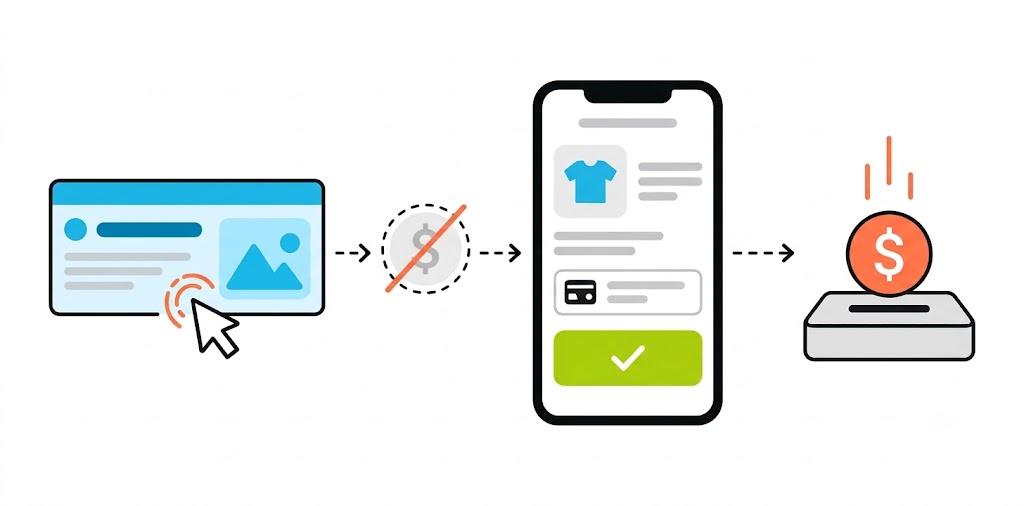
A growth marketing framework is a structured process that uses data-driven testing to improve the full customer lifecycle (AARRR). It moves beyond top-of-funnel acquisition to focus on activation, retention, and unit economics. By identifying funnel leaks and building a creative-data feedback loop, businesses can turn marketing spend into a predictable, scalable revenue engine.
How to Build a Growth Marketing Engine That Actually Scales
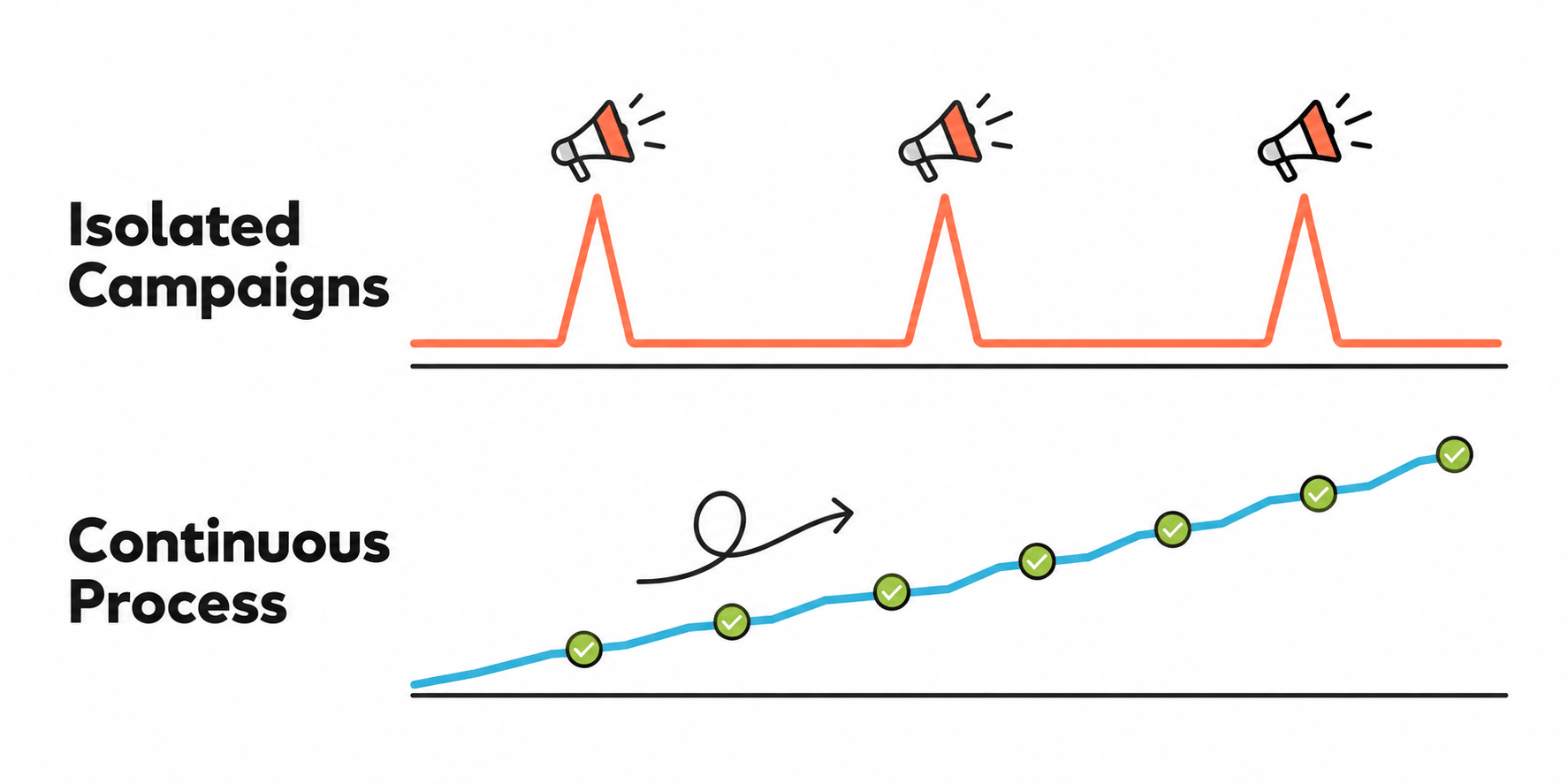
Building a growth engine requires shifting from isolated campaigns to a continuous, integrated process. This involves mapping digital touchpoints to identify where customers drop off or find value. Documenting these interactions helps standardize data collection and analysis.
The general procedure follows these steps:
- Set Your Data Baseline: Record current metrics, including site visits, sign-ups, and customer lifetime value.
- Map the Customer Path: Visualize every step from the first ad to the final purchase to identify points of confusion.
- Identify Value: Pinpoint when a user realizes product value and work to reach that point quickly to ensure retention.
- Create a Testing Cycle: Run frequent small tests. Retain successful tactics and learn from failures.
Popular Growth Marketing Frameworks in 2026
Today's growth strategies focus on making sure every customer is profitable and using AI to improve results. While the standard "AARRR" model is still used to find where customers drop out of the sales process, newer methods focus more on immediate revenue and combining self-service tools with direct sales.
These strategies look past simple web traffic to focus on getting users active and increasing their spending automatically:
- AARRR: Focuses on Acquisition, Activation, Retention, Referral, and Revenue.
- RARRA: A retention-first variation prioritizing user loyalty before new acquisition.
- RACE (Reach, Act, Convert, Engage): Optimizes the lifecycle through Reach, Act, Convert, and Engage.
- Hybrid PLG/PLS: Combines self-service product features with high-touch sales for enterprise scaling
Why is my Growth Marketing Strategy Failing?
Growth strategies typically fail when there is a fundamental disconnect between marketing activity and the actual drivers of customer choice.
Failure often stems from a disconnect between marketing activities and actual customer drivers. Common challenges include:
- Over-reliance on Automation: Using AI to replace human storytelling often leads to disconnected messaging that fails to build trust.
- Ignoring Funnel Leaks: Scaling spend on a funnel with a low retention rate results in high "burn rates" without long-term value.
- Intent Mismatch: Creating content or ads that do not align with the user's current stage in the journey.
- Outdated Strategy: Failing to implement quarterly reviews or agile feedback loops causes the framework to become obsolete as market conditions shift.
When a strategy lacks a clear attribution model, it becomes impossible to determine which investments are actually driving incremental growth.
How to Run a Conversion Funnel Audit
A funnel audit evaluates the customer journey to find where users exit before converting.
By analyzing the stages of the growth marketing funnel, businesses can pinpoint specific stages for intervention, preventing wasted ad spend.
Fixing an ineffective conversion funnel is a prerequisite for any scaling effort. A bigger budget on a broken funnel leads to loss because you haven’t proven your value to customers. Data from Salsify’s 2026 consumer research report shows that only 68% of consumers are willing to pay more for a trusted brand—a significant 20% drop from early 2025.
Funnel Audit Checklist
Before increasing marketing budgets, use this checklist to identify structural weaknesses:
- Data Integrity: Are tracking pixels and server-side events reporting accurately?
- Time-to-Value: Do users reach a key milestone in their first session?
- Cohort Retention: Does the retention rate stabilize, or does it drop to zero over time?
- Payback Period: Is the customer acquisition cost recovered within a sustainable timeframe?
- Channel Saturation: Has the current primary acquisition channel reached a point of diminishing returns?
How to Map Your Growth Process
A structured testing loop makes marketing a scientific process. Following clear workflows allows teams to find and scale winning strategies efficiently.
Case Study: Scaling Global Growth at Coca-Cola
In 2022, Coca-Cola set out to fix a common problem: their global marketing teams were measuring success by how many people watched their videos, rather than how many people bought their products.
To change this, a small central team trained nine global units to focus on actual sales. In one experiment, a local team found that their streaming TV ads were most effective when they made up 75% of their video budget—but any more than that led to diminishing returns. By sharing these types of wins worldwide, Coca-Cola now runs 50 to 100 experiments every few months, leading to a 20% total boost in marketing effectiveness.
What do I need before starting a Growth Experiment? The ICE Model
Before launching a test, teams must identify which initiatives offer the highest probability of success. The ICE scoring model prevents wasting resources on low-impact tasks:
- Impact: Projected movement of the primary growth metric (e.g., "Will this increase sign-ups by 5%?").
- Confidence: Certainty of the hypothesis based on historical data or case studies (e.g., "Have we seen this work before?").
- Ease: Engineering, creative, and financial resources required for launch (e.g., "Can we build this in 2 days or 2 months?").
This method balances potential gains against technical requirements and evidence. It ensures the growth engine focuses on the most valuable tasks first.
The Growth Experimentation Workflow
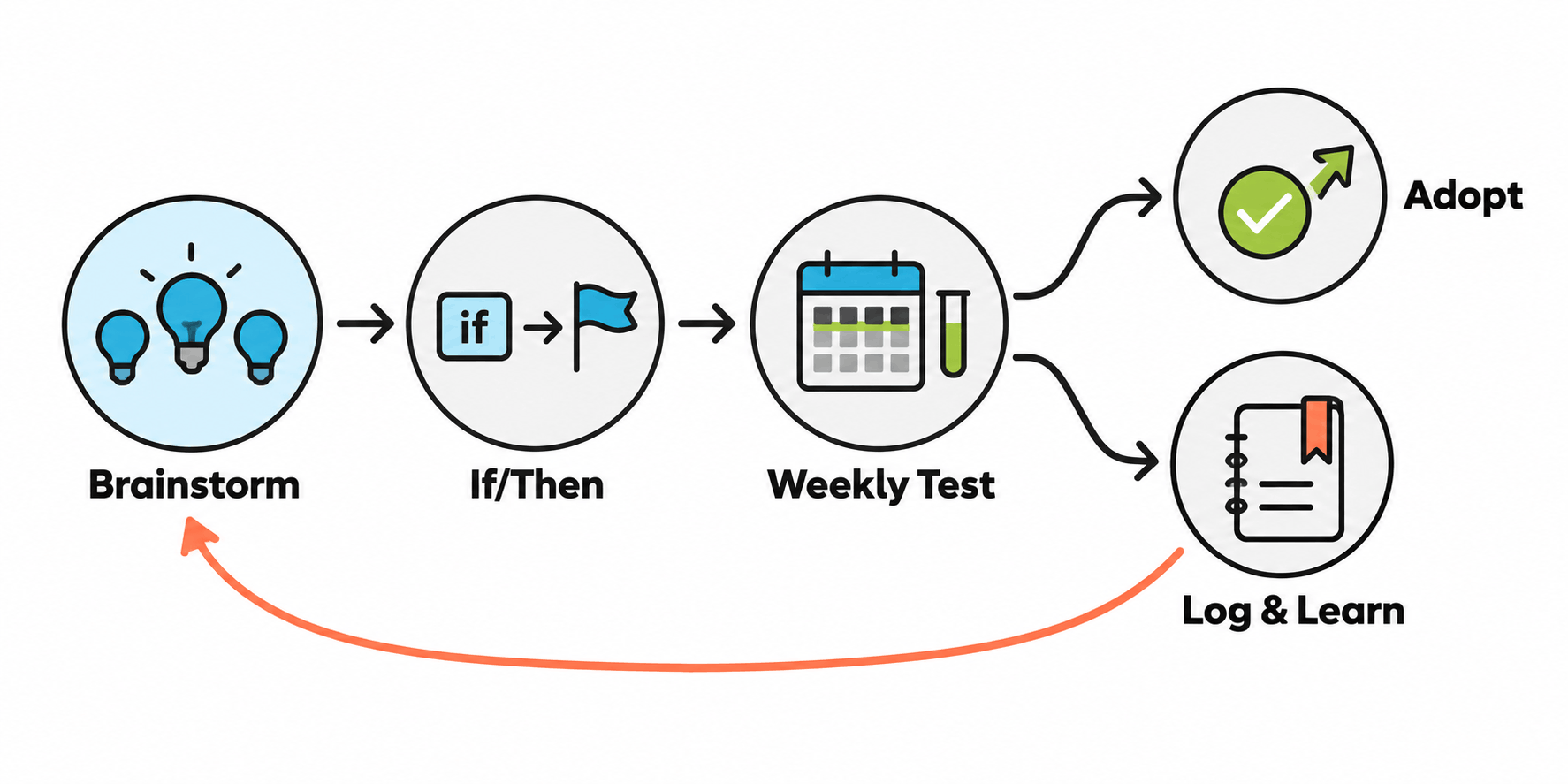
This process testing workflow uses a simple cycle to improve results:
(1) brainstorm ideas, (2) create a clear (3) If/Then prediction, (3) run a weekly test, and then (4) either adopt the performers or log the failures to learn for next time.
Why Frequent Testing Matters
Running a high volume of experiments allows a business to replace guesswork with a library of proven insights. Testing multiple variables simultaneously identifies winning strategies faster.
A structured process prevents unfocused experiments. When tests are documented correctly, a failed experiment becomes a technical victory because it proves what does not work, allowing the team to pivot resources toward more profitable channels.
By mapping your process this way, you remove emotional attachment to ideas and focus entirely on results. Scaling acquisition occurs by spending more only on variables proven during the sprint phase.
How Growth Experiments Improve Customer Retention
Growth experiments drive retention by transforming data into immediate value. Systematic testing through AI and analytics eliminates delays that lead to churn. This iterative approach ensures strategies evolve in real-time to meet client goals.
Case Study: Dentsu’s 90% Velocity Gain
A prime example of this is seen at Dentsu’s 2024 generative AI experimentation, where sophisticated media planning often faced delays of several weeks—a timeline that Senior Director of Analytics Becca Kline noted "put client satisfaction at risk." To pivot, Dentsu used an AI-powered copilot to address delays.
The results were transformative:
- Speed to Insight: Analysis time was slashed by 90%, moving from weeks to minutes.
- Proactive Optimization: Media planners gained the ability to run real-time "mini-experiments" to optimize client spend instantly.
- Reduced Churn: By eliminating "missed opportunities" in trending media, Dentsu moved from a reactive service model to an indispensable growth partner.
Dentsu’s shift proves that retention is tied to technical agility. Investing in experimentation infrastructure removes the friction that drives clients to competitors.
When growth experiments allow a company to deliver results faster and more accurately, they move beyond being a service provider to becoming a critical engine for their clients' success.
How to Achieve Predictable Scaling: Turning Data into Strategy
Predictable scaling uses data to ensure increased marketing spend results in profit, not just volume.
This shift is a major trend as marketers are now moving more of their money toward channels that focus on conversions and retention. NP Digital reports that 61.1% of 2026 marketing budgets are spent on digital channels due to superior tracking
To scale efficiently, growth teams must follow these key steps:
- Find profit limits: Identify where returns drop below profitable levels for each channel.
- Compare Value to Cost: Ensure a customer's value exceeds their acquisition cost.
- Test Budget Increases in Small Increments: Test small budget hikes. If profit remains stable or rises within a specified timeframe, further increases are safe.
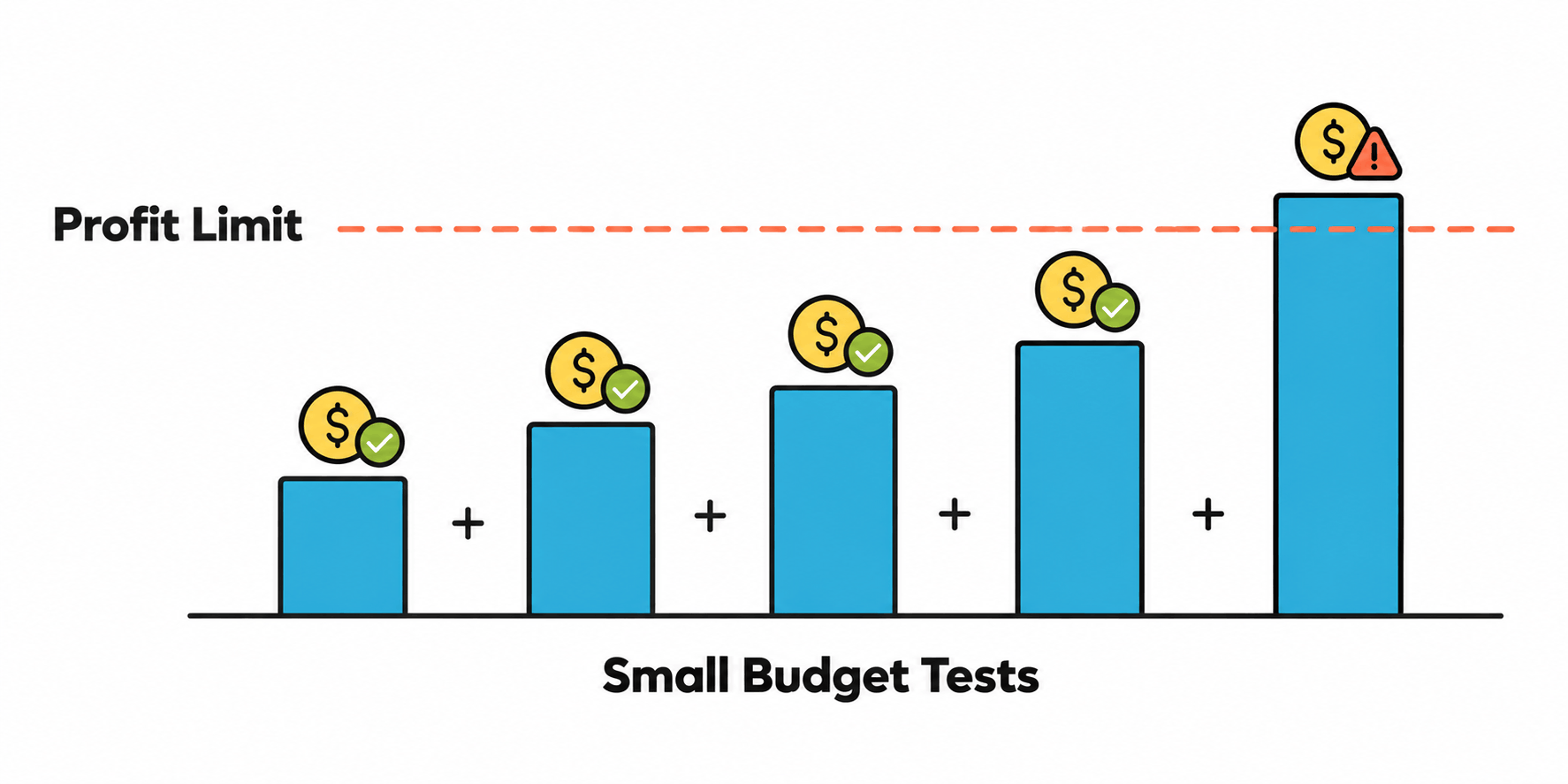
Identifying these factors allows a business owner to start treating marketing as a predictable engine where spend equals a known multiple out. By keeping your budget within a profitable baseline, you ensure that every contribution drives growth.
Conclusion
A successful growth marketing framework combines funnel analysis, continuous experimentation, and data-driven decision-making to support sustainable business growth. By identifying conversion gaps, prioritizing high-impact experiments, and tracking customer lifetime value against acquisition costs, businesses can make informed decisions about where to invest their marketing budgets.
The goal is to build a repeatable process that improves acquisition, strengthens customer retention, and scales revenue without sacrificing profitability.
Frequently Asked Questions (FAQs)
1. What is the ICE model and why is it used?
The ICE model is a technical filter used to score and prioritize growth initiatives.
It evaluates three factors: Impact on primary metrics, Confidence based on historical data, and the Ease of implementation. This ensures teams focus on the most valuable tasks first rather than low-impact ideas.
2. How long should a growth experiment typically run?
For a standard growth experimentation workflow, assets are generally deployed for a window of 7 to 14 days. This allows enough time to gather measurable data without delaying the overall testing cycle.
3. Does a "failed" experiment mean the process isn't working?
Not at all. In a structured testing process, a failure is considered a "technical victory" because it provides data on what does not work. This allows a team to pivot resources away from unprofitable channels and toward proven strategies.
4. How can growth experiments help keep customers longer?
Experiments improve retention by transforming data into immediate value. By using analytics to refine service delivery in real time, companies eliminate the delay that often leads to customer churn.
Read These Next

B2B Performance Marketing: 2026 Complete Guide