.png)
Media Buying Strategy: 7 Tactics for Maximizing Your Reach on a Limited Budget
.png)

.png)

To maximize reach with a limited budget in 2026, advertisers must prioritize efficiency over exposure. This is achieved by focusing on high-intent retargeting segments, using hyper-targeted audience data, and repurposing high-performing organic content into paid ads. By utilizing continuous A/B testing and niche placements like micro-influencers, brands reduce wasted spend and improve ROI without increasing total investment.
Introduction
Maximizing reach with a limited budget requires a structured media buying strategy focused on targeting, channel selection, testing, and performance optimization. Instead of increasing spend, advertisers improve efficiency by narrowing audiences, prioritizing high-ROI placements, using data-driven decisions, and combining organic and paid distribution to reduce waste and increase campaign impact.
Advertising costs continue to rise across digital platforms, which means inefficient campaigns quickly consume budget without producing conversion-qualified leads or positive ROAS. In our audits of paid media accounts, the most common problem is not low budget, but poor allocation, broad targeting, and lack of performance testing.
To maximize reach without increasing spend, advertisers must use structured tactics such as segmentation, retargeting, channel prioritization, testing, and performance tracking. These tactics allow campaigns to scale efficiently while keeping cost per result under control.
This guide explains seven proven media buying tactics that help increase reach, reduce wasted impressions, and improve ROI when working with limited advertising budgets.
What This Guide Covers
This guide explains how to improve media buying performance without increasing budget.
It covers:
- What Does Media Buying Strategy Mean?
- Why Does Budget Efficiency Matter?
- How Do You Target the Right Audience?
- How Do You Choose Cost-Effective Channels?
- How Do You Optimize Campaigns Using Data?
- How Do You Reduce Wasted Ad Spend?
- What Are the Seven Tactics for Maximizing Reach on a Limited Budget?
What Is a Media Buying Strategy
Media buying strategy is the process of planning how advertising budgets will be distributed across platforms, audiences, and placements to achieve the best possible performance. Instead of purchasing ads randomly, advertisers use targeting data, performance metrics, and testing to decide where the budget should go.
A complete strategy usually includes:
- audience targeting
- budget allocation
- channel selection
- campaign timing
- performance tracking
- optimization rules
Without a clear strategy, campaigns often waste budget on low-quality impressions, broad audiences, or placements that do not produce conversions.
When the budget is limited, the goal of media buying is not maximum exposure, but maximum efficiency.
Why Limited Budgets Require Smarter Media Buying
When the advertising budget is small, every impression matters. Broad targeting, wrong channels, or poor optimization can quickly consume budget without producing results.
In our audits of paid campaigns, the most common causes of wasted budget are:
- targeting too many people
- using expensive platforms without testing
- running one creative for too long
- not tracking real conversions
- scaling campaigns too early
While 2024 industry benchmarks from The Media Ant and Affise show that campaigns with clear targeting, performance tracking, and optimization rules consistently achieve higher ROI even with smaller budgets, 2026 performance data confirms that this trend has only intensified.
Instead of increasing spend, advertisers improve results by increasing efficiency.
This is why structured tactics are required when working with a limited budget.
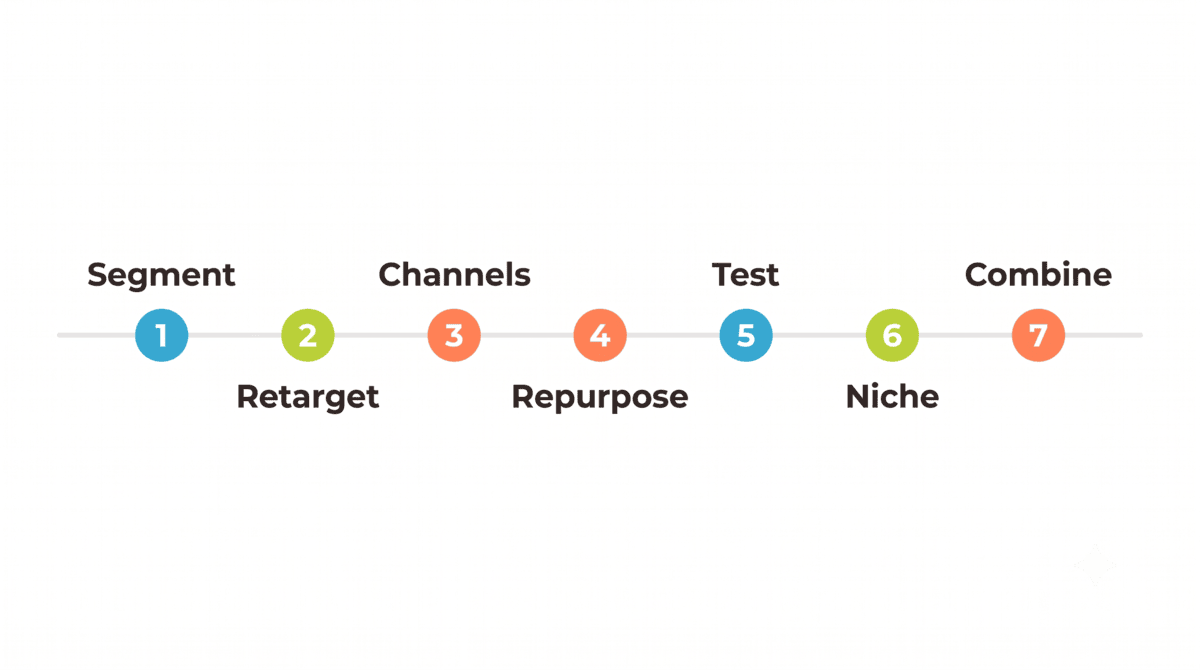
Tactic #1 — Use Hyper-Targeted Audience Segmentation
Broad targeting wastes budget because ads are shown to users who are unlikely to convert. Narrow segmentation allows advertisers to focus spend on the people most likely to engage or buy.
Effective segmentation may include:
- demographics
- interests
- behaviors
- past website visitors
- lookalike audiences
Benefits of narrow targeting:
- fewer wasted impressions
- higher click-through rate
- lower cost per acquisition
- better ROI
In practice, hyper-targeted audiences are often defined as segments under 50,000 users or bottom-of-funnel audiences (such as recent site visitors, high-intent engagers, or cart abandoners), where intent is significantly stronger than broad cold audiences.
In our testing, smaller audiences with stronger intent often outperform large audiences with weak relevance.
Tactic #2 — Prioritize Retargeting Before Cold Traffic
Retargeting campaigns usually produce higher conversion rates because they focus on users who have already interacted with the brand.
Examples of retargeting audiences:
- website visitors
- video viewers
- email subscribers
- past customers
- abandoned cart users
Advantages of retargeting:
- lower CPA
- higher ROAS
- better engagement
- faster results
Because these users are already familiar with the brand, retargeting often requires less budget to produce the same results as cold advertising.
For limited budgets, retargeting should usually be tested before scaling to new audiences. However, for new accounts with no pixel data or audience history, this is not immediately possible. In these cases, advertisers must begin with controlled cold traffic campaigns to generate initial data before retargeting becomes viable.
Tactic #3 — Choose High-ROI Channels Instead of High-Reach Channels
Not all advertising platforms deliver the same efficiency. Some channels offer large reach but high cost, while others allow precise targeting at lower budget.
Examples of channel differences:
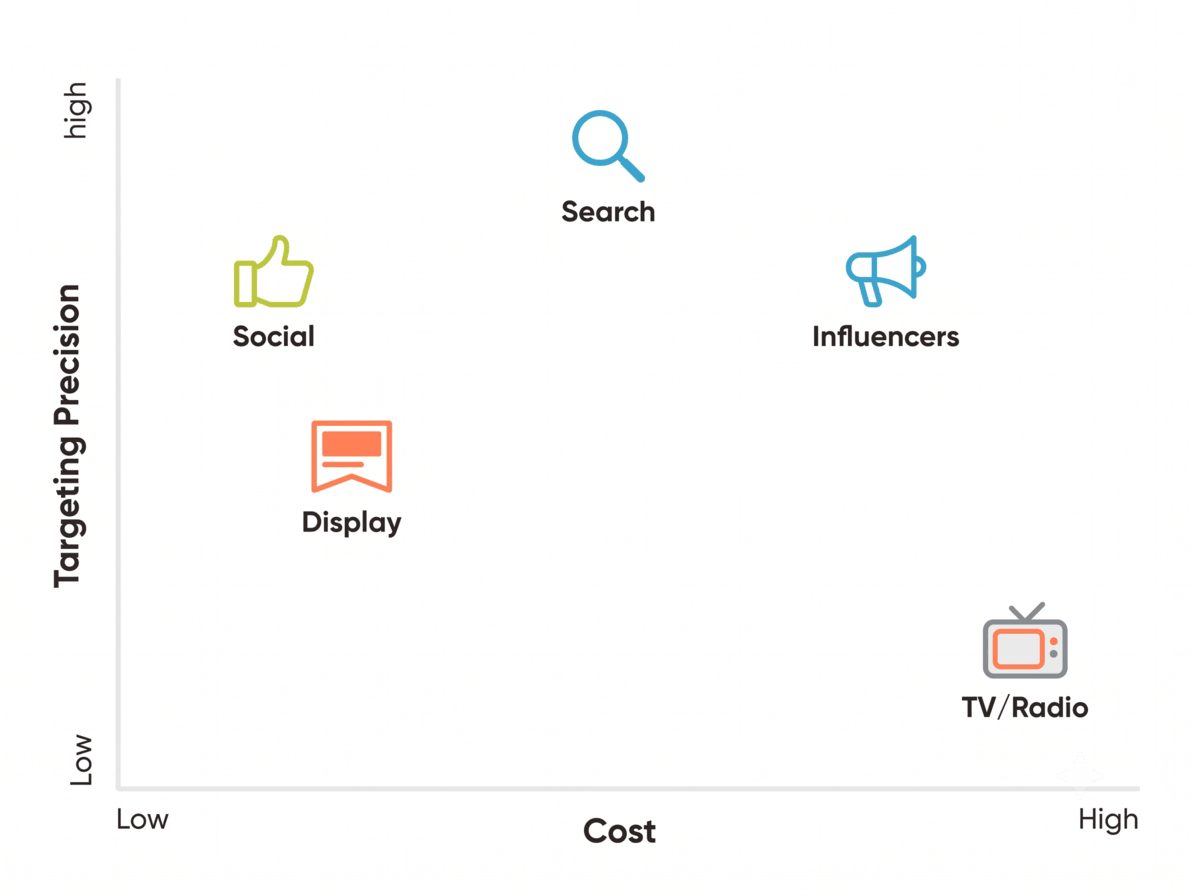
In our experience, limited budgets perform better when focused on platforms that allow precise targeting instead of broad exposure.
Choosing the right channel is often more important than increasing the budget.
Modern campaigns also increasingly rely on AI-driven tools such as Meta Advantage+, Google Performance Max, and LinkedIn Predictive Audiences to automate targeting, bidding, and optimization. These tools improve efficiency but require strong input data and clear campaign objectives to perform effectively.
Tactic #4 — Repurpose Content to Increase Reach Without Extra Cost
Creative production can consume a large part of the advertising budget, especially when campaigns require multiple formats for different platforms. Repurposing existing content allows advertisers to increase reach without creating new assets, which helps maintain efficiency when the budget is limited.
Instead of producing new material for every campaign, high-performing content can be adapted into multiple formats.
Examples of repurposing include:
- long video → short clips for social ads
- blog article → carousel or display creative
- webinar → paid video ad
- testimonial → social proof ad
- organic post → promoted post
Benefits of repurposing content:
- lower production cost
- faster campaign launch
- consistent messaging across platforms
- more placements without more budget
In our testing, campaigns that reuse proven content often perform better than campaigns that constantly introduce new creative without validation. When the budget is limited, it is usually more efficient to scale content that already works than to spend on untested assets.
Repurposing also makes it easier to run campaigns across multiple channels while keeping production costs under control.
Tactic #5 — Use A/B Testing to Optimize Budget Allocation
Testing is one of the most effective ways to improve performance without increasing the budget. A/B testing allows advertisers to compare different versions of ads, audiences, or placements and move budget toward the best-performing option.
Without testing, campaigns rely on assumptions, which often lead to wasted spend.
Common elements to test include:
- headlines
- images or videos
- audience segments
- ad placements
- call-to-action
- landing pages
Benefits of testing:
- identifies high-performing creatives
- reduces cost per acquisition
- improves conversion rate
- prevents scaling weak ads
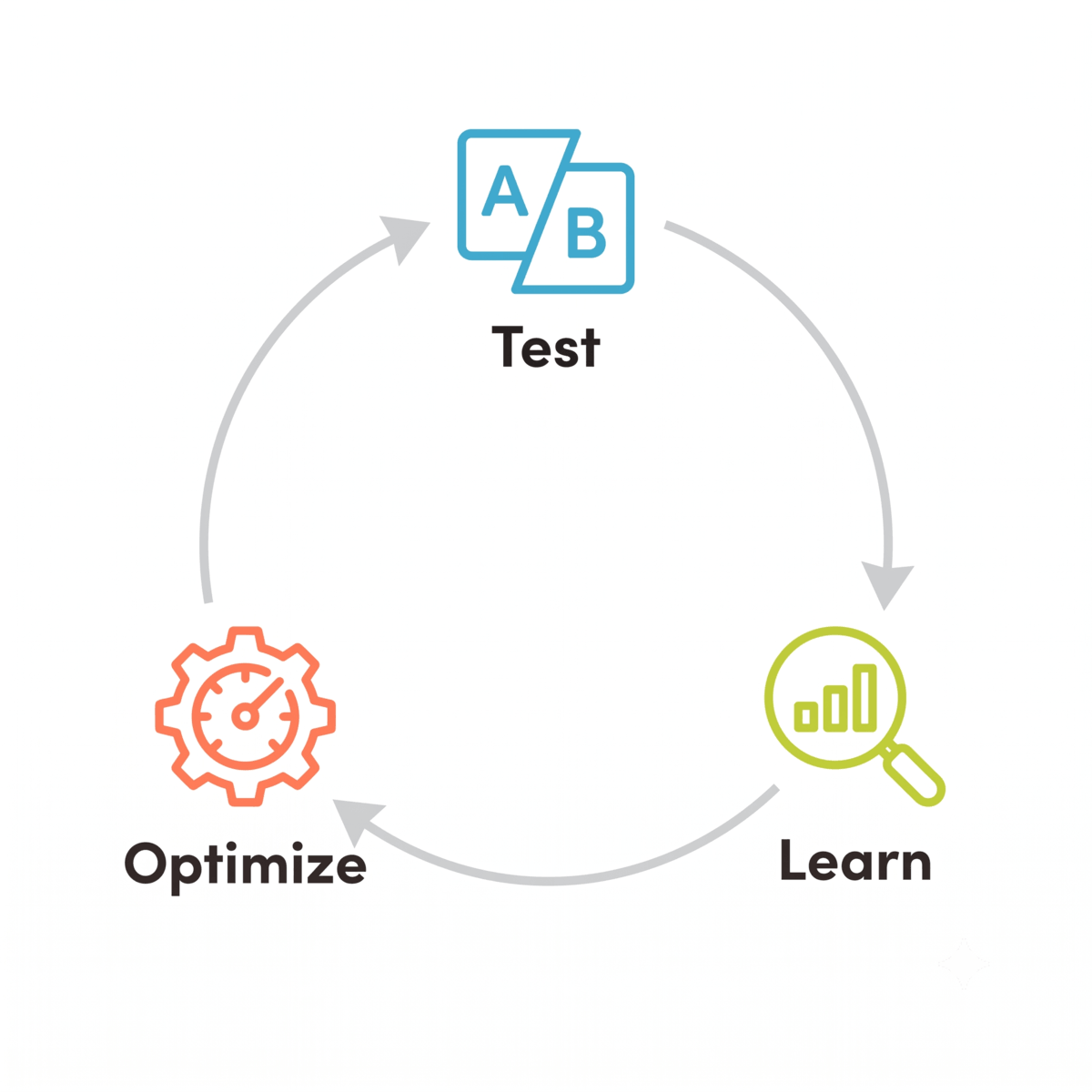
In our audits, campaigns that run continuous testing consistently achieve lower CPA than campaigns that run only one version of an ad. Even small changes in creative or targeting can produce large differences in performance.
Testing should be done before scaling the budget. Increasing spend on an untested campaign often increases cost without improving results.
Tactic #6 — Use Micro-Influencers and Niche Placements
Large influencers, premium websites, or broad-reach platforms can be expensive. Smaller creators and niche placements often provide better engagement at lower cost, which makes them useful when the budget is limited.
Micro-influencers usually have smaller audiences, but their followers tend to be more engaged and more relevant to a specific niche.
Advantages of micro-influencers:
- higher trust
- lower cost
- targeted audience
- more authentic content
Examples of cost-efficient placements:
- niche blogs or websites
- creator partnerships
- community platforms
- local media channels
- industry-specific publications
In our experience, campaigns focused on relevant audiences often outperform campaigns focused on maximum reach. A smaller but more interested audience usually produces better engagement and lower cost per result.
Using niche placements allows advertisers to extend reach without paying premium prices for large platforms. However, managing multiple micro-influencers can create additional operational overhead, including coordination, communication, content approvals, and performance tracking, which should be factored into the total campaign cost.
Tactic #7 — Combine Organic and Paid for Better Efficiency
Organic content can help reduce paid advertising costs when used together with media buying. Instead of creating ads from scratch, advertisers can promote content that has already proven to perform well organically.
A simple strategy is:
- publish content organically
- identify posts with strong engagement
- promote the best-performing posts
- scale using paid ads
Benefits of combining organic and paid:
- lower testing cost
- proven content before spending
- higher engagement rates
- reduced risk of wasted budget
In our testing, boosting high-performing organic posts often delivers better results than launching new ads without prior validation. Organic performance shows that the message already resonates with the audience, which makes paid promotion more efficient.
Paid media works best when supported by organic content instead of replacing it.
Conclusion
Maximizing reach on a limited budget requires strategy, not more spending. Advertisers who focus on segmentation, retargeting, channel selection, testing, and performance tracking can achieve strong results even with small budgets.
The most effective media buying strategies reduce wasted impressions, prioritize high-intent audiences, and use data to decide where the budget should go. Campaigns that are continuously tested and optimized usually outperform campaigns that rely on broad targeting or guesswork.
When the budget is limited, efficiency becomes more important than reach. A structured media buying strategy allows advertisers to control cost, improve performance, and scale campaigns without increasing spend.
FAQs
What is a media buying strategy?
Media buying strategy is the plan used to decide where the advertising budget is spent, which platforms are used, and how performance will be measured.
How can I reduce wasted ad spend?
Use targeted audiences, test creatives, track conversions, and move budget to placements that perform best.
What is the best channel for a small budget?
Platforms with precise targeting, such as search ads or paid social, usually perform better than broad-reach media.
Should I use retargeting first?
Yes. Retargeting often produces higher conversion rates because the audience already knows the brand, but new accounts may need to start with cold traffic to build initial data.
Why is testing important in media buying?
Testing identifies which ads work best so the budget can be focused on high-performing campaigns.
How can I increase reach without increasing budget?
Use segmentation, retargeting, content repurposing, testing, and organic-paid promotion to improve efficiency.
Related Content
Read These Next
E-commerce Marketing Automation: How to Increase Sales on Autopilot in 2026