.png)
Pay Per Click Ad Networks: A Comparison of the Top 10 Platforms for 2026
.png)

.png)

In 2026, PPC advertising is an autonomous system driven by signal quality rather than manual keywords. Success relies on providing high-quality data to AI models across Search Platforms (intent), Discovery Platforms (demand), and Answer Engines (recommendations). Advertisers must prioritize first-party data and structured assets to ensure visibility in AI-mediated search and zero-click environments.
Key Takeaways
- Signal quality now outweighs manual optimization in PPC performance.
- The ecosystem is now divided into Search Platforms for high intent, Discovery Platforms for creating demand, and Answer Engines for AI-generated recommendations.
- Success is no longer about manual tweaks but providing high-quality data signals (conversion tracking and creative inputs) for AI systems to interpret.
- Advertising is moving toward a model where AI agents research and purchase on behalf of humans, making structured data and brand authority essential for being recommended by AI.
- High-performing brands combine intent-driven search with discovery-based social ads, while using PPC data to inform long-term SEO efforts.
How the Google Ads Auction Works in 2026
The Google Ads auction is a real-time system that determines which ads appear and in what order based on bid amount, ad quality, and contextual signals. Ad placement is determined by Ad Rank, which is calculated using:
- Maximum bid (maximum amount willing to be paid per click or conversion)
- Quality Score (how relevant and useful an ad is)
Quality Score is based on:
- Relevance: How well the ad matches what the user is looking for.
- Expected Click-Through Rate (CTR): The probability that a user will click the ad.
- Landing Page Experience: How useful and fast the website is once a user arrives.
In 2026, Smart Bidding systems adjust bids automatically using signals like device, location, and browsing behavior to maximize conversions.
Which are the best PPC platforms for 2026?
The best PPC platforms in 2026 depend on campaign goals and user intent, but Google Ads, Meta Ads, and emerging AI answer engines dominate due to their scale and data advantages.
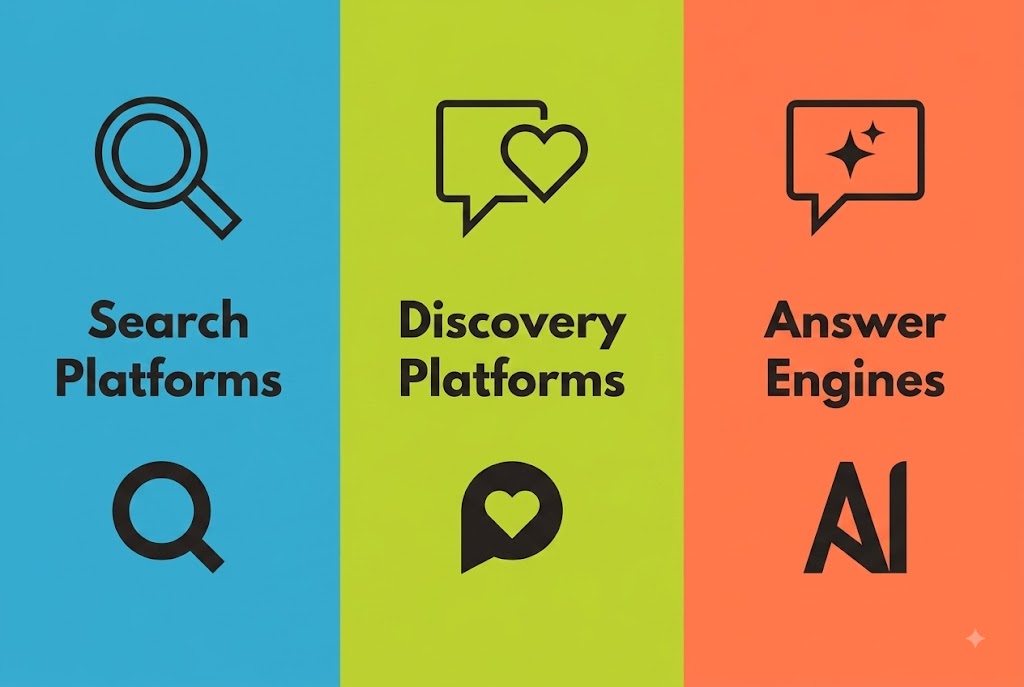
PPC platforms now fall into three distinct categories:
- Search Platforms (Google Ads, Microsoft Advertising): Capture high-intent users actively looking for solutions
- Discovery Platforms (Meta Ads, TikTok Ads, YouTube): Generate demand through interest-based targeting
- Answer Engines (ChatGPT, Perplexity, Gemini): Deliver AI-generated responses where ads appear as recommendations
In 2026, many advertisers over-invest in discovery platforms while underutilizing high-intent search and AI answer engines, leading to inefficient budget allocation despite strong top-of-funnel visibility.
Comparison Table of Top 10 PPC Platforms in 2026
Compare the top 10 PPC platforms in 2026 by their best use case, core advantage, cost level, learning curve, and when each platform is not the right fit. This table helps advertisers choose between search, social discovery, retail media, B2B, automation, and AI-driven commerce channels.
How to Choose the Right Platform (Quick Decision Guide)
- Use Google Ads or Microsoft Ads if users are actively searching for solutions
- Use Meta or TikTok Ads if you need to create demand and awareness
- Use LinkedIn Ads if you sell high-ticket B2B products, enterprise services, recruiting solutions,
- Use Amazon Ads if your goal is direct product sales
- Use YouTube if storytelling or education drives conversions
- Use AI platforms (ChatGPT, Perplexity) if you want visibility in AI-generated answers
A common high-performance framework is to pair one intent-driven platform, such as Google Ads or Microsoft Ads, with one discovery platform, such as Meta, TikTok, or YouTube. This gives advertisers a way to capture existing demand while also creating future demand, though the right mix depends on budget, audience behavior, sales cycle, and creative capacity.
Why Your PPC Ads Are Not Showing or Converting
When PPC campaigns fail to show or convert, the root cause is typically weak signal quality, restrictive targeting, or friction in the post-click experience. In AI-driven systems, performance is directly tied to the quality of data and inputs provided to the platform.
1. Weak Data Signals
In 2026, signal quality refers to how clearly your tracking, pixel, Merchant Center feed, and conversion data teach ad platforms and LLM systems which users, products, and actions are valuable. AI-driven campaigns depend on accurate and consistent conversion data to optimize effectively.
When tracking is incomplete or misconfigured, the system cannot identify which interactions lead to meaningful outcomes.
In practice, this issue is addressed by ensuring that conversion tracking is properly configured, prioritizing high-value actions, and maintaining stable data inputs to support algorithmic learning.
Case Study: Convoy
E-commerce agency 7Digits identified significant backend tracking issues after taking over Convoy’s campaigns. Once conversion tracking and automation systems were corrected, the platform was able to interpret signals accurately, resulting in sustained performance improvements and over $424 million in revenue.
2. Low Impression Volume
Overly narrow targeting or privacy-related limitations can restrict the platform’s ability to scale delivery, resulting in low impression volume and limited reach.
Addressing this issue generally involves broadening audience definitions, leveraging first-party data, and enabling platform-driven expansion features to restore scale.
Case Study: Omni Hotels & Resorts
Omni Hotels faced reduced audience scale due to privacy changes and the decline of third-party cookies. By implementing Display & Video 360’s PAIR solution, the brand expanded its addressable audience using first-party data, leading to a significant increase in impressions and a fourfold improvement in conversion rates.
3. Low Click-Through Rates
Low CTR typically indicates a mismatch between ad creative and user intent, often exacerbated by over-reliance on generic or automated messaging.
Improving CTR requires aligning creative with specific user intent, incorporating authentic or contextually relevant messaging, and reducing dependence on purely automated asset generation.
Case Study: Marriott International
Marriott improved ad relevance by replacing generic messaging with dynamically personalized creatives tailored to user context, including location and travel intent. This shift resulted in a 289% increase in bookings.
4. Landing Page Friction
When users click but do not convert, the issue is usually related to the landing page experience, including performance, usability, or trust signals.
This type of friction is typically reduced by improving page load speed, simplifying navigation, and reinforcing trust through visible social proof and clear conversion paths.
Case Study: Space NK
Space NK identified that users who engaged with product reviews were significantly more likely to complete a purchase. By improving the visibility of review elements and refining call-to-action clarity, the brand achieved a 30% increase in checkout conversion rates.
PPC vs SEO: Which Should You Prioritize in 2026?
PPC and SEO serve different roles: PPC delivers immediate traffic and fast data, while SEO builds long-term visibility and reduces acquisition costs over time.
- Use PPC when you need quick results, testing, or immediate leads
- Use SEO when you want sustainable traffic and lower long-term costs
Most effective strategies combine both, using PPC data to inform SEO content and keywords.
The PPC-versus-SEO decision is no longer just a budgeting question. In 2026, both channels feed the same broader visibility system: PPC provides fast behavioral and conversion data, while SEO builds the authority, structured content, and brand trust that AI systems use when generating recommendations.
This is why the future of paid media is less about choosing isolated channels and more about training the digital ecosystem to understand, trust, and recommend your business. That shift explains why the next phase of advertising is centered on AI-mediated discovery, agentic commerce, and machine-readable brand signals.
What is the Future of AI in advertising?
The future of AI in advertising is defined by a shift from manual campaign management to autonomous systems that simulate, decide, and act on behalf of both advertisers and users. As AI becomes the primary interface for discovery and decision-making, advertising will increasingly optimize for machine interpretation rather than direct human interaction.
- Digital Twinning
Digital twinning refers to the use of virtual customer models to simulate behavior and predict outcomes before campaigns are deployed. Advertisers will use these models to test thousands of scenarios, such as messaging variations, audience segments, and bidding strategies.
Multiple testing allows AI systems to identify high-performing combinations prior to live spend. This reduces reliance on trial-and-error optimization and accelerates performance gains.
- Agentic Ad Fraud
Ad fraud is evolving from simple bot traffic to more advanced AI agents capable of mimicking realistic human behavior, including browsing patterns and engagement signals.
As a result, protecting the learning signal (the data used by AI systems to determine what constitutes a valuable interaction) becomes critical. Poor-quality or manipulated signals can degrade model performance and lead to inefficient budget allocation.
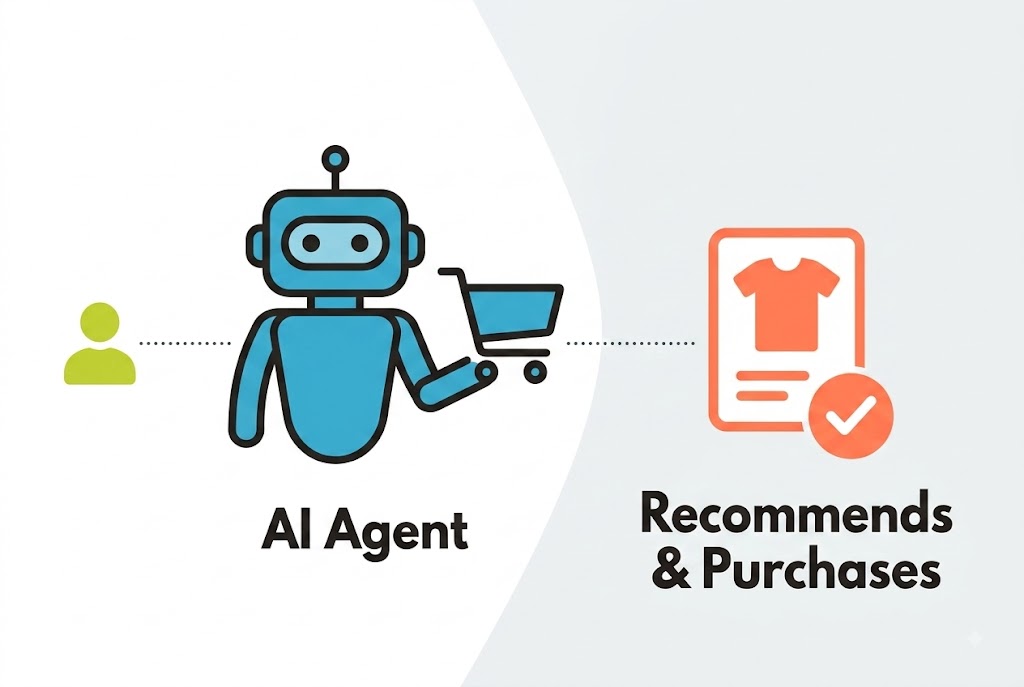
- Agentic Commerce
Agentic commerce describes an environment where AI agents act on behalf of users to research, compare, and complete purchases.
For advertisers, this makes “agent-ready” infrastructure a competitive advantage. Product feeds, Merchant Center data, inventory accuracy, pricing transparency, return policies, reviews, and structured business information all become inputs that determine whether an AI agent can confidently recommend or complete a purchase on behalf of a user.
- Zero-Click Dominance
Zero-click behavior occurs when users receive complete answers directly within a platform, such as a search engine or AI assistant, without needing to click through to an external website.
As AI adoption accelerates, answer engines powered by large language models (LLMs) and retrieval-augmented generation (RAG) increasingly generate these direct responses, reducing reliance on traditional search results.
Advertising is therefore shifting toward sponsored placements within AI-generated answers, where brands are surfaced as recommended solutions rather than clickable links. This changes the primary objective from driving traffic to establishing authority and relevance within AI-generated outputs.
These shifts indicate that competitive advantage in PPC will depend less on manual optimization and more on the ability to provide structured, high-quality signals that AI systems can interpret and prioritize within automated decision environments.
Final Thoughts
To stay competitive in the 2026 PPC landscape, advertisers should focus on the following:
- Ensure conversion tracking is flawless, as AI performance depends entirely on the quality of data inputs.
- Balance one intent-driven platform (like Google Ads) with one discovery platform (like Meta or TikTok).
- Provide structured data and build brand authority to ensure AI assistants recommend your business in zero-click environments.
- Move away from generic automated messaging and use personalized, authentic content to improve engagement.
- Regularly check for budget waste in low-quality automated placements, such as mobile apps or irrelevant display inventory.
- Strengthen the data layer with tools such as Server-side GTM, enhanced conversions, clean Merchant Center feeds, and AI-native creative systems like Google Asset Studio.
Frequently Asked Questions (FAQs)
Which PPC platforms are best for beginners in 2026?
For beginners, Google Ads and Meta Ads are the most practical starting points. Google Ads captures high-intent searches, while Meta Ads helps generate demand through interest-based targeting. Automated options like Performance Max can simplify setup but still require accurate tracking and quality creative inputs.
Why are my ads not appearing or getting clicks?
Issues usually stem from weak signals, such as broken conversion tracking, or restrictive targeting that prevents AI from scaling. Low click-through rates often signal a mismatch between the ad creative and user intent.
What are "Answer Engines" in advertising?
Answer engines like ChatGPT, Gemini, and Perplexity provide direct responses to users. Ads on these platforms appear as suggested solutions within a conversation rather than a list of clickable links.
Related Content
Read These Next
B2C Marketing Automation: 7 Retail Workflows That Drive Immediate Impulse Sales