.png)
Types of Media Buying: Choosing the Right Approach for Your Campaign Goals
.png)

.png)

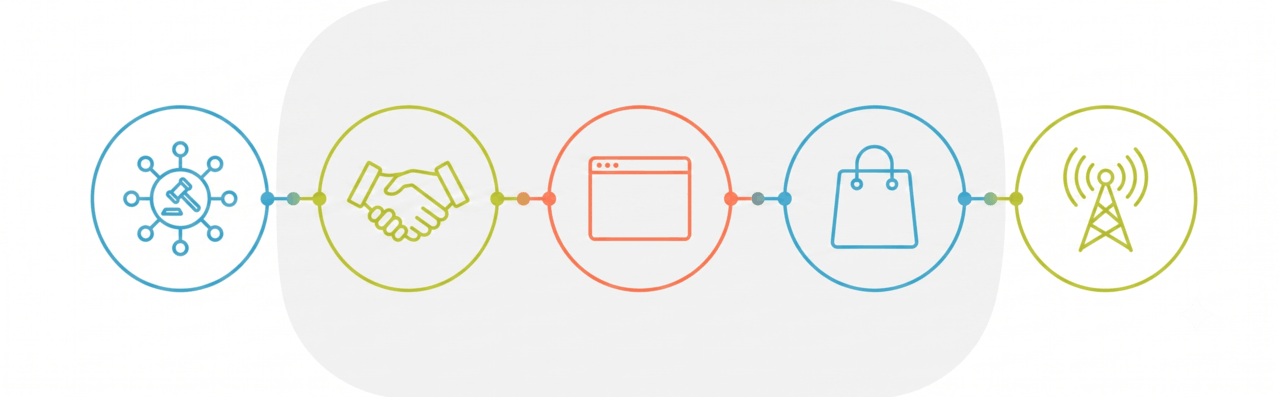
Media buying in 2026 is categorized into five primary methods: Programmatic (automated RTB), Direct (negotiated premium deals), Platform-based (Walled Gardens like Google/Meta), Retail Media (first-party shopper data), and Traditional (TV/OOH). Success requires a hybrid strategy that aligns these buying types with specific funnel goals, balancing automated scale with brand-safe, high-intent placements.
Introduction
Media buying is the process of purchasing advertising space across digital and traditional channels to reach the right audience at the right time for the best cost. Modern campaigns can use several buying methods, including automated programmatic ads, direct publisher deals, and self-serve ad platforms. Each approach offers different levels of control, targeting, and scalability.
Choosing the right type of media buying depends on the campaign goal. Awareness campaigns often require a broad reach, while performance campaigns need precise targeting and measurable conversions. Because of this, media buying is not only about where ads appear, but also about how inventory is purchased and optimized.
Industry guides explain that effective media buying aligns the buying method with objectives such as brand awareness, lead generation, or sales, while also considering budget, audience data, and available inventory (Amazon Ads, 2024; Camphouse, 2024; Dotit, 2024).
Understanding the different types of media buying helps marketers select the approach that best supports campaign performance instead of relying on one method for every situation.
Quick Comparison: Types of Media Buying
(Media buying guides: Amazon Ads, 2024; Camphouse, 2024; Dotit, 2024)
What This Guide Covers
This guide explains the different types of media buying and how each approach affects campaign performance.
This guide covers:
- What Is Media Buying
- Main Types of Media Buying
- How to Choose the Right Media Buying Approach
- Key Factors to Consider When Choosing a Media Buying Type
- Why Many Campaigns Use a Hybrid Media Buying Approach
What Is Media Buying
Media buying is the process of purchasing advertising space across digital and traditional channels to reach a specific audience at the right time and cost. The goal of media buying is to place ads where they are most likely to generate results, whether the objective is brand awareness, lead generation, or sales.
Modern media buying can happen through different methods. Some campaigns use automated systems that buy ad space in real time, while others involve direct negotiation with publishers or manual setup through advertising platforms. The method used affects targeting accuracy, cost, control, and how easily a campaign can scale.
Unlike media planning, which focuses on strategy, media buying focuses on execution. It involves selecting the platform, choosing the pricing model, managing bids, and optimizing placements while the campaign is running.
Advertising guides describe media buying as a balance between reach, efficiency, and control. The best approach depends on campaign goals, available budget, audience data, and how much flexibility the advertiser needs Amazon Ads, 2024; Camphouse, 2024).
Because modern campaigns run across multiple channels, marketers often use different types of media buying instead of relying on only one method.
Main Types of Media Buying
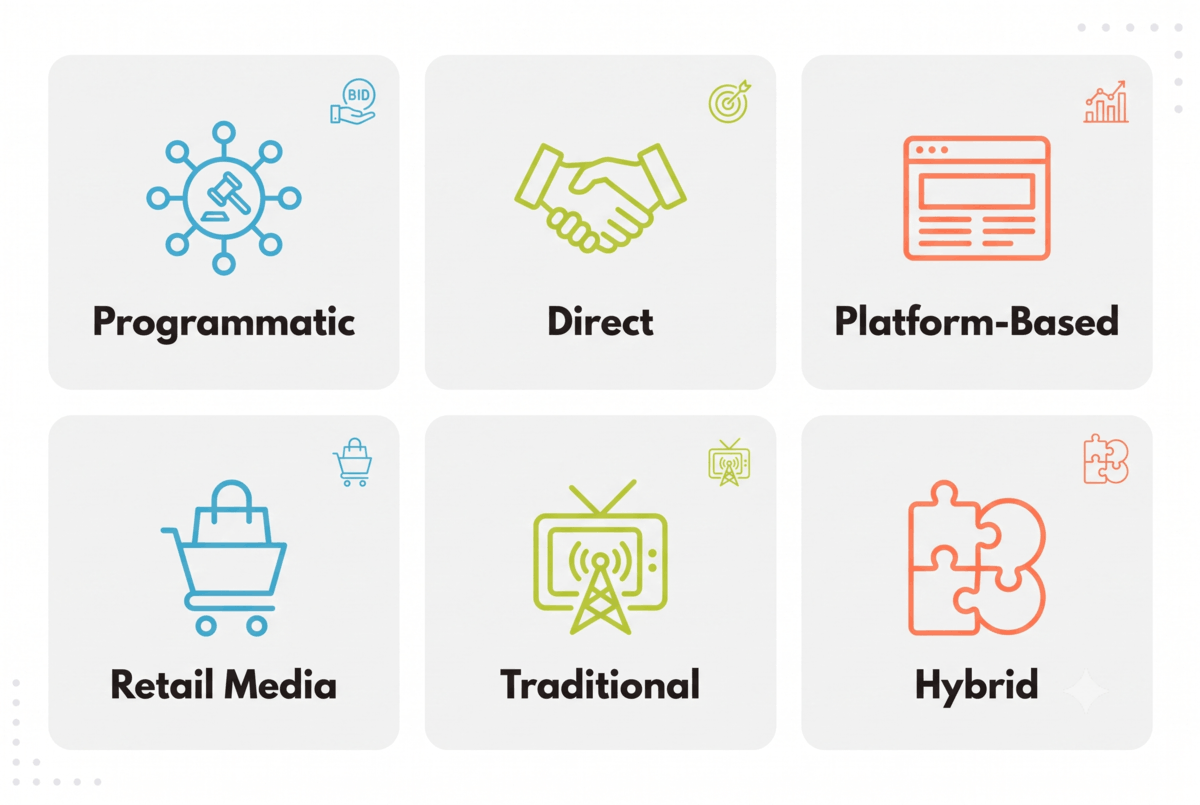
Media buying can be done in several ways, and each approach works best for different campaign goals. The most common types include programmatic buying, direct buying, platform-based buying, traditional media buying, and hybrid buying.
Programmatic Buying
Programmatic buying uses automated systems to purchase ad space through real-time auctions. Instead of choosing specific websites manually, advertisers target user profiles based on data such as behavior, interests, or demographics.
This method uses demand-side platforms (DSPs) and real-time bidding (RTB) to show ads to the most relevant audience at the moment an impression becomes available. Because bidding happens automatically, campaigns can scale quickly and adjust performance in real time.
Programmatic buying is often used for performance campaigns, retargeting, and large-scale awareness campaigns because it allows precise targeting and flexible budgets (Amazon Ads, 2024; Dotit, 2024).
Direct Buying
Direct buying is a traditional method where advertisers negotiate directly with publishers to secure ad placements. Instead of bidding in an auction, the advertiser agrees on a fixed price, usually based on cost per thousand impressions (CPM) or a sponsorship deal.
This approach gives more control over where ads appear and is often used for premium placements, brand campaigns, or partnerships with well-known websites, TV networks, or publications.
Direct buying usually costs more than automated buying but provides better control, predictable pricing, and stronger brand safety because the advertiser knows exactly where the ad will be shown (Camphouse, 2024; Havas Edge, 2024).
Platform-Based Buying
Platform-based buying refers to running ads directly through advertising platforms such as Google Ads, Meta Ads, LinkedIn Ads, or TikTok Ads. These platforms allow advertisers to create campaigns, choose audiences, set budgets, and track performance without negotiating with publishers.
This type of buying is common for performance marketing because it supports targeting based on search intent, interests, or demographics. Pricing models often include cost per click (CPC), cost per acquisition (CPA), or cost per thousand impressions (CPM).
Platform-based buying gives high control and detailed analytics, which makes it popular for lead generation, ecommerce, and conversion-focused campaigns (Dotit, 2024).
Retail Media Buying
Retail media buying refers to purchasing ad placements within ecommerce platforms or retailer-owned ecosystems where ads are shown close to the point of purchase. Instead of targeting users across the open web, advertisers reach shoppers directly on platforms where buying intent is already high.
Retail media networks use first-party purchase and browsing data to target users based on real shopping behavior, such as past purchases, search queries, or product views. This makes it highly effective for conversion-driven campaigns and product visibility.
Examples of retail media networks include Amazon Advertising, Walmart Connect, and eBay Ads. These platforms allow brands to promote products within search results, product pages, and sponsored listings.
Retail media buying is commonly used for ecommerce growth, marketplace visibility, and lower-funnel performance campaigns because it connects advertising directly to sales outcomes.
Traditional Media Buying
Traditional media buying includes purchasing advertising space in television, radio, print, outdoor, or sponsorship placements. These campaigns usually focus on broad reach rather than precise targeting.
Traditional buying often uses fixed pricing and scheduled placements instead of real-time bidding. Because of the cost and limited targeting, it is commonly used for large awareness campaigns or when the goal is to reach a wide audience quickly.
Even though digital advertising is growing, traditional media buying is still used for brand campaigns, product launches, and national advertising (Amazon Ads, 2024).
Hybrid Media Buying
Many campaigns use a combination of buying methods instead of relying on only one. This approach is often called hybrid media buying.
For example:
- programmatic buying for scale
- direct buying for premium placements
- platform ads for conversions
- retail media for verified purchase
- traditional media for awareness
Using multiple buying types allows marketers to balance reach, control, and performance. Industry guides note that hybrid strategies are common because different channels serve different roles in the marketing funnel (Dotit, 2024; Camphouse, 2024).
Choosing the right mix depends on campaign goals, budget, and how much targeting precision is required.
How to Choose the Right Media Buying Approach
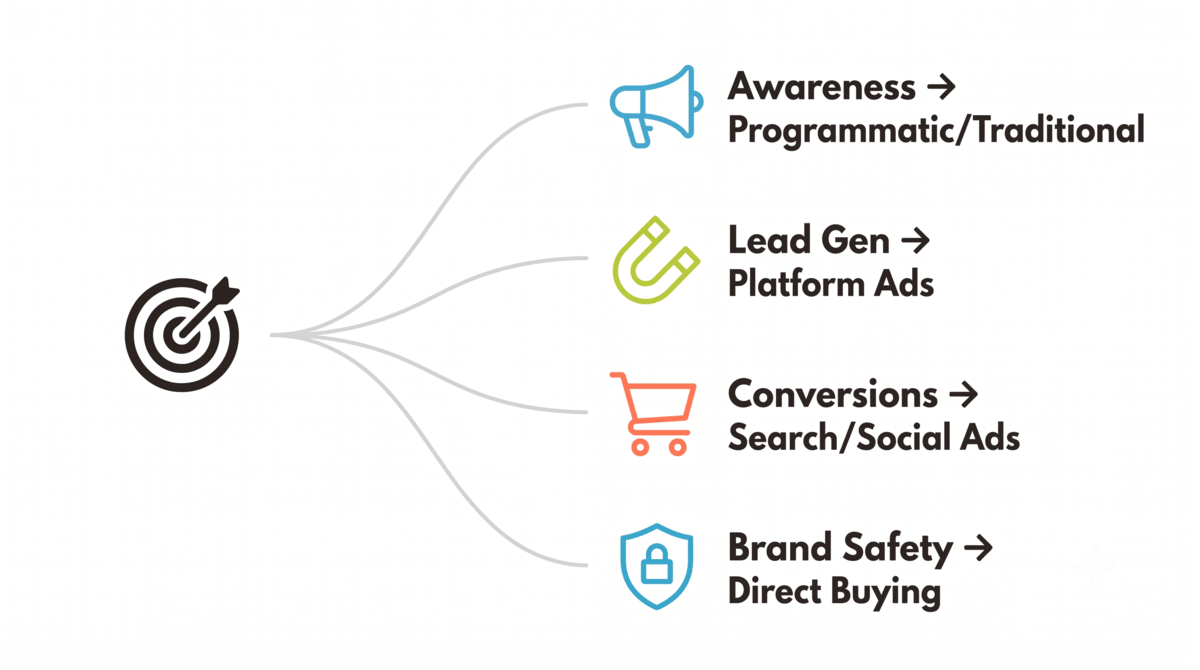
Choosing the right type of media buying depends on the goal of the campaign, the audience being targeted, and how performance will be measured. Different buying methods are designed for different objectives, so using the wrong approach can increase costs or reduce results.
Some campaigns need maximum reach, while others require precise targeting or strict control over placements. Because of this, media buying should be selected based on the outcome the campaign is expected to produce, not only on cost or platform preference.
Industry guides explain that effective media buying aligns the buying method with campaign goals such as awareness, lead generation, conversions, or premium placement, while also considering budget and scalability (Amazon Ads, 2024; Dotit, 2024).
Choosing the right media buying type by campaign goal
Programmatic buying is often used when scale and targeting are important. Because ads are purchased automatically, campaigns can reach large audiences while adjusting bids in real time.
Direct buying is usually chosen when control matters more than scale. Brands that need specific placements, sponsorships, or guaranteed impressions often use this method.
Platform-based buying works well for performance campaigns because it allows advertisers to target users based on search intent, interests, or behavior while tracking conversions inside the platform.
Traditional media buying is commonly used when the goal is mass awareness rather than precise targeting, especially for national campaigns or product launches.
In practice, many advertisers combine several buying methods to balance reach, efficiency, and control instead of relying on a single approach (Camphouse, 2024; Dotit, 2024).
Selecting the right type of media buying helps campaigns stay efficient, scalable, and aligned with business goals.
Key Factors to Consider When Choosing a Media Buying Type
Selecting the right media buying approach depends on several practical factors, not only the campaign goal. Budget size, targeting needs, level of control, and scalability all affect which buying method will perform best. A strategy that works for one campaign may not work for another if these conditions change.
Industry guides note that media buying decisions should balance efficiency, reach, and control while making sure the buying method matches the campaign objective and available resources.
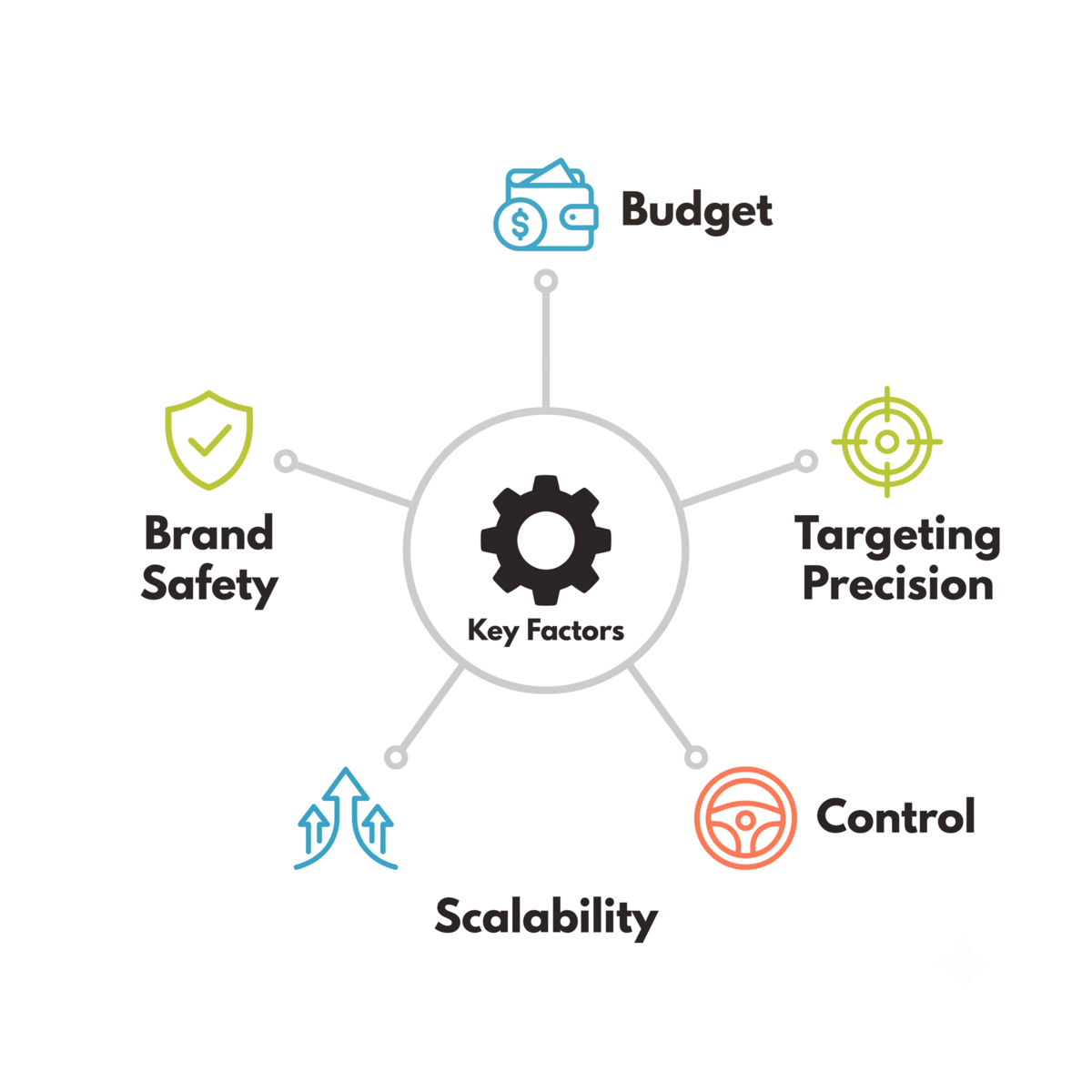
Important factors to consider include:
Budget and cost structure
Different buying types use different pricing models.
Programmatic and platform ads often allow flexible budgets, while direct buying and traditional media usually require fixed costs.
- Programmatic → flexible, auction-based pricing
- Platform ads → CPC / CPA / CPM options
- Direct buying → fixed CPM or sponsorship
- Traditional media → fixed placement cost
Campaigns with limited budgets often use platform or programmatic buying because spending can be adjusted quickly.
Audience targeting precision
Some campaigns require very specific targeting, while others only need broad reach.
- Programmatic → behavioral and data targeting
- Platform ads → demographic / interest / intent targeting
- Direct buying → context-based targeting
- Traditional media → broad audience reach
Performance campaigns usually need precise targeting, while awareness campaigns may focus on reach instead of accuracy.
Level of control over placements
Control is important when brand safety, context, or premium positioning matters.
- Direct buying gives the highest control
- Platform ads allow moderate control
- Programmatic offers less placement control but more automation
- Traditional media gives fixed placement but limited targeting
Brands that need guaranteed placements often prefer direct deals with publishers.
Scalability and speed
Some buying methods are easier to scale than others.
- Programmatic → high scalability
- Platform ads → scalable with budget increase
- Direct buying → limited scale
- Traditional media → slow to change once booked
Campaigns that need fast testing or frequent optimization usually rely on automated buying methods.
Brand safety and context
Where an ad appears can affect how the brand is perceived.
Some advertisers prefer guaranteed placements instead of automated auctions.
Direct buying and private marketplace deals are often used when brand safety is critical, while programmatic buying may require additional filters to control placement (Dotit, 2024).
Why Many Campaigns Use a Hybrid Media Buying Approach
In practice, most campaigns do not rely on only one type of media buying. Different buying methods serve different purposes, so advertisers often combine programmatic, direct, platform, and traditional buying to balance reach, control, and performance.
For example, a campaign may use programmatic buying to reach large audiences, platform ads to drive conversions, and direct buying to secure premium placements on trusted publishers. This combination allows marketers to run awareness, consideration, and conversion campaigns at the same time instead of depending on a single channel.
Hybrid media buying is common because each method has limitations. Automated buying provides scale but less control, while direct buying offers control but less flexibility. Using multiple approaches helps reduce risk and improve efficiency across the full campaign cycle (Amazon Ads, 2024; Camphouse, 2024).
Modern advertising strategies often treat media buying as a system rather than one decision. The goal is not to choose one method, but to select the right mix based on campaign objectives, budget, and targeting needs.
Conclusion
Media buying is not a single method but a set of approaches used to place ads in the right channel, at the right time, and for the right cost. Programmatic buying, direct buying, platform ads, and traditional media each offer different advantages depending on campaign goals, budget, and targeting needs.
Choosing the correct buying type helps improve efficiency, control, and scalability. Many campaigns use a hybrid approach, combining multiple buying methods to balance reach, performance, and brand safety. Understanding these differences makes it easier to select the strategy that fits the objective instead of using the same approach for every campaign.
FAQs
What are the main types of media buying?
The most common types are programmatic buying, direct buying, platform-based buying, traditional media buying, and hybrid buying.
What is programmatic media buying?
Programmatic buying uses automated systems and real-time bidding to purchase ad space based on audience data.
What is direct media buying?
Direct buying is when advertisers negotiate placements directly with publishers to secure specific inventory.
Which media buying type is best for performance campaigns?
Platform ads and programmatic buying are commonly used because they allow precise targeting and measurable results.
Why do many campaigns use hybrid media buying?
Using multiple buying methods helps balance reach, control, and performance across different campaign goals.
Does the media buying type affect campaign cost?
Yes. Different buying methods use different pricing models, which can affect efficiency, scalability, and return on ad spend.
Read These Next
AI Marketing Automation: How to 10x Your Output with Machine Learning