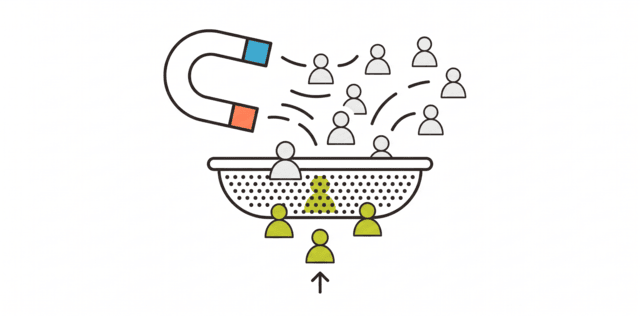
.png)
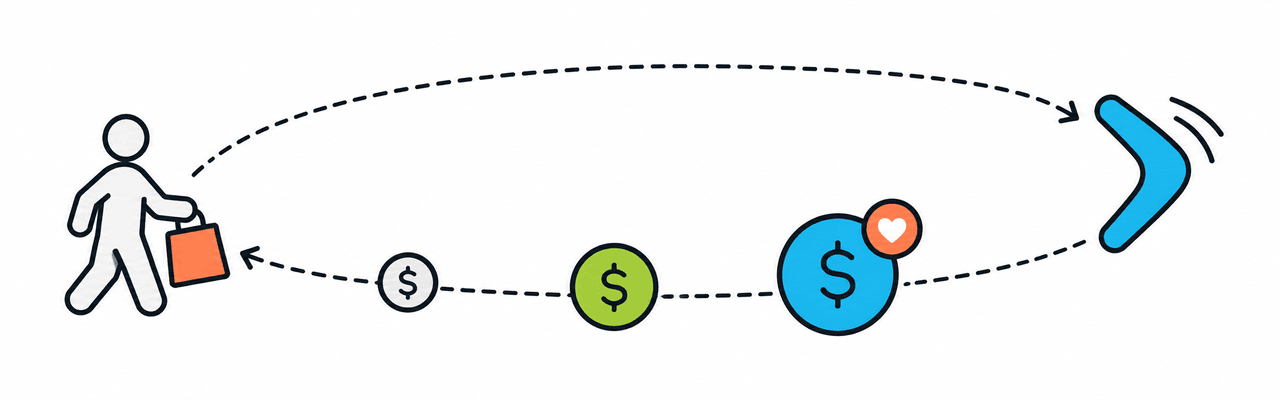
What is Retention Marketing? - The 2026 Guide to Customer-First Growth
.png)

.png)

Snapshot
Retention marketing is a strategy that encourages existing customers to keep buying from your business. It uses channels like email, SMS, and push notifications to re-engage customers, reduce churn, increase Customer Lifetime Value (CLV), and lower Customer Acquisition Costs (CAC) by making the most of your existing customer base.
Introduction
Most marketing budgets are built around acquisition. Getting new customers in the door is measurable, familiar, and easy to justify. But the customers already in your database, the ones who have purchased, browsed, and engaged, are often the most overlooked growth lever available.
Retention marketing is the discipline of keeping those customers active. It is not a single campaign or a loyalty program. It is a structured system of communication, segmentation, and timing designed to increase the probability that a customer buys again, engages more deeply, and stays longer.
The case for investing in retention has strengthened as the cost of acquisition has risen. A returning customer costs less to influence and delivers far more lifetime value than a new one. With paid media costs increasing across platforms and third-party targeting becoming less reliable due to privacy changes, brands that have built strong retention systems are insulated in ways that acquisition-first brands are not.
In 2026, AI-driven automation has changed how retention programs are built and managed. Trigger sequences that once required manual setup can now respond to real-time behavioral signals. Modeled audiences replace cookie-dependent segments. The fundamentals of retention have not changed, but the infrastructure behind them has.
What This Guide Covers
- What retention marketing is and how it works as a system
- How it differs from acquisition marketing in strategy, cost, and outcome
- The key components of a retention strategy and when to use each
- Metrics that matter and what realistic performance looks like
- Where retention systems break and what to account for
What Is Retention Marketing?
What does retention marketing actually mean?
Retention marketing is the practice of re-engaging existing customers through structured campaigns designed to drive repeat purchases, reduce churn, and increase lifetime value. It operates after the first transaction and across the full post-purchase lifecycle.
Customer retention marketing keeps your hard-earned customers active and buying again. It is not about pushing promo codes. It is about showing up with the right message, at the right time, in the right channel.
The channels most commonly used in retention programs are email, SMS, push notifications, and in-app messaging. Each channel serves a different function depending on where the customer is in their lifecycle. Email handles longer nurture sequences and post-purchase education. SMS is used for high-urgency triggers like cart abandonment or time-sensitive offers. Push notifications re-engage mobile users in real time. The most effective retention programs use these channels together, not in isolation.
The typical retention triggers include post-purchase onboarding, browse and cart abandonment, win-back flows, and loyalty and referral communications. These triggers are not arbitrary. Each one corresponds to a measurable drop-off point in the customer journey where the probability of churn increases without intervention.
Retention Marketing vs. Acquisition Marketing
How is retention different from acquisition marketing?
Acquisition marketing targets people who have not yet purchased. Retention marketing targets people who have. The difference is not just in audience, it is in cost structure, messaging strategy, and expected return.
Acquiring a new customer requires building awareness, establishing trust, and overcoming purchasing inertia, all of which consume budget. Retaining an existing customer starts from a position of established trust, which reduces the cost of conversion significantly. Industry benchmarks commonly place the cost of acquiring a new customer at five to seven times the cost of retaining one, though this varies considerably by industry, channel, and average order value.
The two strategies are not in competition. Acquisition fills the top of the funnel. Retention extracts value from it. A brand that invests heavily in acquisition without a retention system is continuously replacing customers it has already paid to acquire. Retention marketing keeps your hard-earned customers active and buying again. When done well, it stabilizes revenue, lowers churn, and compounds the return on every acquisition dollar you have already spent.
Key Components of a Retention Strategy
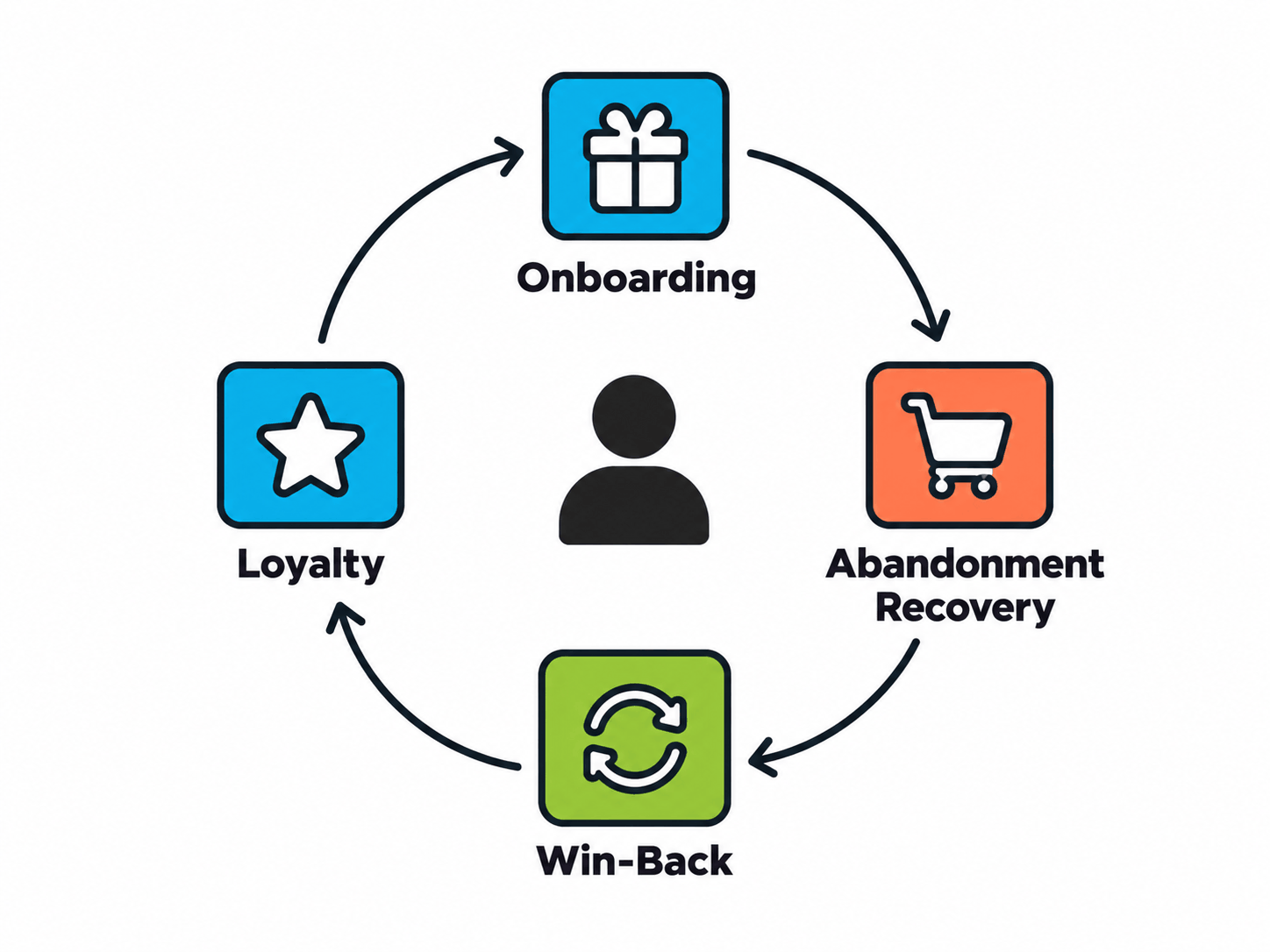
What makes up a retention marketing system?
A retention strategy is not a single campaign. It is a set of interconnected programs that address different stages of the post-purchase lifecycle. The components work together: onboarding reduces early churn, win-back flows recover lapsed customers, and loyalty programs reinforce the habit of repeat purchase.
Post-purchase onboarding sets expectations, reduces buyer's remorse, and introduces the customer to the full range of what the brand offers. For subscription products, this sequence is critical. For one-time purchases, it creates the conditions for a second transaction.
Abandonment recovery captures customers who showed intent but did not convert. Cart abandonment rates typically range from 60 to 80 percent across ecommerce categories. An automated, multi-touch abandonment sequence can recover 5 to 15 percent of those sessions, depending on timing, channel, and offer.
Win-back campaigns target customers who have gone inactive. The definition of inactive varies by purchase frequency. For a brand with a 30-day repurchase cycle, a customer who has not bought in 60 days may already be at risk. For a brand with a 90-day cycle, the threshold is different. Win-back campaigns should be triggered by relative inactivity, not fixed time windows.
Loyalty programs provide structural incentives for repeat purchases. Points, tiers, and exclusive access rewards are the most common formats. Their effectiveness depends on the reward being meaningful relative to the purchase frequency. A loyalty program that takes two years to reach the first meaningful reward will not change behavior.
The components above form a system. A customer who receives a strong onboarding experience is less likely to need a win-back campaign later. A loyalty program that rewards engagement reduces the cost of every subsequent retention touchpoint. Performance is a function of how well these pieces are connected, not how well any single piece performs in isolation.
Retention Marketing Metrics
What metrics should you track in a retention program?
The primary metrics in retention marketing are retention rate, repeat purchase rate, customer lifetime value, and churn rate. Each measures a different dimension of the same problem.
Retention rate measures the percentage of customers who remain active over a defined period. The standard formula is: (customers at the end of the period minus new customers acquired) divided by customers at the start of the period, multiplied by 100. For example, if your 90-day retention rate is 70%, it means 7 out of 10 customers are still buying or engaging three months later. The remaining 30% represent churn.
Repeat purchase rate measures the percentage of your customer base that has made more than one purchase. For most e-commerce businesses, this number sits between 20 and 40 percent. Moving it by even 5 percentage points has a compounding effect on revenue.
Customer lifetime value (CLV) is the total revenue a customer is expected to generate over their relationship with a brand. It is the most important metric in retention marketing because it contextualizes acquisition cost. If your average CLV is $200 and your cost to acquire is $80, the economics are sustainable. If your CLV is $90, they are not.
These ranges vary significantly by industry, price point, and purchase frequency. They are reference points, not targets. What constitutes good performance depends on your acquisition cost, margin structure, and customer base.
The Role of Data and Identity in Retention
Why does customer data quality affect retention performance?
Retention programs are only as accurate as the data behind them. A win-back campaign sent to the wrong person at the wrong time does not just fail; it creates a negative signal that can damage deliverability and brand perception.
Strong retention relies on knowing exactly who your customers are, not just what they did last session. Identity resolution makes that possible by unifying every customer interaction across devices and channels into a single, accurate profile.
The shift away from third-party cookies has made a first-party data strategy a prerequisite for effective retention. Brands that built their retention programs on third-party audience data have had to rebuild them. The most durable retention strategies are built on first- and zero-party data: information that customers willingly share through purchase histories, sign-ups, and on-site interactions. It is compliant, privacy-safe, and future-proof.
AI-driven automation has extended what is possible with this data. Predictive churn models can now identify at-risk customers before they go inactive. Behavioral triggers respond to real-time signals rather than batch-scheduled sends. Personalization at scale, which previously required significant engineering investment, is now accessible through most enterprise customer engagement platforms like Klaviyo, Attentive, Braze, or HubSpot.
The constraint is data quality, not technology. Automated systems amplify whatever signals they are fed. If customer profiles are incomplete, duplicated, or outdated, the automation will surface the wrong message to the wrong person at the wrong time. Data hygiene is not a technical maintenance task. It is a retention performance variable.
What Challenges Do Retention Systems Face?
What causes retention programs to underperform?
Retention programs fail in predictable ways. The most common failure modes are attribution errors, channel dependency, and campaign fatigue.
Attribution errors occur when retention programs are measured against last-touch models. Email marketing is frequently over-credited in last-touch attribution because it is the final touchpoint before purchase. A customer who was already going to repurchase will often open a retention email before doing so. The email receives credit that belongs to brand equity, product satisfaction, or prior touchpoints. This creates a distorted picture of what is actually driving retention.
Channel dependency is the risk of building a retention program entirely on a single channel. Email programs that rely on inbox placement for all revenue are exposed to deliverability fluctuations. Deliverability directly determines how much revenue your retention program recovers. Weak deliverability erodes sender reputation and gradually pushes even good campaigns into low-visibility folders. A retention system that spans email, SMS, and push is more resilient than one built on email alone.
Campaign fatigue emerges when customers receive too many messages with too little relevance. Open rates decline, unsubscribes increase, and the audience shrinks over time. Frequency and relevance are in tension. The solution is not to send less universally, but to segment more precisely so that each customer receives messages calibrated to their behavior and lifecycle stage.
Signal loss is an increasingly significant constraint. As platforms limit data sharing and browsers restrict tracking, the behavioral signals that power automated triggers become less reliable. Modeled conversions and privacy-preserving measurement tools reduce the impact but do not eliminate the gap. Retention programs built in 2026 need to account for incomplete data as a structural condition, not an anomaly.
AI and Automation in Retention Marketing
How is AI changing retention marketing operations?
AI has shifted retention marketing from a campaign-based model to a continuous engagement model. The difference is that campaigns are scheduled and batch-driven, while continuous engagement responds to real-time behavior.
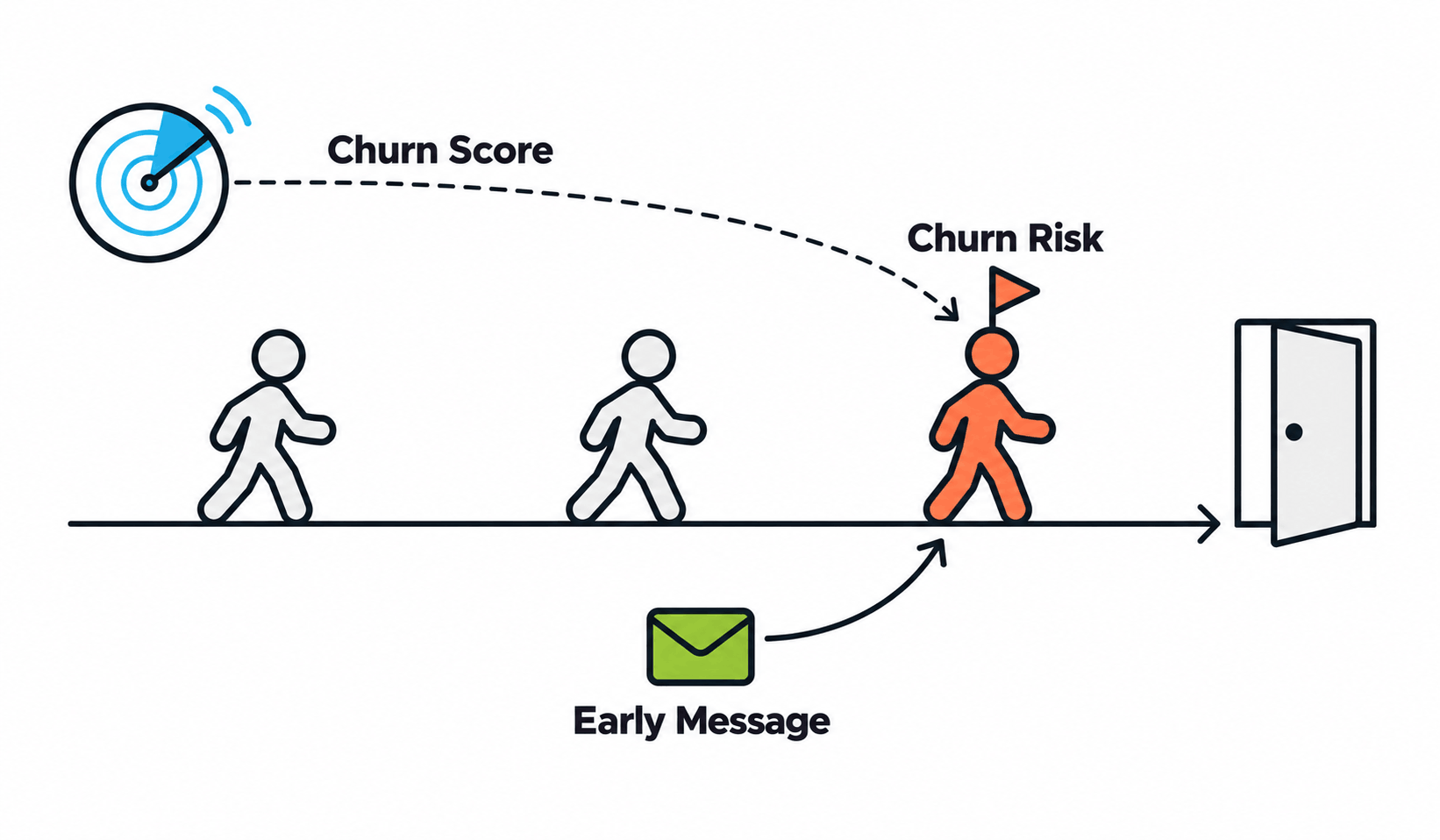
Predictive churn scoring uses historical purchase patterns, engagement signals, and demographic data to assign each customer a probability of churning within a defined window. Customers above a threshold are automatically enrolled in re-engagement sequences. This allows brands to intervene before churn occurs rather than after.
Automated send-time optimization adjusts when each message is delivered based on when individual customers have historically engaged. This has a measurable effect on open and click rates, typically in the range of 5 to 15 percent improvement, though the impact diminishes when the majority of sends are already AI-optimized, and gains compress toward a ceiling.
Generative AI tools are now widely used for personalization at scale, producing subject line variants, product recommendation copy, and message content tailored to individual customer segments. The operational risk is over-reliance on generated content without human review. Automated content that is technically personalized but tonally off-brand can erode trust faster than generic content.
The underlying constraint remains the same across all AI applications in retention: model quality is bounded by data quality. AI systems trained on noisy or biased data will produce outputs that reflect those problems at scale.
FAQs
What is the difference between retention marketing and loyalty marketing?
Retention marketing encompasses all activity aimed at keeping customers active and reducing churn, including email flows, win-back campaigns, and behavioral triggers. Loyalty marketing is a subset of retention that uses structured reward programs, points, and tiers to incentivize repeat purchase. All loyalty marketing is retention marketing, but not all retention marketing involves a loyalty program.
What is a good customer retention rate?
Retention rate benchmarks vary significantly by industry and business model. SaaS businesses typically target monthly retention rates above 95 percent. Ecommerce businesses have more variability, with 90-day retention rates commonly ranging from 25 to 45 percent. What matters most is whether your retention rate is improving relative to your own historical baseline, not whether it matches an industry average.
How do you measure the ROI of retention marketing?
The clearest measure is the revenue generated by repeat customers relative to the cost of the campaigns that drove their reactivation. A more complete picture includes the reduction in acquisition spend required when retention improves, since a higher retention rate means fewer customers need to be replaced. CLV relative to customer acquisition cost is the most useful long-term ratio.
When should a company prioritize retention over acquisition?
Retention becomes a priority when acquisition costs are rising faster than revenue, when repeat purchase rates are declining, or when CLV is below three times the cost of acquisition. For most businesses at scale, retention and acquisition should run in parallel. The allocation shift toward retention typically makes sense after the brand has established consistent acquisition channels and wants to improve margin.
What channels work best for retention marketing?
Email remains the highest-volume channel for most retention programs due to low incremental cost and strong segmentation capability. SMS performs well for high-urgency triggers like cart abandonment where speed matters. Push notifications are effective for mobile-first products. The most resilient programs use at least two channels so that deliverability issues or audience fatigue in one do not collapse the entire program.
How does privacy regulation affect retention marketing?
Privacy regulations like GDPR in Europe and the Australian Privacy Act require that brands obtain and document consent before using customer data for marketing communications. For retention programs, this means list hygiene and consent management are not just compliance requirements but operational foundations. Sending to unconsented contacts increases spam complaints, damages deliverability, and creates legal exposure. First-party data collected through opt-in mechanisms is both the most compliant and the most performant starting point for retention programs.
Conclusion
Retention marketing is not a campaign type. It is a system that extracts compounding value from customers a brand has already acquired. The fundamentals, post-purchase communication, abandonment recovery, win-back flows, and loyalty reinforcement, are consistent across industries and business models. What changes is the sophistication of the data behind them and the automation that executes them.
In 2026, the operational advantage belongs to brands that have built retention systems on clean first-party data, multi-channel delivery, and predictive automation. The technology to do this is widely accessible. The limiting factor is almost always data quality and the willingness to segment precisely rather than send broadly.
The question is not whether retention marketing works. The evidence on CLV, churn reduction, and margin improvement is consistent across the research. The question is whether the infrastructure behind your retention program is accurate enough to act on at scale.
Related Content
Read These Next
Email Marketing Automation Strategy: How to Build High-Converting Email Funnels