.png)
.png)
Programmatic Media Buying: How to Automate Your Way to Better Ad Placements
.png)

.png)

Programmatic media buying is the AI-driven automation of purchasing digital ad space in real time. Using Demand-Side Platforms (DSPs), advertisers bid on individual impressions based on audience data rather than buying bulk inventory manually. This process enables precise targeting across Display, Video, and Connected TV (CTV) while optimizing for ROI in milliseconds.
Introduction
Programmatic media buying is the automated process of purchasing digital advertising using software, audience data, and real-time bidding instead of manual negotiations. It allows advertisers to place ads across multiple platforms efficiently, optimize targeting in real time, and scale campaigns faster than traditional media buying methods.
According to Adobe’s programmatic advertising guide (2024), automation makes it possible to manage large volumes of ad inventory while optimizing targeting and performance at the same time. In our audits of digital campaigns, programmatic buying is often used to scale placements across multiple channels without increasing manual work, but results still depend on correct setup, data quality, and campaign strategy. In 2026, this also depends on how well campaigns adapt to a privacy-first landscape, including cookieless tracking and frameworks like Privacy Sandbox.
This guide explains how programmatic media buying works, the components involved, how to get started, and the best practices for improving ad placements using automation.
What This Guide Covers
This guide explains how programmatic media buying works. It covers the basic process, the main components of programmatic systems, how to get started, and the best practices for running efficient campaigns.
This guide includes:
- What Is Programmatic Media Buying
- How Programmatic Ad Buying Works (Step-by-Step)
- Essential Components of Programmatic Advertising
- How Programmatic Works Without Third-Party Cookies
- Getting Started With Programmatic Advertising
- Pros and Cons of Programmatic Media Buying
What Is Programmatic Media Buying?
Programmatic media buying is the automated purchase of digital ads using software, data, and real-time bidding, allowing advertisers to target audiences and optimize placements instantly without manual negotiations. In 2026, it relies on first-party data, contextual signals, and AI-driven systems.
Programmatic media buying is the automated process of purchasing digital advertising using software, audience data, and real-time bidding instead of manual negotiations between advertisers and publishers. It allows ads to be placed across websites, mobile apps, video platforms, and streaming services automatically.
Traditional media buying required direct agreements with publishers, which made large campaigns slow and difficult to manage. According to Coursera’s programmatic advertising overview (2025), programmatic ad buying uses automated systems and data analytics to improve campaign efficiency and return on investment by selecting the best ad placements in real time.
Programmatic media buying typically involves:
- automated bidding instead of manual negotiations
- real-time data used for targeting decisions
- advertising platforms that connect advertisers and publishers
- algorithms that select the best ad placement
- campaigns running across multiple digital channels
Automation improves efficiency, but performance still depends on correct setup, reliable data, and clear campaign goals. In 2026, “reliable data” refers to signal-based inputs such as first-party data (CRM, website activity), contextual signals, and modeled data rather than third-party cookie-based tracking.
How Does Programmatic Ad Buying Work Step-by-Step?
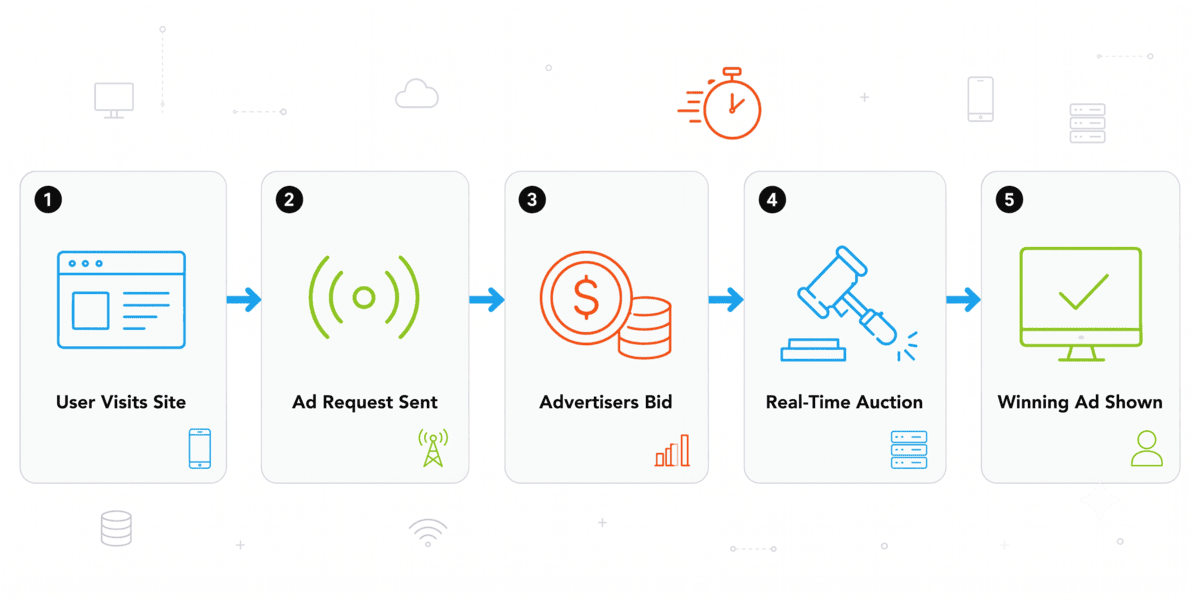
Programmatic advertising works by evaluating ad impressions in real time, using data signals and automated bidding systems to decide which ad to show. In 2026, this process relies more on AI, contextual targeting, and first-party data instead of third-party cookies.
According to Adobe’s programmatic advertising guide (2024), this process happens in milliseconds through automated auctions known as real-time bidding.
A typical programmatic ad buying flow looks like this:
User visits a website or app
When a person opens a page, the publisher makes ad space available for bidding, including display, video, or Connected TV (CTV) inventory.
Publisher sends an ad request
The website or app sends information about the user, device, and placement to the advertising system. In privacy-first environments, this may rely on contextual data instead of third-party cookies.
Advertisers bid using audience data
Advertising platforms evaluate the request and decide how much to bid based on targeting, budget, and campaign goals. In 2026, this includes first-party data and AI-modeled signals.
Auction happens in real time
The ad exchange runs an automated auction in milliseconds and selects the highest or most relevant bid. Many platforms now use AI-driven “black box” bidding systems such as Google Performance Max and Meta Advantage+.
Winning ad is displayed
The selected ad appears on the page almost instantly, without the user noticing the bidding process.
Because this process is automated, advertisers can target specific audiences, control costs, and place ads across thousands of websites at the same time. However, performance now depends on the quality of signal-based data and proper campaign setup, rather than cookie-based tracking.
What Are the Essential Components of Programmatic Advertising?
Programmatic advertising runs through a system of platforms including DSPs, SSPs, and ad exchanges, supported by data sources like first-party data and contextual targeting. These components work together to automate buying, selling, and optimization of digital ad placements.
Programmatic advertising works through a system of platforms that connect advertisers and publishers automatically.
The main components of programmatic advertising include:
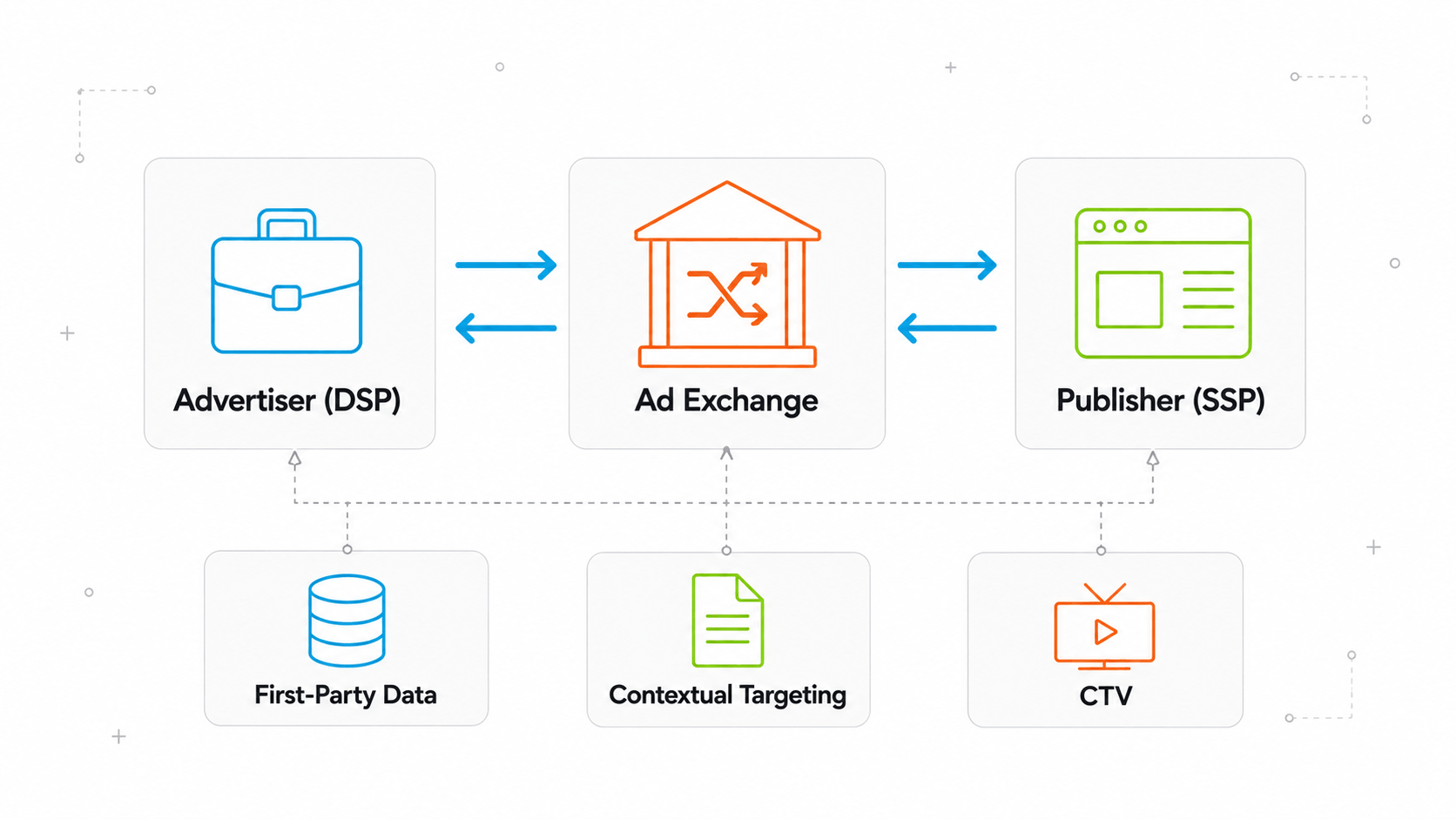
These components work together to automate the buying process, allowing ads to be placed across multiple websites and platforms without manual negotiation.
How Does Programmatic Advertising Work Without Third-Party Cookies?
Programmatic advertising now relies on alternative data and targeting methods instead of third-party cookies.
These include:
- First-party data (website visitors, CRM, app users)
- Contextual targeting (ads based on content being viewed)
- Identity solutions (hashed emails, clean rooms)
- Modeled audiences (AI predictions based on behavior patterns)
This shift is driven by privacy changes such as Privacy Sandbox and the broader move toward cookieless tracking.
How To Get Started With Programmatic Advertising?
Getting started with programmatic advertising involves choosing the right platform, defining clear campaign goals, preparing first-party data, and setting up tracking. In 2026, success depends on strong data signals and allowing AI-driven systems to optimize performance.
Programmatic campaigns are managed through advertising platforms that allow advertisers to buy ad placements automatically.
Common platform options include:
- demand-side platforms (DSPs)
- ad networks with programmatic features
- social and video advertising platforms
- retail media and marketplace ads
In 2026, many platforms rely on AI-driven campaign types such as Google Performance Max and Meta Advantage+, which automate bidding, targeting, and optimization.
Four Things to Consider When Choosing a DSP:
- Targeting options – ability to use first-party data, contextual signals, or retargeting
- Inventory access – number of websites, apps, or video platforms available
- Reporting and optimization tools – ability to track performance and adjust bids
- Integrating capabilities - Assess how seamlessly the DSP connects to your CRM and first-party data to fuel AI bidding with accurate, privacy-compliant conversion signals.
Setting Up a Programmatic Campaign
Typical setup follows these steps:
- Define the campaign goal
- Select the target audience
- Set the budget and bidding strategy
- Upload creatives and choose ad formats
- Enable tracking and reporting
In 2026, “correct setup” means having accurate conversion tracking (often server-side), strong first-party data signals, and clear campaign objectives so AI systems can optimize effectively.
What Are the Pros and Cons of Programmatic Media Buying?
Programmatic media buying offers automation, scale, and real-time optimization, but also introduces challenges such as data dependency, limited transparency in AI systems, and risks like ad fraud and low-quality inventory, requiring proper setup and monitoring to be effective.
Programmatic buying can improve performance and reduce manual work, but it requires reliable data, correct setup, and regular monitoring.
FAQs
What is programmatic media buying?
Programmatic media buying is the automated process of purchasing digital ads using software, audience data, and real-time bidding instead of manual negotiations.
How does programmatic advertising work?
Programmatic advertising works through automated auctions where advertisers bid in real time to show ads to specific users based on targeting data.
What are the main components of programmatic advertising?
The main components include advertisers, publishers, DSPs, SSPs, ad exchanges, and audience data used for targeting.
What are the benefits of programmatic media buying?
Programmatic buying allows advertisers to scale campaigns, target specific audiences, and optimize performance using automation and real-time data.
What are the risks of programmatic advertising?
Common risks include ad fraud, brand safety issues, complex setup, and wasted budget when campaigns are not configured correctly.
Related Content
Read These Next
E-commerce Marketing Automation: How to Increase Sales on Autopilot in 2026