.png)
%20(2).webp)
Ecommerce Growth Strategies: Advanced Tactics to Increase AOV and Repeat Sales in 2026
.png)

.png)

Ecommerce brands in 2026 increase Average Order Value (AOV) and repeat sales by combining AI-driven personalization, product bundling, and post-purchase upsells with real-time inventory systems and loyalty segmentation. Growth comes from capturing zero-party data, using it to personalize offers via platforms like Shopify and Klaviyo, and optimizing pricing, retention, and content for both human buyers and AI shopping agents.
Key Takeaways
- Modern growth relies on zero-party data collected through interactive tools like quizzes to create tailored shopping experiences rather than generic ads.
- Success in 2026 requires a compounding growth loop where AI-integrated systems sync warehouse stock with marketing platforms in real-time to maximize session profit.
- High-performing brands use product bundling, price anchoring, and one-click post-purchase upgrades to significantly boost AOV.
- Ecommerce sites must adopt structured data to ensure their products are discoverable and purchasable by AI shopping agents.
- While automation improves efficiency, human editors must still define the brand's unique voice to prevent the loss of emotional connection with customers
Article Overview
As customer acquisition costs rise, 2026 ecommerce success shifts toward maximizing unit economics through high-tech integration. This guide explores transitioning from manual marketing to automated systems powered by AI agents and augmented reality.
By prioritizing machine-readability and personalized data collection, brands can drive sustainable revenue through increased order values and customer loyalty.
What is the Role of AOV in Ecommerce Growth in 2026?
Average Order Value (AOV) measures customer spend, and is one of the fastest levers for improving profitability because it increases revenue without increasing acquisition spend
Successful ecommerce brands in 2026 balance the immediate revenue from a single checkout with the long-term value of a returning buyer to ensure sustainable and predictable business growth.
- Average Order Value (AOV): Average amount of money a customer spends during a single transaction. Increasing this allows higher potential earnings from the same amount of website traffic.
- Repeat Sales: Frequency with which a single customer returns to make additional purchases over time.
Traditional Marketing Approach versus Modern Growth Strategies
Modern brands have moved away from broad, expensive advertising to focus on gathering specific data directly from their customers to build more profitable, long-lasting relationships.
- Traditional Marketing strategies focused on mass-market ads and generic coupons to get as many people as possible to the checkout page. Success was measured by total site visits, and every shopper saw the same offers.
- Modern ecommerce growth has shifted from traffic-first to data-first systems. In 2026, they rely on personalization, where stores use zero-party data (information customers willingly share companies in exchange for value) to create custom shopping experiences depending on consumer needs.
This transition from mass to personal is what drives high engagement and loyalty today.
Building a Profitable Ecommerce Architecture for 2026
Transforming stagnant metrics into profit requires moving from manual campaigns to a compounding growth loop, where every purchase feeds data back into your system (email, ads, recommendations) to improve the next purchase.
This architecture works by treating every customer interaction as a signal to a predictive modeling engine, an AI-driven tool like Klaviyo AI, Meta Advantage+, or Google Performance Max predicting what users will likely to buy next. Data from this system leads to maximizing the potential profit of every customer session.
Moving from theories to results requires the implementation of real-time inventory management. Unlike legacy systems that are updated daily, this is a fully automated, AI-integrated system that syncs warehouse stock with advertising platforms in seconds.
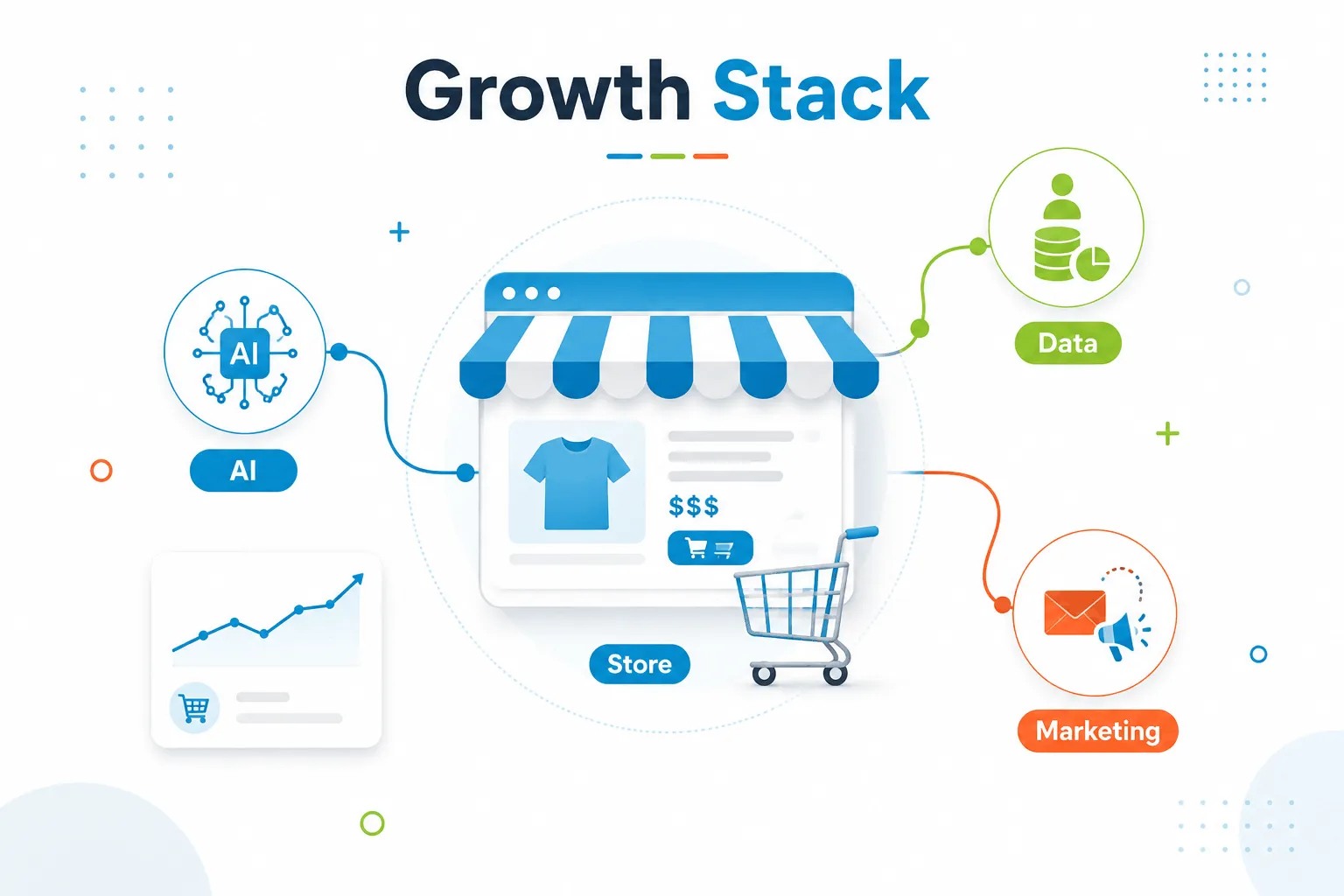
High-performing brands connect their storefront, marketing automation, data layer, and AI tools into a unified growth stack that automatically captures customer signals, personalizes experiences, and drives both higher order values and repeat purchases.
The table below outlines the core stack used by modern ecommerce brands:
Core Ecommerce Growth Stack
How to Scale Ecommerce Revenue: Advanced Tactics for AOV and Customer Retention
The following guides provide actionable frameworks for deploying AI-driven personalization, automated inventory triggers, and spatial commerce tools to maximize the profit generated from every visitor and secure long-term brand loyalty.
1. Boost Order Value with Bundles and Smart Pricing
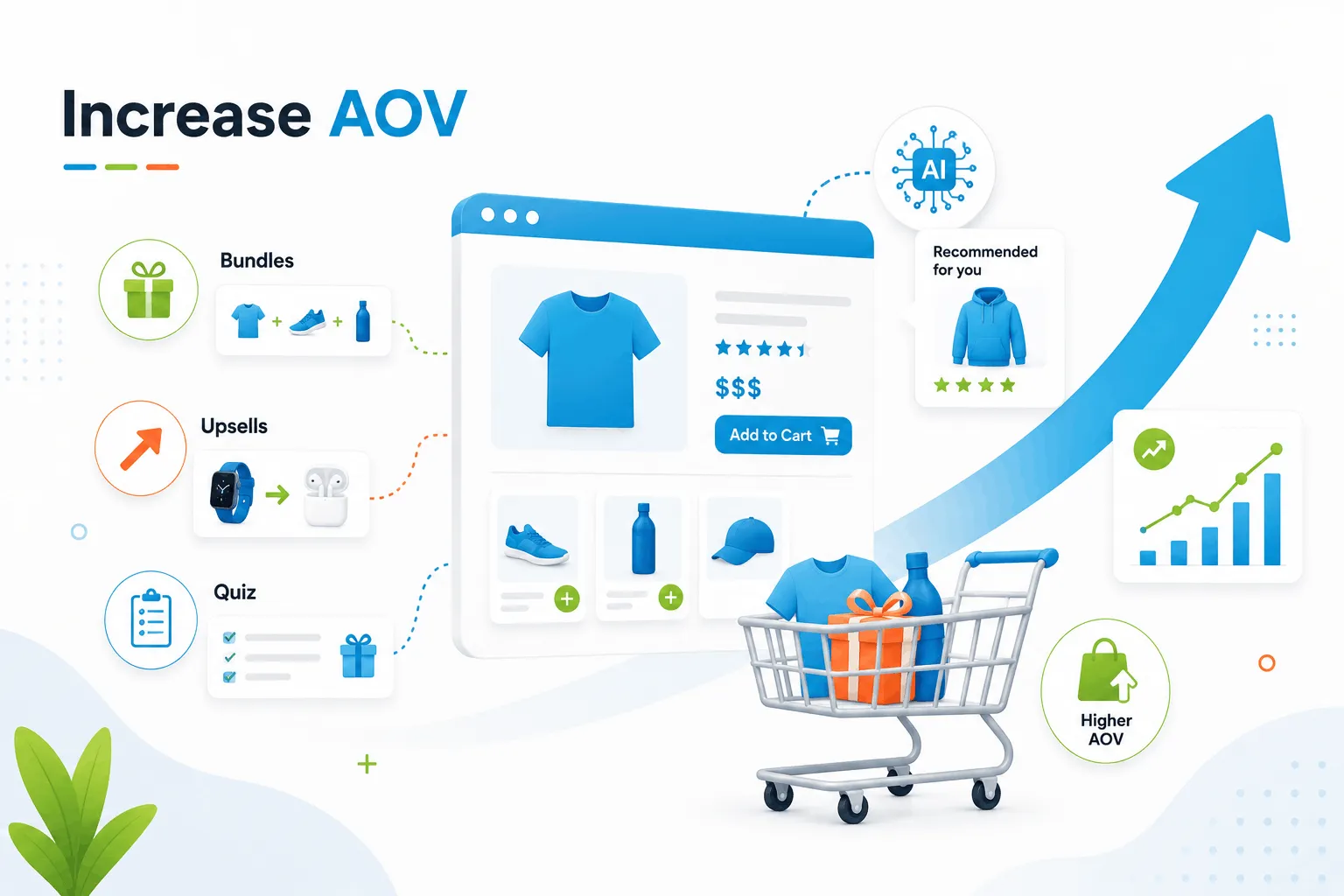
Bundling is grouping related items into a single kit to simplify the shopping process. It often utilizes price anchoring, a psychological method where a store shows a premium option next to a lower-priced one to make the upgrade feel like a small, high-value step.
For instance, L’Oréal UK increased AOV by 134% using diagnostic quizzes to capture zero-party data and deliver personalized product bundles in real time. Instead of showing generic products, the quiz asked users about their skin type and concerns to provide a recommended tailored skincare routine with bundled items that could be purchased immediately. This shifted the user experience by aligning recommendations with individual needs and reducing decision friction.
2. Maximize Retention Using Predictive AI and Loyalty Data
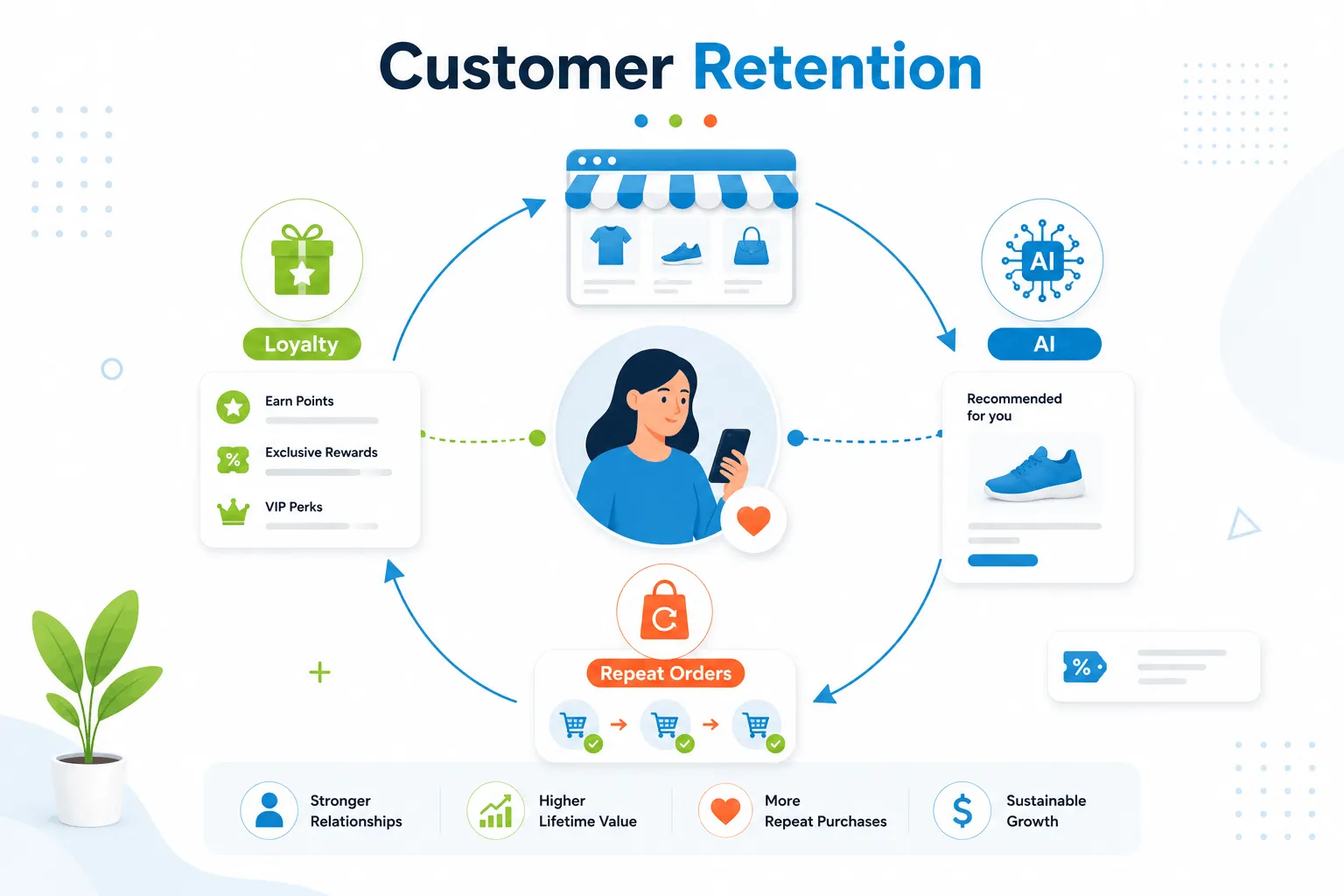
Retention strategies in 2026 leverage behavioral AI to predict customer loss before it happens, using shared personal data and exclusive brand communities to transform one-time shoppers into high-value, long-term advocates.
- Cultivate Communities through Zero-Party Data: Instead of generic rewards, use data from quizzes and surveys to place customers into specific lifestyle tiers. For instance, a sports brand can use zero-party data to identify marathon runners and invite them into an exclusive digital community that offers tailored training advice and early access to long-distance gear.
- Build Personalized Loyalty Offers: Use loyalty programs to send customized offers ensures that customers only see what they actually want to buy.
For example, Beardbrand increased retention by replacing generic email campaigns with behavior-driven lifecycle flows, including multi-step abandoned cart emails, product-specific education, and timed reminders. By personalizing messages based on customer actions, they achieved a 16.5% cart recovery rate (up from 7%) and a +15% lift in repeat purchases, with about 10% of total revenue coming from automated flows.
3. Scale Through Automated Workflows and Operational Readiness
Operational readiness ensures the technical infrastructure can sustain high growth without manual interference, using automated triggers to manage inventory, recover lost sales, and eliminate checkout friction in real-time.
- Multi-Channel Recovery: If a shopper leaves an item in their cart, automated systems send an email and a social media ad at the same time to increase the chance they return.
- One-Click Additions: Allow customers to add related items, such as socks, to their cart with a single click during checkout to eliminate friction.
4. Prepare for AI Shopping Agents with Structured Data
Future-proofing ecommerce involves optimizing product data for AI software agents that shop on behalf of humans, requiring standardized technical protocols and machine-readable code to ensure products remain visible in automated searches.
Agentic Commerce is a new era where AI software agents act as shopping partners for individuals, making buying decisions based on specific needs. To capture these sales, the underlying data architecture must be optimized for machine readability rather than visual appeal.
- Implement Rich Product Schema: Add JSON-LD schema code to every product page. This code must explicitly define attributes such as real-time stock levels, specific materials, and exact shipping windows. This allows AI agents to verify if a product meets a user’s specific constraints.
- Adopt the Agentic Commerce Protocol (ACP): Integrate the ACP standard into the checkout API. This enables an AI agent to authorize a payment and complete a transaction autonomously, removing the need for a human to interact with the traditional web interface.
- Audit for Machine Readiness: Conduct a data plumbing audit, checking that Shopify, inventory, ads, and analytics tools (e.g., Segment, Snowflake) all sync correctly. This ensures that if an item is out of stock in the warehouse, it immediately disappears from search engines and AI assistants to avoid order cancellations.
5. Reduce Returns Using Spatial Commerce and AR Tools

Spatial Commerce uses augmented reality (AR), which overlays digital images onto the real world to let customers virtually try on products. This technology is one key tool for reducing returns as customers experience the product without having to visit physical stores.
- Prioritize 3D Modeling for High-Return Items: Identify product categories with high return rates (e.g., furniture or eyewear) and convert those SKUs into 3D models.
- Embed View-in-Room Triggers: Place an AR trigger button directly under the Add to Cart button. This allows a customer to use their smartphone camera to place a digital twin of the product in their physical environment to check for size, color, and fit.
- Measure Success via Conversion Lift: Track the AR Engagement Rate. Shoppers who engage with AR tools are more likely to buy, as the tool solves the imagination gap that usually leads to buyer hesitation.
In fashion and retail, DRESSX is leading fashion innovation through digital-first, cross-platform commerce, where customers can purchase and instantly use digital fashion in virtual environments, such as generative AI try-ons and virtual avatars. The platform has partnered with leading retail companies and global platforms, such as the latest Lacoste collection release with Roblox.
6. Win Modern SEO with AI-Friendly Content and Unique Data
Dominating 2026 search requires a shift from keywords to information gain, where brands provide unique, expert-backed data that AI generative engines can cite as a primary source in automated search overviews.
Generative Engine Optimization (GEO) is the practice of optimizing a website so it is cited as a source by AI-powered search engines. To win in 2026, brands must focus on providing Information Gain—unique data or expert opinions that an AI cannot find elsewhere.
- Structure Content for AI Extraction: Format the top of every page with a 40–60 word snapshot summary. This makes it easy for AI search engines to pull a direct quote and cite the brand as the primary source in an AI Overview.
- Verify Experience via E-E-A-T: Update author bios to include links to verified social profiles and professional credentials. Google and AI engines prioritize content from authors with proven Experience, Expertise, Authoritativeness, and Trustworthiness.
- Produce Original Datasets: Publish internal case studies, customer survey results, or proprietary buying guides. This unique data provides high Information Gain, making the site an essential resource for AI models.
The Hidden Risks: Where These Growth Strategies Can Fail
While these tactics are powerful, they carry significant risks if mismanaged.
1. The Trap of Margin Erosion and "Ghost Profits"
Increasing AOV doesn't always lead to higher profit. Brands often fall into the trap of offering aggressive bundles or free shipping thresholds without accounting for variable costs (the costs that change based on how much you sell, such as packaging, credit card fees, and shipping surcharges).
- The Risk: Offering free shipping at $150, but the weight of the bundled items triggers a "heavy goods" surcharge from the carrier, larger orders may hold less revenue compared to smaller purchases.
- The Fix: Implement SKU-Level Economics. Use automated dashboards to calculate the exact profit margin for every possible bundle combination. If a bundle’s margin falls below 20% after shipping, the AI should automatically de-prioritize it in customer recommendations.
2. Privacy Friction and the Invasive Factor
In 2026, zero-party data is gold. However, there is a fine line between helpful personalization and invasive surveillance.
- The Risk: If a customer takes a quiz about skin concerns and then receives an email five minutes later saying, "We noticed you’re worried about wrinkles, buy this now," it can trigger privacy friction. This results in high unsubscribe rates and a loss of brand trust.
- The Fix: Use a stacked personalization strategy. Instead of immediate, aggressive targeting, fold the data into the customer’s overall profile to subtly influence future recommendations and educational content over several weeks.
3. Implementation Debt and Data Plumbing Failures
Many brands attempt to jump into Agentic Commerce (selling to AI agents) or Spatial Commerce (AR) without having a clean data foundation. This is known as Implementation Debt.
- The Risk: If a product schema is outdated, an AI shopping agent might buy a product for a customer at an old, lower price, or promise a delivery date your warehouse can't meet. This leads to forced refunds and "Agent Blacklisting," where AI assistants stop recommending your store because your data is unreliable.
- The Fix: Conduct a data plumbing audit." Ensure inventory management system (IMS) and the website’s structured data are synced in real-time. If an item is out of stock in the warehouse, it must automatically disappear from the feed.
4. Over-Automation
The zero-manual mandate is excellent for efficiency, but it risks stripping the identity out of a brand.
- The Risk: If every email, chat response, and product description is generated by the same AI models used by competitors, brand identity becomes a commodity. Customers will eventually choose the cheapest option because they no longer feel an emotional connection to your brand.
- The Fix: Ensure that a human editor injects unique brand voice, original photography, and "Behind-the-Scenes" stories into the automated workflows. AI should handle the delivery of the message, but humans should still define the spirit of the message.
Final Thoughts
To maintain a competitive edge in 2026, ecommerce leaders should move beyond manual campaigns and focus on building a scalable, AI-integrated infrastructure.
Next Steps:
- Ensure real-time synchronization between inventory systems and machine-readable product feeds.
- Implement quizzes or surveys to collect zero-party data for personalized customer offers.
- Format page tops with brief summaries to help AI search engines cite the brand as a primary source.
- Use automated dashboards to ensure that high-AOV bundles remain profitable after accounting for variable spend, such as shipping surcharges.
Frequently Asked Questions (FAQs)
What is Average Order Value (AOV), and why does it matter in 2026?
AOV is a KPI measuring the average dollar amount spent per transaction. In 2026, it is a critical lever for profit because it allows brands to earn more from existing website traffic, helping to offset the rising costs of acquiring new customers.
How does "Agentic Commerce" change how people shop?
Agentic Commerce involves AI software agents acting as personal shopping partners that make buying decisions for humans. For a brand to capture these sales, its data architecture must be optimized for machine readability, such as using protocols like JSON-LD, so AI agents can verify stock and complete transactions autonomously.
What is the best way to reduce high product return rates?
Brands are using spatial commerce, which leverages augmented reality (AR) to let customers virtually try-on products or see them in their own homes. This technology helps bridge the imagination gap, increasing buyer confidence and reducing the operational costs of returns.
Read These Next
AI Marketing Automation: How to 10x Your Output with Machine Learning