.png)
.webp)
.webp)
How Zero-Party Data Drives Marketing Growth in 2026
.png)

.png)

What is zero-party data in 2026?
In 2026, zero-party data is the primary driver of personalized marketing, replacing deprecated third-party cookies. Zero-party data is information that a customer willingly and intentionally shares with a brand. This includes their personal preferences, how they want to be identified, and what they plan to buy. Unlike other data types, customers know they are sharing this to improve their own experience.
In the past, companies used third-party cookies to track people across different websites, often without their knowledge. Today, most of this tracking is blocked by browsers and phones. This shift has forced brands to find new ways to understand shoppers. Because zero-party data stays in a company’s own database, it is a permanent asset that doesn't disappear when a browser cache is cleared.
Key Takeaways
The move toward zero-party data in 2026 is driven by the end of traditional cookies and the rising cost of finding new customers. Businesses are transitioning from passive data extraction to value-exchange with customers. Key insights include:
- Information customers willingly and intentionally share, such as personal preferences, purchase intentions, and identity.
- To collect data ethically, brands must offer immediate value (such as personalized advice, rewards, or exclusive content) in exchange for user input.
- Effective collection methods include interactive quizzes, preference centers, conversational chatbots, and gamified communities.
- Utilizing this data can significantly boost performance; for example, L'Oreal UK saw a 21% increase in conversion rates by using diagnostic quizzes.
- Reducing churn requires brands to use collected data to ensure marketing remains relevant to the user's current needs.
Article Overview
This article explores the shift toward zero-party data in 2026 as privacy regulations and the decline of cookies disrupt traditional tracking.
It details how brands are moving toward value-exchange ecosystems, where customers voluntarily share preferences in exchange for immediate utility, such as personalized recommendations.
By utilizing interactive tools like quizzes and AI-driven personalization cycles, businesses can move beyond passive data collection to drive higher conversion rates and reduce churn. Ultimately, the piece provides a roadmap for leveraging transparent data practices to build long-term customer retention and competitive advantage.
What are the different types of data collected from users?
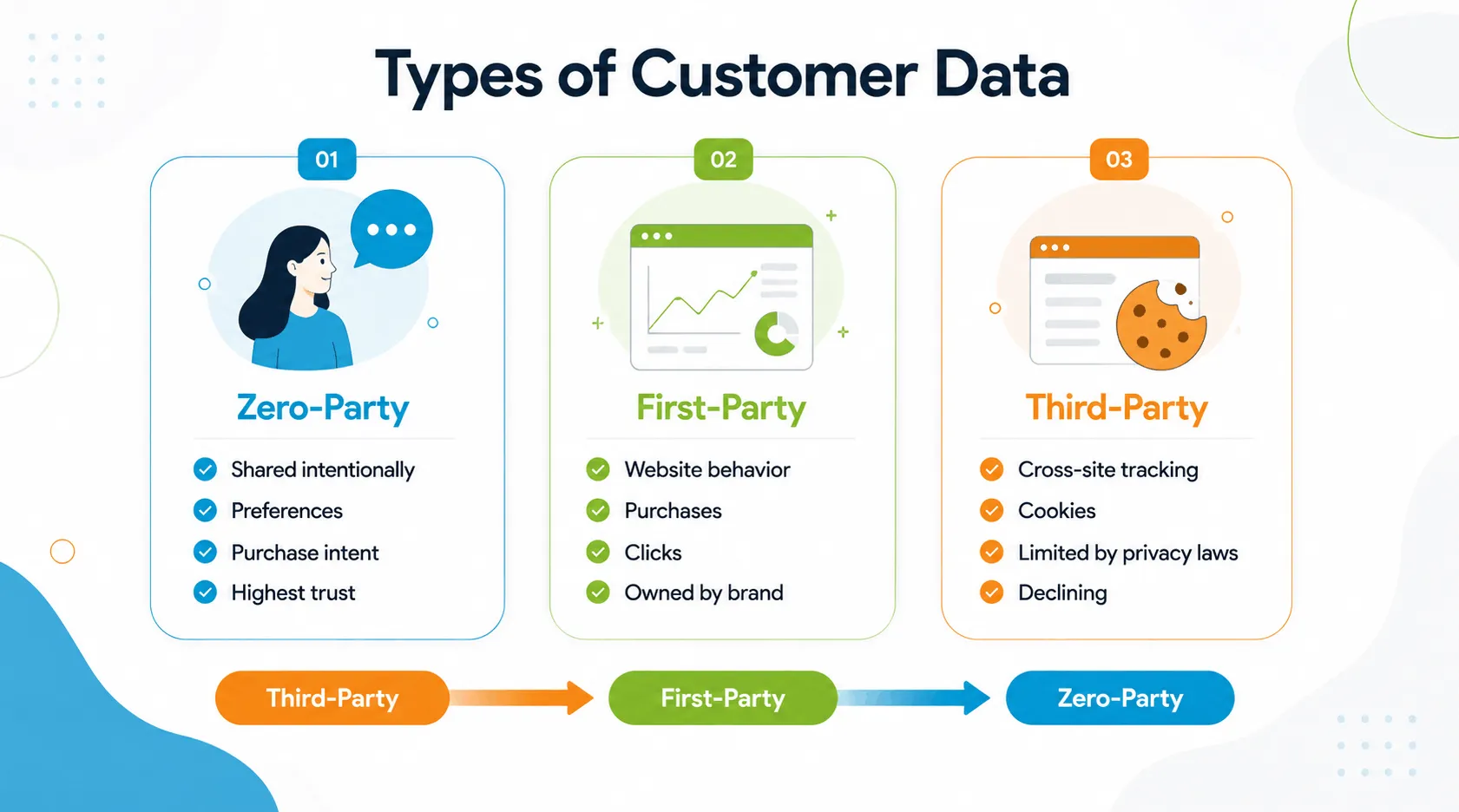
The modern data landscape distinguishes between observed, tracked, and volunteered data. As third-party methods decline, brands are shifting toward high-integrity data rooted in explicit customer consent.
How Regulations Reinforced the Shift to Zero-party Data?
The transition to zero-party data is a direct response to these legal reinforcements that made third-party tracking a high-risk liability:
- Criminalizing Shadow Tracking: Regulations now require clear, affirmative action for data collection. Pre-ticked boxes and implied consent from scrolling are no longer legally valid.
- Data Portability & Deletion: Users can now demand their data be extracted or deleted instantly. This makes rented third-party data unstable, while zero-party data (held in your own CDP) is a more permanent, reliable asset.
- Interoperability Mandates: Under the DMA, large platforms are forced to allow users to move their data more freely. This levels the playing field, allowing smaller brands to own their direct customer relationships rather than relying on algorithms.
- Mandatory Privacy Risk Assessments: As of 2026, many regions require systematic audits of any data processing that presents a high risk. Direct, volunteered data (zero-Party) is considered the lowest risk because the user has provided it with full intent.
Privacy Regulation Compliance Comparison (2026)
Replacing cookies with zero-party data strategies
Businesses are replacing hidden tracking with interactive experiences where the customer leads the conversation. This transition is no longer optional; it is a regulatory necessity. The enforcement of strict privacy frameworks—including GDPR in Europe, CCPA/CPRA in the US, and the Digital Markets Act (DMA)—has effectively criminalized the non-consensual tracking that third-party cookies once provided. Consequently, brands are moving toward data that carries explicit consent by design.
A 2025 Pipeline360 report reveals that marketing teams are prioritizing personalized relevance throughout the buyer journey. Research shows 56% of UK and European marketers view content personalization as the top tactic for lead nurturing.
To scale these efforts, marketers now leverage AI automation tools to optimize audience segmentation based on direct customer data.
How to collect customer data without cookies in 2026
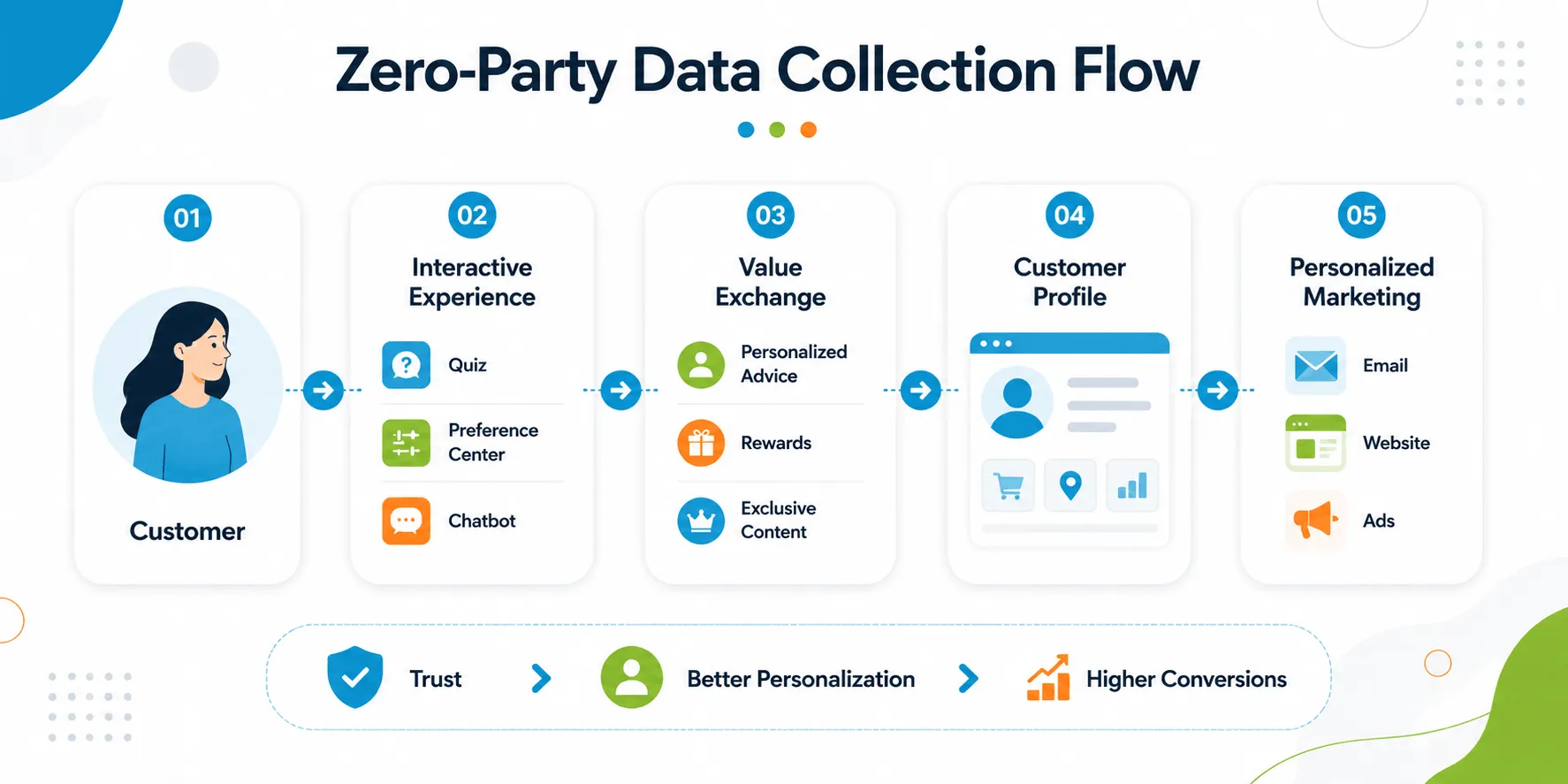
To get information without cookies, you must offer a value exchange. You cannot simply wait for a user to buy something to learn about them. You must invite them to participate.
Here are the key strategies for highly effective zero-party data collection:
1. Build interactive quizzes and tools that help users understand their own problems.
Instead of basic contact forms, offer helpful tools like a security assessment or a maturity quiz that shows a user how they compare to others in their industry. In exchange for giving the user customized advice, actionable insights, and resource recommendations, you can ask them specific questions about their budget, timeline, and current business challenges.
2. Create simple preference menus that let users pick exactly what topics they want to see.
Start by asking for the most important information first, like their industry or job role, and leave deeper questions as optional choices. Because people change careers and interests over time, set up automatic emails that go out regularly to remind users to review and update their choices.
3. Use friendly chatbots that adjust their questions based on user response.
Instead of asking twenty questions at once on a static form, use a chatbot that asks just one or two relevant questions during a visit. By using conditional logic, the chatbot changes its next question based on the user's previous answer. This method gathers small pieces of information over many separate conversations, so it feels like a helpful discussion rather than a long test.
4. Require users to answer just one new question to unlock your best articles or videos.
While basic information should be free to read, save your highest-value content behind a barrier. For their first download, ask for a single, critical detail, like what industry they work in. As they return to unlock more content over time, gradually ask for new, different details, making the process of sharing information feel natural and easy rather than annoying.
5. Give users actual rewards, like prizes or exclusive access, in exchange for their information.
Building customer accounts and loyalty programs gives people a strong, direct reason to share their preferences with you. By offering tangible rewards, you encourage users to willingly share data that you can then use to make better decisions about your products and marketing.
6. Ask for feedback immediately after an event and build gamified online communities.
Send out a survey right after a user watches a webinar or tries a product, and frame the request as an opportunity to provide constructive feedback to get more honest answers. Additionally, build online community groups where users can talk to each other, and use game-like features—such as points, badges, or leaderboards—to reward them for sharing their challenges and ideas.
7. Instantly connect the answers people give you to your website, emails, and ads. Collecting information is useless if you do not act on it. If a user updates their preferences to say they only care about a specific topic, your systems must automatically update in real-time so they only see that specific topic on your website, in your emails, and in your advertisements. This proves to the user that you are actually listening and respecting their choices, which builds trust.
Consumers are increasingly protective of their personal information, but they remain willing to share it when the benefits are clear. This value exchange occurs when a brand offers immediate utility in return for user input.
Data shows that transparency is a significant competitive advantage. According to McKinsey’s Digital Trust Report in 2022, 71% of consumers are more likely to buy from brands that are open about how they use personal data. While consumers are guarding their data more closely, they actively reward brands with data when they are offered transparency, respect, and highly personalized value.
It is also important to note that when rewards are involved, some users may game the system with false information. To keep your data accurate:
- Compare what a user says in a quiz with what they actually do on your site.
- Use helpful rewards, like custom advice, to attract users who are genuinely interested.
- Ask for preferences in different ways during future visits to ensure the data remains consistent.
Maintaining and Activating Zero-Party Data
Collecting data is only the first step; it must be treated as a living asset within a customer data platform (CDP) to scale effectively. By integrating zero-party data into this, brands can maintain data hygiene and trigger real-time actions across all touchpoints.
A customer data platform (CDP) is a centralized system that unifies data from all your tools into a single customer profile. In 2026, it ensures that when a customer shares a preference, that information is instantly sent to your email, ad, and website tools to personalize their experience.
Leading brands demonstrate that the most effective way to maintain data is to weave the collection process directly into the customer experience. For example, L'Oreal UK uses diagnostic quizzes to help customers identify beauty preferences, which has led to a 21% increase in conversion rates and a 134% increase in Average Order Value (AOV).
Here are a few of more examples how key market leaders activated their zero-part data:
- Link Data to Loyalty: Follow the Sephora model by rewarding customers with loyalty points for completing or updating their "beauty profile." This ensures your database stays current while the customer feels compensated for their time.
- Project-Based Segmentation: Adopt The Home Depot’s “Know me, Meet me, Speak to Me, Value Me” strategy by combining zero-party data with current behavioral trends. This allows you to show sponsored products only when they are highly relevant to a customer’s specific, active project.
- Contextual Recommendations: Use Product Finder quizzes, similar to Bobbi Brown Cosmetics, to turn raw data into immediate, personalized advice.
- Gamified Refreshing: Use interactive promotions or seasonal events, like OXXO’s 2026 World Cup campaign, to encourage users to re-engage with your app and refresh their data through play.
By treating zero-party data as an evolving dialogue rather than a one-time form, you ensure that every marketing touchpoint remains accurate and relevant to the user's current needs.
Fixing high churn rate with zero-party data
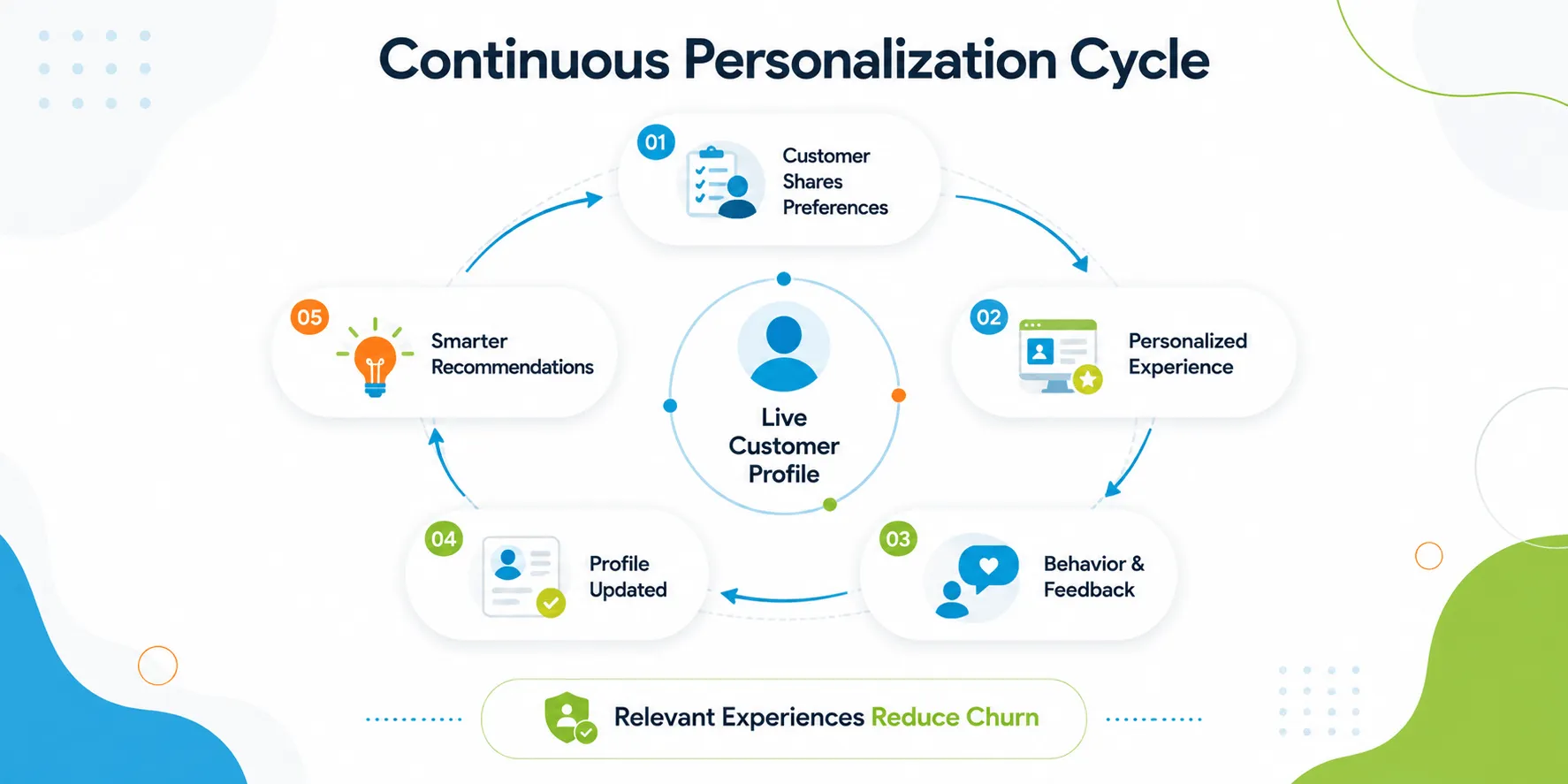
Churn occurs when customers feel a brand no longer understands their needs. Fixing high churn rate with zero-party data involves using micro-personalization cycles (small, frequent data updates to adjust marketing in real-time) to keep the customer experience fresh.
To stop customers from leaving, you must move beyond static profiles and focus on real-time relevance. Diagnostic strategies to reduce churn include:
- Predictive Replenishment: Ask customers how quickly they consume a product and send reminders at the exact moment they need a refill.
- Continuous Preference Update: If a customer’s behavior changes, trigger a short check-in to update their profile, rather than sending irrelevant offers.
- Segmented Loyalty Rewards: Offer rewards based on specific interests stored in the user’s profile to prove you are listening.
- Automated Feedback Loops: Use post-purchase surveys to ask why a customer chose a specific item, helping you predict their future needs and refine your long-term retention strategy.
By constantly updating what you know about a customer, you prevent the one-size-fits-all marketing that leads to abandonment. With zero-party data available, relevance becomes the most effective tool for keeping customers.
Final Thoughts
Transparency is a competitive advantage for brands who understand that data must be earned, not mined. With consumers willingly providing valuable information to brands, the immediate next step is taking advantage to build personalized connections.
- Audit Your Touchpoints: Identify where you can replace passive tracking with interactive elements like quizzes or preference centers.
- Define the Value: Ensure every data request is tied to a clear benefit for the user (e.g., "Tell us your skin type to get a custom routine").
- Close the Loop: Update your CRM instantly so that the next email or site visit reflects the user’s shared preferences, proving that you are listening.
By prioritizing privacy and relevance today, you turn data collection from a compliance hurdle into your greatest asset for long-term retention.
Read These Next
AI Marketing Automation: How to 10x Your Output with Machine Learning