.png)


Inorganic Growth Strategy: Step-by-Step Framework for 2026
.png)

.png)

What is the Inorganic Growth Strategy in 2026?
In 2026, the Inorganic Growth Strategy is the use of mergers and acquisitions (M&A) to rapidly bridge capability gaps—specifically in Artificial Intelligence (AI) and specialized talent. Unlike traditional expansion, 2026 strategies prioritize Strategic Capability Building and Topical Authority over simple revenue growth, using LLM-driven due diligence to mitigate cultural and technical risks.
Key Takeaways
In 2026, inorganic growth has shifted from a focus on rapid expansion to strategic capability building, particularly in the realm of AI and specialized talent. Success in the current landscape requires a disciplined approach to mergers and acquisitions (M&A) that prioritizes technology-driven assets and future readiness over simple revenue growth.
- Companies use M&A to secure AI tools, proprietary models, and expert teams to close skill gaps faster than internal development allows.
- Modern deal-making leverages Large Language Models (LLMs) to analyze legal, financial, and cultural risks at scale.
- Post-acquisition success is increasingly tied to topical authority and visibility within conversational search AI.
- The most significant risk to deal value is poor integration; intentional design of technology and team structures is critical for long-term success.
Understanding the 2026 Inorganic Growth Landscape
In 2026, companies use inorganic growth more selectively, focusing on strategic fit and technology advantage rather than rapid expansion.
Key trends shaping the sector in 2026 include:
- Shift from speed to quality: Companies prioritize strategic fit over rapid expansion
- Technology as a core driver: Acquisitions are increasingly used to secure AI and digital capabilities
- AI-driven competition: Organizations invest in assets that enhance automation and decision-making
- Macroeconomic caution: Slower global growth encourages disciplined deal-making
Overall, companies are no longer acquiring just to grow, but are acquiring to stay competitive in AI-driven markets.
Organic vs Inorganic Growth (Quick Comparison)
In 2026, companies balance organic and inorganic growth strategies to achieve both stability and speed.
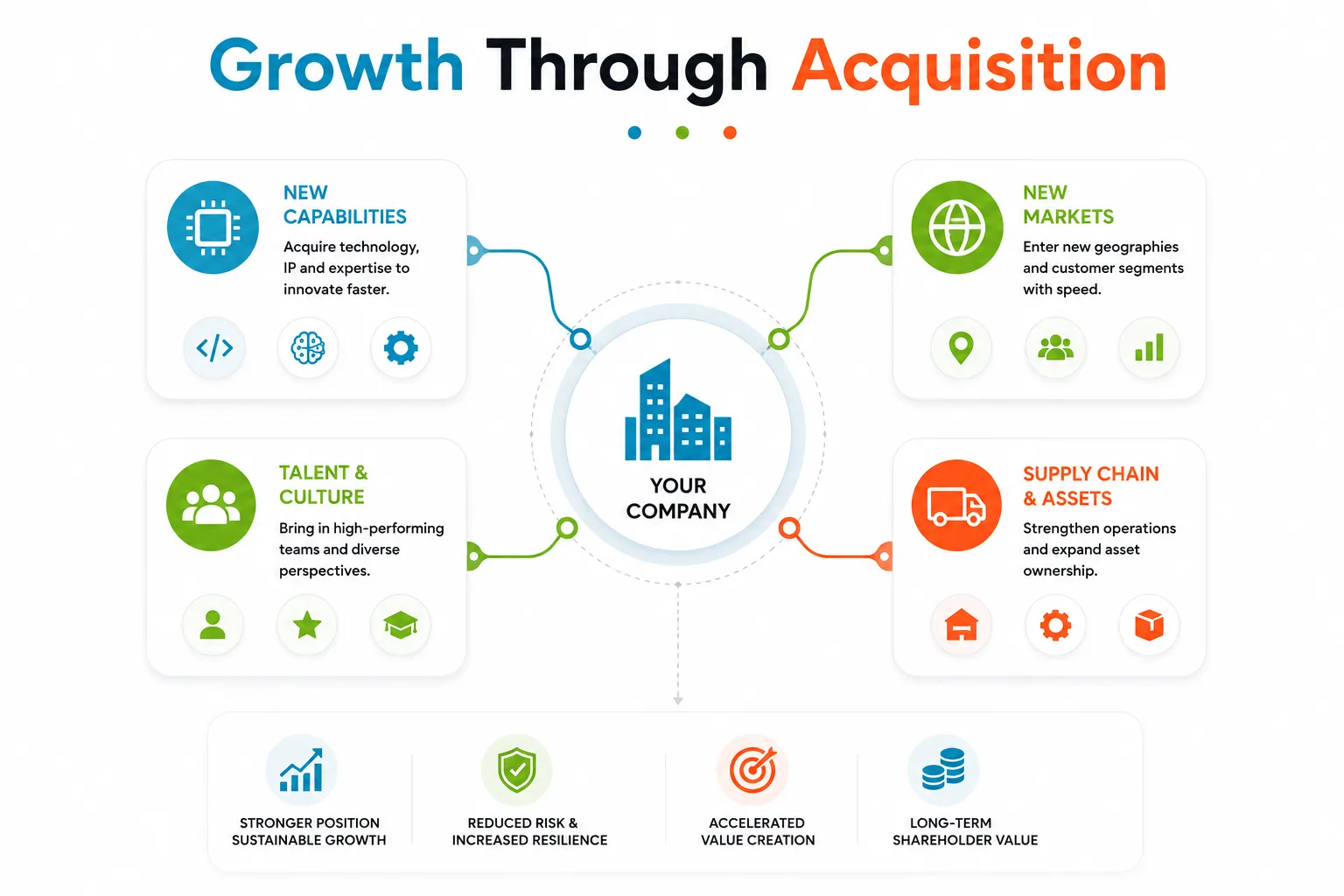
4 Core Types of Inorganic Growth Strategies for 2026
Inorganic growth strategies vary based on the company’s primary objective, such as technology, market share, geography, or operational control.
Most companies combine both approaches—using organic growth to build a stable foundation and inorganic growth to accelerate strategic initiatives.
The Role of AI in 2026 M&A Due Diligence
AI is reshaping both how companies evaluate acquisitions and how they extract value after deals are completed.
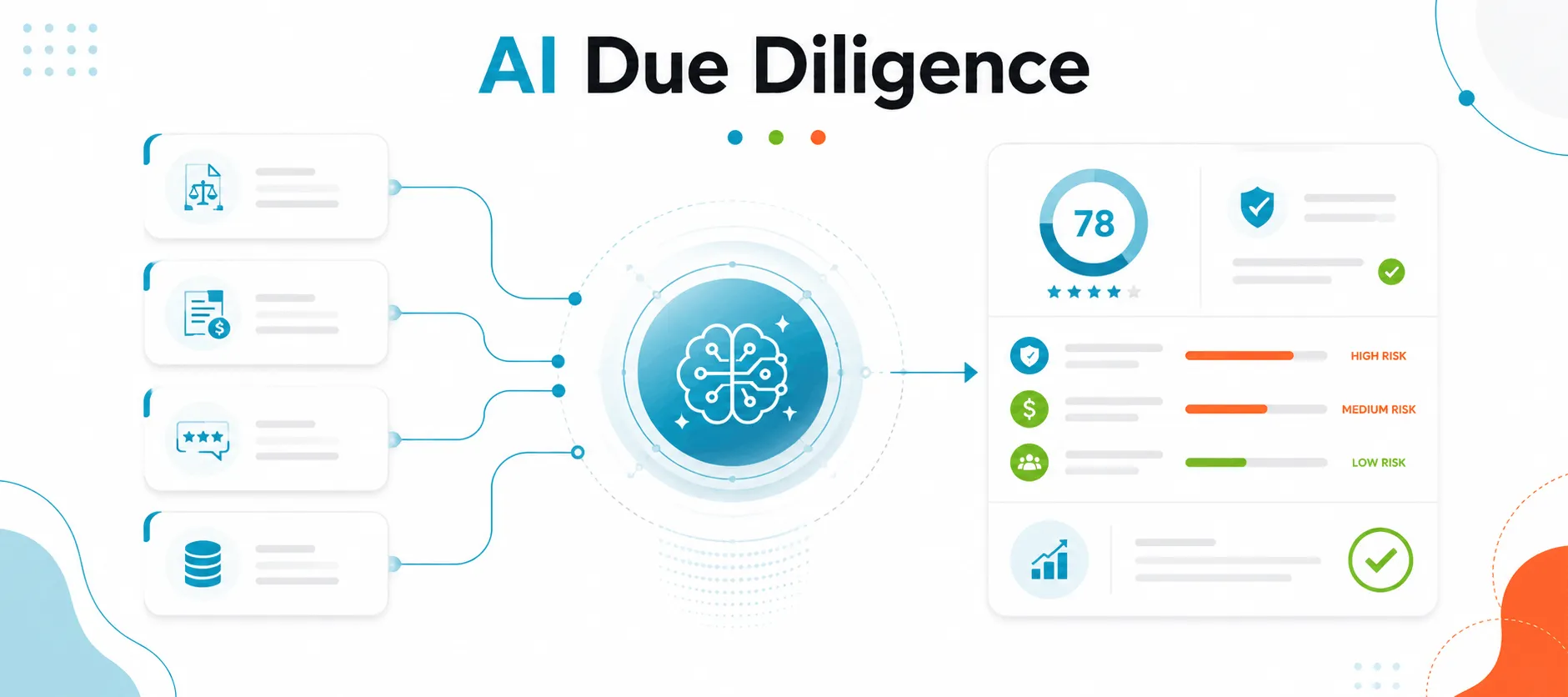
AI-Enhanced Due Diligence
AI enables faster and more comprehensive due diligence by analyzing large volumes of data.
- Large Language Models (LLMs) can review:
- Legal documents
- Financial reports
- Customer feedback
This helps identify:
- Operational risks
- Financial inconsistencies
- Cultural misalignment (“cultural debt”)
Digital Visibility and Topical Authority
Post-acquisition success now depends heavily on digital authority and discoverability.
Key concepts:
- Topical authority: Demonstrating deep expertise in a subject area through Generative Engine Optimization (GEO)
- Conversational search: Optimizing for how users ask questions in AI tools powered by LLMs like GPT5.1 and Gemini 3.1
- High-intent keywords: Targeting queries with buying or decision signals, aligned with AI Overviews
Companies must integrate content strategy and SEO into their post-merger integration plans.
GEO also strengthens the Experience component of E-E-A-T by helping AI systems recognize whether a company demonstrates real operational knowledge, not just keyword coverage.
After an acquisition, content should show firsthand experience with the acquired capability, such as implementation lessons, customer use cases, integration insights, technical workflows, and measurable outcomes. This helps generative engines connect the parent brand with practical expertise in the acquired domain.
6 Steps to Executing a Winning Inorganic Growth Strategy
A successful inorganic growth strategy follows a structured process from decision-making to integration.
Step 1: Strategic Rationale and the Build-vs-Buy Decision
Start by defining whether acquisition is necessary or if internal development is sufficient.
Use this decision framework:
Choose acquisition when speed and capability gaps are critical.
Step 2: Target Identification and AI Capability Mapping
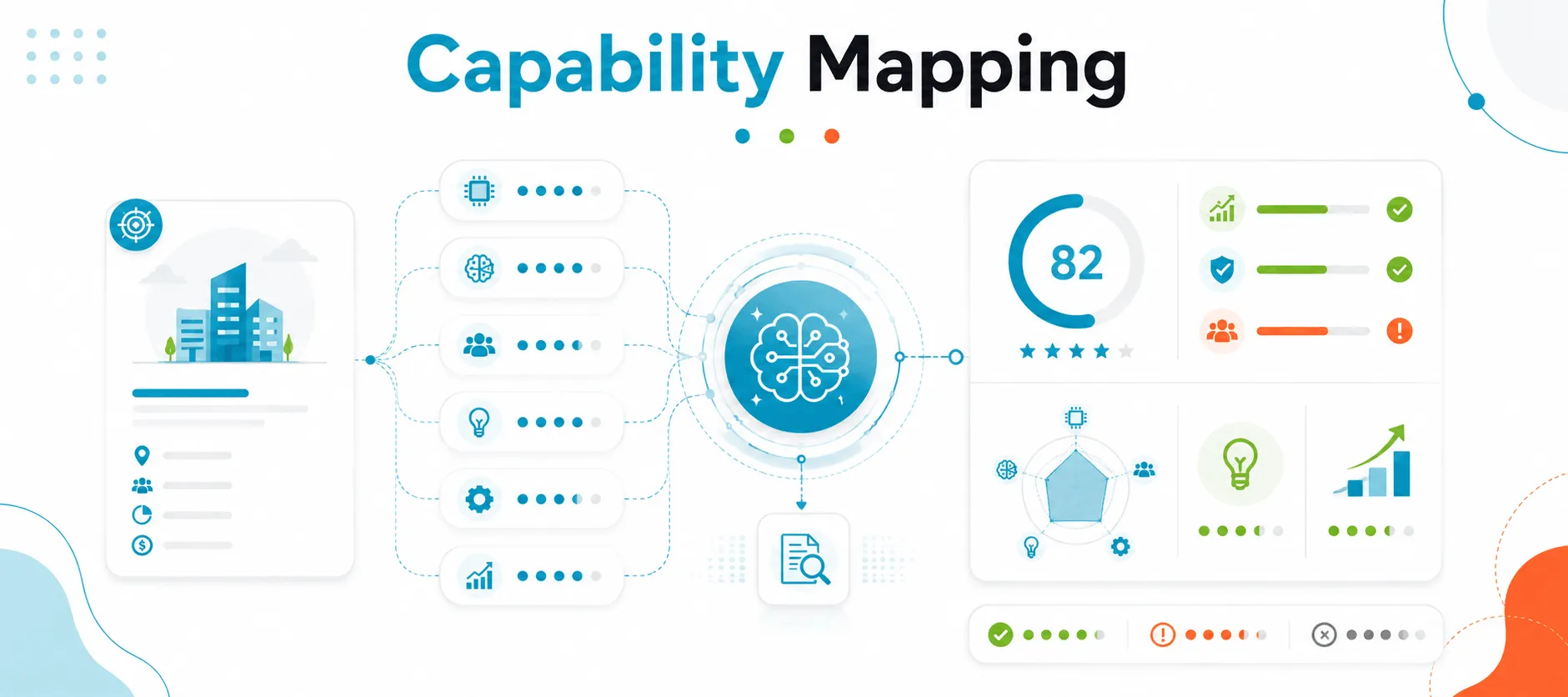
Identify targets based on strategic fit, not just financial performance.
Evaluate:
- Market position
- Customer base
- Revenue concentration
- Technology stack
New in 2026:
- AI capability mapping
- Is the company AI-enabled or vulnerable to AI disruption?
- Does the workforce support automation and innovation?
Focus on future readiness, not just current performance.
Step 3: Valuation and the Role of EBITDA
Valuation ensures you pay a fair price and capture future value.
Key concepts:
- Earnings Before Interest, Taxes, Depreciation (EBITDA): Measures operational profitability
- Valuation multiples: Based on comparable companies
- Synergies:
- Cost savings (e.g., operations, staffing)
- Revenue growth (e.g., cross-selling)
Avoid overpaying based on optimistic synergy assumptions.
Step 4: Regulatory Compliance and Antitrust Policy
Regulatory approval is a critical gating factor in many deals.
Consider:
- FTC and DOJ review in the United States, especially for antitrust concerns, market concentration, data control, and technology-sector consolidation
- European Commission and EU AI Act obligations, particularly when acquisitions involve AI systems, automated decision-making, biometric data, or high-risk AI use cases
- NDRC and SAMR review in China, especially for cross-border transactions, foreign investment, merger control, and strategically sensitive technology assets
- Reporting thresholds, sector-specific rules, and data-transfer requirements across relevant jurisdictions
Early legal assessment helps avoid:
- Delays
- Deal cancellations
- Unexpected compliance costs
For AI-driven acquisitions, regulatory diligence should assess not only market concentration, but also model governance, training data exposure, consumer protection risk, and whether the combined entity creates new compliance obligations under AI-specific laws.
Step 5: Workforce Analysis and Cultural Debt
People risk is one of the most underestimated factors in M&A success.
Evaluate:
- Leadership alignment
- Retention risks
- Organizational culture
Cultural debt refers to the friction that builds up when legacy human workflows, decision-making habits, and organizational norms fail to keep pace with automated AI-agent systems.
In 2026 M&A, this often appears when an acquired company’s teams still rely on manual approvals, informal knowledge-sharing, or spreadsheet-based processes while the buyer expects AI agents to automate research, reporting, customer support, or operational handoffs.
For example, a company may acquire an AI-enabled sales platform, but if the acquired sales team does not trust automated lead scoring or continues routing every decision through managers, the combined organization inherits cultural debt. The technology may be strong, but adoption slows because people, workflows, and incentives are not aligned with AI-driven execution.
Step 6: Intentional Integration Design
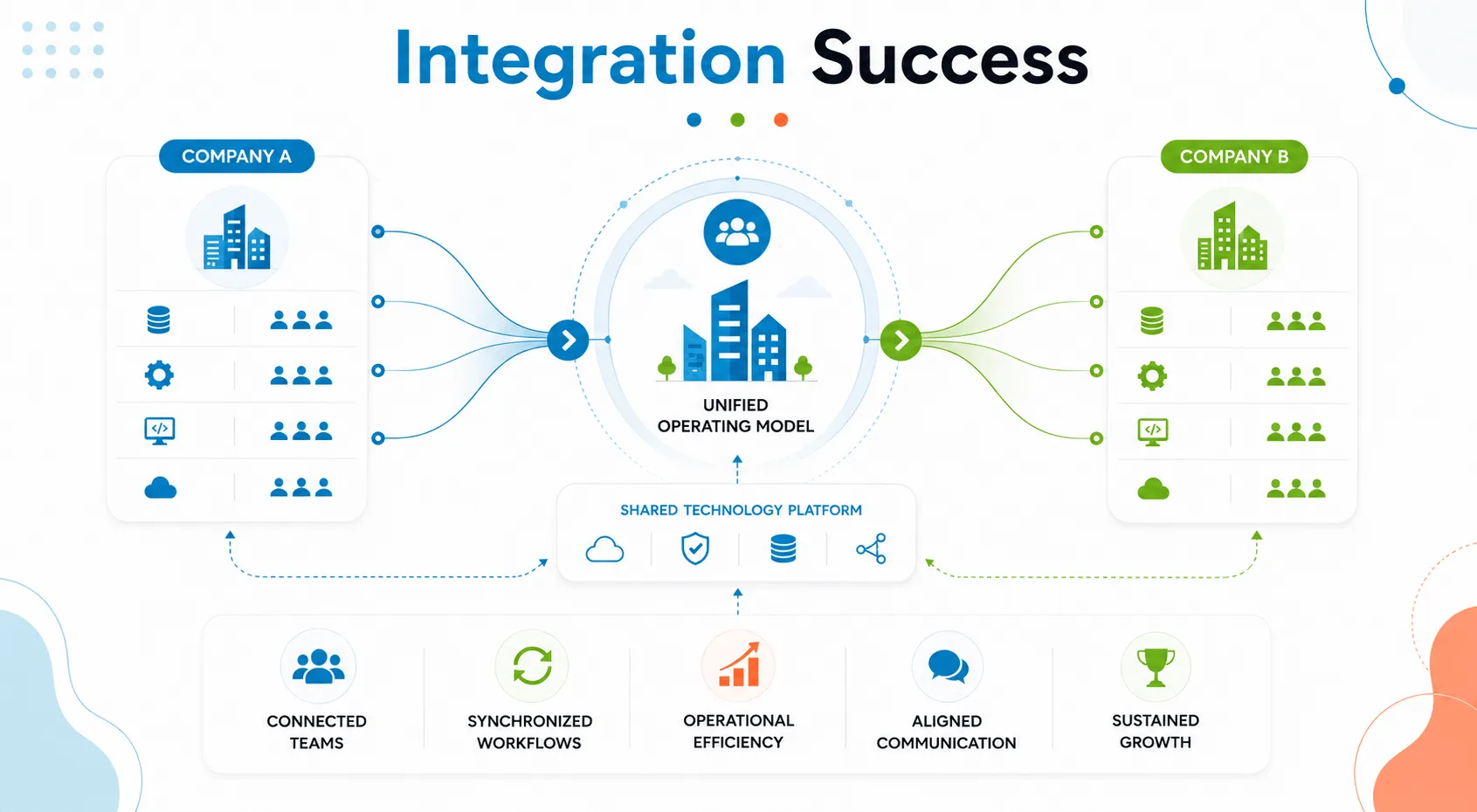
Integration determines whether the deal succeeds or fails. Prioritize a 30-day Entity Mapping sprint to ensure AI search engines correctly associate the acquired company's technical assets with the new parent brand.
Focus areas:
- Technology systems
- Operations and supply chain
- Team structure and communication
Best practices:
- Define integration goals early
- Prioritize critical systems first
- Align leadership quickly
Poor integration (not bad strategy) is the most common cause of failure.
2026 Inorganic Growth Case Studies
Recent acquisitions show how leading companies use inorganic growth to secure AI capabilities, specialized talent, and long-term competitive advantage.
Capability Acquisition: Accenture and Faculty
Accenture completed its acquisition of Faculty in 2026 to strengthen its enterprise AI capabilities. Accenture acquired Faculty, a firm known for applied AI and decision intelligence systems used in complex, high-stakes environments.
This deal expanded Accenture’s ability to deliver AI-driven transformation by integrating specialized talent, proprietary models, and real-world deployment expertise.
Companies can apply a similar strategy by targeting firms with proven AI capabilities to close critical skill gaps quickly, especially when internal development would be too slow or resource-intensive.
AI Infrastructure and Platform Expansion: SpaceX and Cursor
SpaceX secured an option to acquire Cursor in a deal valued at up to $60 billion, aiming to combine AI-assisted software development with large-scale compute infrastructure.
The strategy centers on integrating AI coding tools directly into engineering workflows to accelerate development cycles and improve productivity at scale.
Organizations can replicate this by acquiring tools that directly enhance their core systems, ensuring the combined capabilities deliver measurable efficiency or performance gains.
Ecosystem Expansion: Meta and AI Creator Tools
Meta has expanded its AI capabilities by integrating tools like Manus AI into its business and creator ecosystem to improve content generation, automation, and user engagement.
This reflects a broader strategy of continuous inorganic growth through smaller acquisitions, partnerships, and integrations rather than relying on a single large transaction.
Companies can adopt this approach by continuously integrating smaller capabilities that strengthen their platform, rather than relying solely on large, infrequent deals.
Key Takeaways from 2026 Deals
Across these examples, three consistent patterns emerge:
- Companies prioritize acquiring capabilities and expertise rather than scale alone
- Specialized talent and intellectual property are often the primary value drivers
- The success of acquisitions depends heavily on how well they integrate with existing systems
Organizations that want to replicate these outcomes should focus on alignment between acquisition targets and their long-term strategy, ensure integration planning begins early, and prioritize assets that enhance (not complicate) their core operations.
Risks of Inorganic Growth Strategy In 2026
Inorganic growth can accelerate expansion, but it introduces operational, financial, and cultural risks, making it most effective when combined with a strong organic growth strategy.
Key Risks of Inorganic Growth:
- Integration risk: Merging systems, processes, and teams is complex and often underestimated
- Synergy gaps: Expected cost savings or revenue gains may not fully materialize
- Cultural misalignment: Differences in leadership and work culture can reduce performance
- Execution failure: Poor planning or unclear ownership can erode deal value
Why Inorganic Growth Should Be Paired with Organic Growth
The most resilient companies use inorganic growth to enhance—not replace—their core organic strategy.
Organic growth (e.g., product development, marketing, customer acquisition) provides:
- Stable revenue foundations
- Brand consistency
- Long-term customer relationships
Inorganic growth works best when it:
- Fills capability gaps (e.g., AI, technology, talent)
- Accelerates entry into new markets
- Strengthens existing offerings
When combined effectively:
- Organic growth sustains the business
- Inorganic growth accelerates strategic expansion
Companies that rely solely on acquisitions often struggle with integration and consistency, while those that balance both approaches achieve more durable growth.
Quick Checklist: Is Your Company Ready for Inorganic Growth?
Use this checklist to assess readiness before pursuing acquisitions:
- Do you have a clear strategic reason for acquiring (not just growth for growth’s sake)?
- Can your leadership team manage integration effectively?
- Do you have financial capacity to absorb acquisition costs and risks?
- Are your internal processes stable enough to scale?
- Do you understand how the acquisition will enhance your core business?
- Is there a plan to retain key talent post-acquisition?
Final Thoughts
To successfully execute an inorganic growth strategy in 2026, organizations should move beyond financial metrics and focus on operational synergy.
Next steps:
- Identify critical technology or talent gaps that would take more than 18–24 months to develop internally.
- Evaluate potential targets not just on current revenue, but on whether they are AI-enabled or vulnerable to future disruption.
- Use LLMs during due diligence to scan for misalignments in communication and workflow that could hinder post-merger integration.
- Define specific integration goals and leadership structures before the deal closes to prevent execution failure.
Frequently Asked Questions (FAQs)
What is the difference between organic and inorganic growth?
Organic growth involves expanding a business through internal efforts, such as product development and marketing. Inorganic growth uses mergers and acquisitions to quickly gain market share, new technologies, or specialized talent. The most resilient companies balance both, using organic growth for stability and inorganic growth for strategic acceleration.
Why is "cultural debt" a concern in 2026 acquisitions?
Cultural debt refers to misalignments in workflows, values, or a resistance to new processes like AI adoption. In 2026, identifying these risks during due diligence is vital because retaining key talent and ensuring leadership alignment are often more valuable than the acquired assets themselves.
When should a company choose to buy a capability rather than build it?
A company should choose to buy when speed is critical and the internal capability gap is too wide to fill quickly. While building internally offers more control, acquiring externally provides immediate access to established technology and talent.
Related Content
Read These Next

B2C Marketing Automation: 7 Retail Workflows That Drive Immediate Impulse Sales