.png)
Lifecycle Marketing vs Growth Marketing: Which One Should You Prioritize?
.png)

.png)

Prioritize growth marketing when optimizing CAC, conversion rates, and top-of-funnel acquisition using channels like SEO, paid media, and A/B testing. Shift to lifecycle marketing when LTV, churn rate, and retention become primary constraints, leveraging CDPs, marketing automation (e.g., Braze, Klaviyo), and predictive analytics to maximize customer value.
Key Takeaways
- Growth marketing targets the top of the funnel to increase acquisition velocity (the speed and volume of new users). Lifecycle marketing focuses on the bottom of the funnel to maximize retention and customer lifetime value (LTV).
- Companies should prioritize growth marketing during product launches or market entry to build volume. A shift to lifecycle marketing is necessary when high churn or rising acquisition costs (CAC) begin to limit profitability.
- Companies that want to remain competitive increasingly need AI-enabled infrastructure for both strategies, including hyper-personalization, human-supervised marketing agents, and real-time journey orchestration.
- High-performing organizations integrate both functions through a shared data layer (such as a Customer Data Platform (CDP), data warehouse, or vector database) to create continuous feedback loops between acquisition and retention.
What is the Difference in Growth Hacking Versus Lifecycle Stages in 2026?
Growth marketing drives acquisition at the top of the funnel, while lifecycle marketing optimizes retention and value across the customer journey.
- Growth marketing refers to data-driven, rapid experimentation aimed at acquiring new users, typically focused on awareness, traffic, and conversions.
- Lifecycle marketing focuses on the post-acquisition journey, onboarding, engagement, retention, and advocacy.
While growth marketing fills the funnel, lifecycle marketing ensures customers don’t drop out after entering it.

Key Differences, Similarities, and Selection Criteria
Both strategies rely heavily on experimentation (e.g., A/B testing) and search visibility (SEO), but they operate at different stages of the customer journey.
When to Prioritize Growth Marketing
Growth marketing should be prioritized when acquiring new users is the primary constraint to growth, especially when a business needs more awareness, traffic, sign-ups, or first purchases.
Use growth marketing when:
- Entering a new market: Brand awareness is low or nonexistent
- Launching a new product: You need to validate product-market fit
- Meeting investor expectations: Rapid growth is required post-funding
- Running experiments: High-volume testing is needed to find winning channels
Case Study: Ford New Zealand
Ford New Zealand used AI-powered audience segmentation to automate targeting and scale reach. This resulted in improved campaign efficiency and higher engagement, while reducing manual workload. This allowed the team to focus on experimentation and strategy.
When to Shift Focus to Lifecycle Marketing
Lifecycle marketing should become the priority when retention, repeat purchase, customer lifetime value, or churn becomes the main constraint on profitable growth.
Shift to lifecycle marketing when:
- CAC exceeds first-purchase margin: Acquisition is no longer profitable
- Churn is high: Users leave after initial engagement
- Revenue stagnates despite growth: Sign-ups increase but revenue does not
- You reach scaling stage: Growth depends more on existing users than new ones
Case Study: Bazaar
Bazaar implemented lifecycle automation using real-time “back-in-stock” notifications. This increased revenue without additional acquisition spend, demonstrating how retention can outperform paid growth at scale.
Here’s the revised structure with a dedicated H2 for emerging trends, while keeping flow, avoiding redundancy, and maintaining strong SEO/AI clarity:
How AI Is Transforming Growth and Lifecycle Marketing in 2026
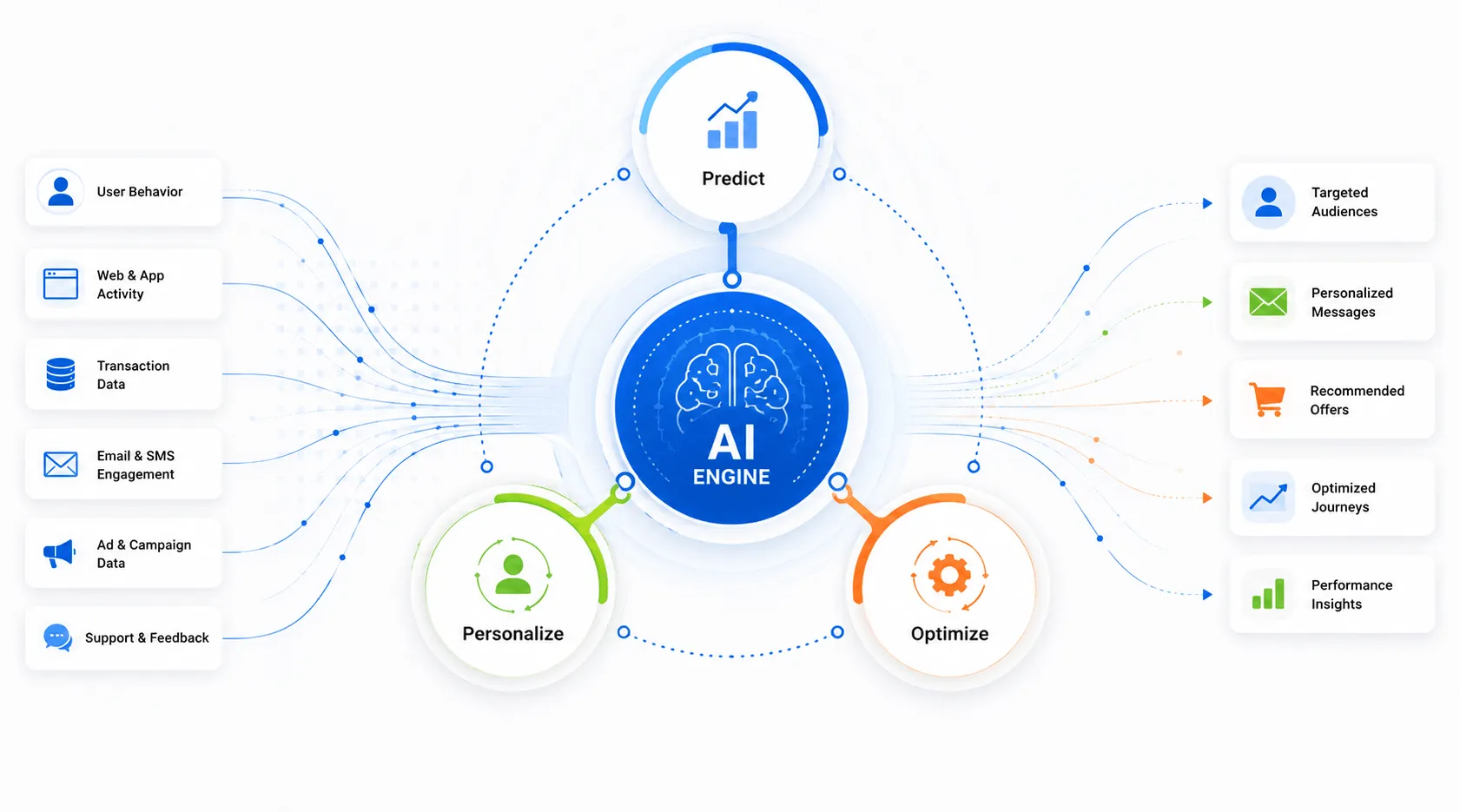
For growth and lifecycle marketing teams competing in 2026, AI-enabled infrastructure is becoming a practical requirement for acquiring, retaining, and monetizing customers at scale. The most effective teams use AI to support predictive decision-making, real-time automation, and more personalized customer journeys.
In 2026, many marketing teams are moving beyond static rules and manual execution toward proactive, data-driven systems that continuously optimize performance across the funnel. However, these systems are most effective when paired with human oversight, clear brand guardrails, and compliance controls.
At the foundation are three core capabilities:
- Predictive segmentation: Using machine learning models to group users based on expected future behaviors, such as likelihood to convert, churn, or repeat purchase.
- Hyper-personalization: Dynamically adjusting messaging, offers, and timing at the individual level using real-time behavioral data.
- Automated experimentation: Running continuous A/B testing and multivariate testing with less manual setup, while marketers still define strategy, success metrics, and acceptable risk thresholds.
Case Study: Luxury Escapes
Luxury Escapes used BrazeAI Agent Console™ to replace simple session-count rules with AI-powered segmentation. Instead of grouping users by how many times they visited, the system looked at a wider mix of behavior signals (such as signups, page views, searches, and product interactions). This helped match new users with more relevant welcome journeys, increasing revenue per user by 10% and purchase volume by 6%.
Emerging AI Marketing Trends in 2026
Emerging AI trends in 2026 are changing how growth marketing and lifecycle marketing teams acquire, retain, and expand customer relationships.
- Generative Engine Optimization (GEO)
Content strategies are shifting from traditional SEO (optimizing for search engines like Google) to GEO, the practice of optimizing for AI-driven search systems like ChatGPT. This requires concise, answer-first content, clear entity definitions, and structured data to increase visibility in AI-generated responses.
- Autonomous Marketing Agents
Instead of manually managing every campaign variable, AI-assisted marketing agents can recommend or execute bounded decisions, such as adjusting ad bids, reallocating budgets within approved limits, and triggering lifecycle workflows based on real-time performance data. These systems should still include human-in-the-loop, where marketers set guardrails, review exceptions, and approve high-impact decisions.
- Real-Time Journey Orchestration
Customer journeys are no longer linear funnels. AI systems dynamically adjust user experiences across channels (ads, email, apps) using event streams (continuous flows of user activity data), ensuring each interaction reflects current behavior.
- First-Party Data Activation
As privacy regulations and platform restrictions limit third-party tracking, companies increasingly rely on first-party data, meaning information collected directly from users through owned channels. In 2026, this data must be managed with GDPR and CCPA compliance in mind, including consent, data minimization, user access rights, and deletion workflows.
Systems such as Customer Data Platforms (CDPs), data warehouses, and vector databases help unify customer data for targeting, personalization, semantic search, and real-time decisioning across both acquisition and retention efforts.
- Multimodal Content Optimization
AI models now optimize not just text, but also images, video, and audio simultaneously, such as improving campaign performance across platforms like TikTok, YouTube, and connected TV (internet-enabled television platforms).
These shifts are dissolving the traditional boundaries between growth and lifecycle marketing. Growth teams increasingly use lifecycle signals, such as predicted LTV (lifetime value, or total expected customer revenue), to refine acquisition targeting, while lifecycle teams adopt experimentation frameworks traditionally used in growth.
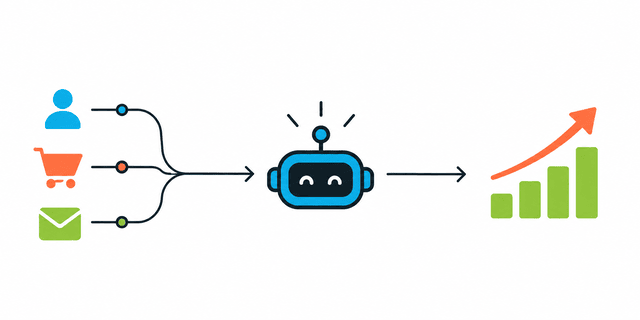
As a result, AI is no longer just a supporting tool, but the system that unifies acquisition and retention into a single, continuously learning marketing engine.
Integrating Growth and Lifecycle Strategies
Integrating growth marketing and lifecycle marketing allows companies to connect acquisition, retention, and customer value instead of managing them as separate functions.
1. The Shared Data Layer
A unified data system, such as a data warehouse, Customer Data Platform (CDP), or vector database, ensures growth and lifecycle marketing teams work from the same customer insights. CDPs and warehouses organize structured customer data, while vector databases can support AI-powered retrieval, semantic audience matching, and personalization based on behavioral similarity.
2. Feedback Loops
- Growth teams bring in volume
- Lifecycle teams identify high-value users
- Insights flow back into acquisition targeting
This creates a continuous optimization loop.
3. Cross-Channel Synchronization
Coordinated messaging across ads, email, and product ensures consistency.
For instance, a customer should not see a “new user” discount ad after making a purchase. Integrated systems prevent these inefficiencies and improve ROI.
Should You Hire a Growth marketer or a Lifecycle marketer?
The right hire depends on your business stage and growth constraints.
Priority Checklist for 2026:
- Prioritize growth until product-market fit is proven
- Invest in data infrastructure early to support both strategies
- Shift to lifecycle marketing when CAC pressures margins
- Integrate both strategies through shared data and feedback loops
- Optimize for AI search (GEO) with clear, structured content
- Measure what matters: Focus on LTV, retention, and CAC efficiency
Final Thoughts
To stay competitive in 2026, businesses should move toward a unified marketing model:
- Determine if your primary constraint is acquisition volume (Growth) or customer retention (Lifecycle).
- Implement a CDP or shared data warehouse to ensure both teams have a single view of the customer journey.
- Update content strategies to be concise and structured, ensuring visibility within AI-driven search engines like ChatGPT.
- Use lifecycle insights, such as predicted LTV, to sharpen the targeting of your growth acquisition campaigns.
Frequently Asked Questions (FAQs)
What is the main difference between growth and lifecycle marketing?
Growth marketing is about speed and volume, using experimentation to acquire new users. Lifecycle marketing is about depth and endurance, focusing on onboarding and engaging existing customers to prevent them from leaving.
When should a business prioritize one over the other?
Prioritize growth marketing when the primary goal is reaching new markets or validating a new product. Shift focus to lifecycle marketing if customers are dropping off quickly (high churn) or if the cost to acquire a customer exceeds the profit they bring in.
How is AI changing these strategies in 2026?
AI is dissolving the boundaries between the two. It allows for "Generative Engine Optimization" (GEO) to capture AI-driven search traffic and uses autonomous agents to manage campaigns and budgets in real-time without manual intervention.
Read These Next
AI Marketing Automation: How to 10x Your Output with Machine Learning