Performance Marketing Strategy: The Data-Driven Playbook for 2026




Performance marketing is a widely used approach for evaluating digital marketing campaigns based on measurable results rather than visibility alone. Instead of focusing only on reach or impressions, performance marketing tracks specific user actions such as purchases, signups, or lead submissions.
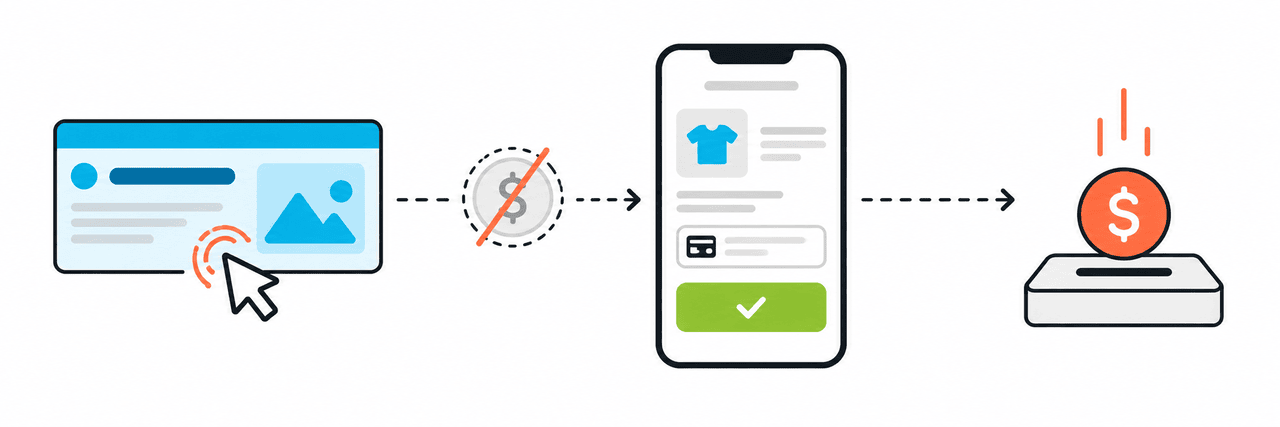
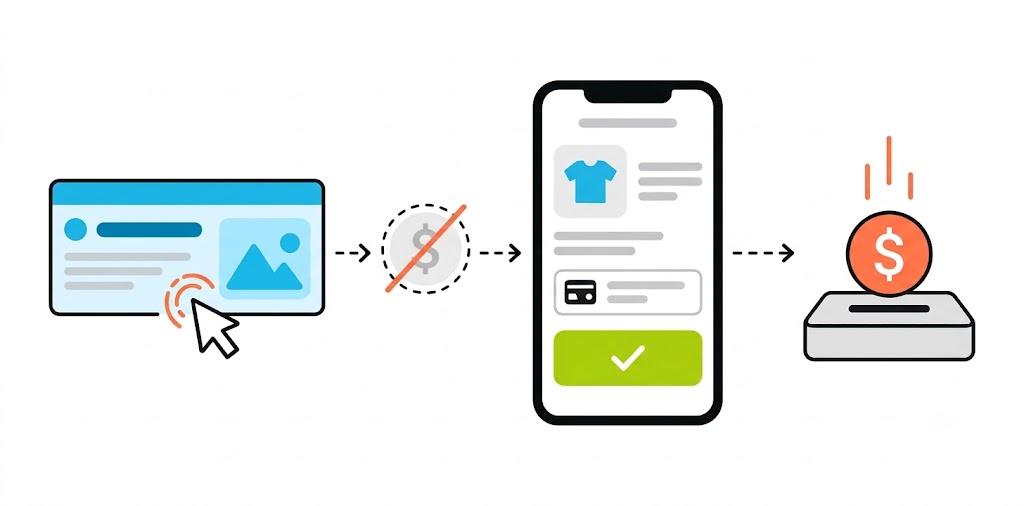
In simple terms, performance marketing is a results-based strategy where advertisers pay when a defined action occurs, and campaigns are evaluated using metrics like conversion rate, customer acquisition cost (CAC), return on ad spend (ROAS), and increasingly profit on ad spend (POAS).
As advertising platforms introduced more advanced tracking and reporting tools, marketers gained the ability to analyze campaign performance in real time. Global digital advertising spending is expected to exceed 700 billion dollars by 2026, reflecting the growing reliance on measurable, data-driven marketing strategies.
However, performance data does not always provide complete answers. Attribution limits, privacy restrictions, competition, and platform changes can affect results, which is why performance marketing requires a structured strategy, careful measurement, and continuous optimization rather than isolated tactics.
Overview: What This Guide Covers
This guide explains the fundamentals of performance marketing strategy and how campaigns are typically structured.
- What performance marketing means
- How performance marketing strategies are structured
- The performance marketing funnel and customer journey
- Key metrics used to evaluate campaigns
- Common marketing channels used in performance campaigns
- The role of experimentation and testing
- Challenges affecting performance marketing in 2026
- Common misconceptions about performance marketing strategies
Together, these sections provide a practical overview of how performance marketing systems operate and how marketers evaluate campaign results.
What Is Performance Marketing
A results-based approach to marketing
Performance marketing is a form of marketing where campaigns are evaluated based on measurable outcomes. Instead of focusing mainly on visibility or brand awareness, the goal is to track specific user actions such as purchases, account signups, app downloads, or lead submissions.
The term conversion refers to one of these desired actions. A conversion occurs when a user completes a specific activity that a marketer wants to measure.
Marketers typically evaluate performance using data such as:
- Clicks
- Conversions
- Cost per acquisition
- Revenue generated from advertising
Because these results can be tracked, performance marketing is commonly associated with digital advertising platforms that provide reporting and analytics tools.
How it differs from traditional marketing
Traditional marketing often measures success using broader indicators such as audience reach, brand recall, or general exposure. While these signals can be useful, they do not always show whether marketing activity directly resulted in customer actions.
Performance marketing attempts to connect marketing activity to specific, trackable results. Digital platforms made this approach more common by allowing marketers to track user behavior more precisely, although tracking systems are not always perfect.
Privacy changes introduced by major browsers and mobile operating systems have reduced the reliability of some tracking methods, making measurement more complex in recent years.
Why measurement plays a central role
Because performance marketing focuses on measurable outcomes, campaigns are monitored using standard metrics.
Common metrics include:
- Conversion rate
- Customer acquisition cost (CAC)
- Return on ad spend (ROAS)
- Profit on ad spend (POAS)
Metrics help marketers determine whether campaigns are operating efficiently, but results may be influenced by external factors such as competition, platform algorithms, seasonality, or tracking limitations.
Industry research shows that small changes in landing page design, message clarity, or loading speed can significantly affect conversion rates, which is why performance marketing often involves continuous testing rather than one-time setup.
How Performance Marketing Strategies Are Structured
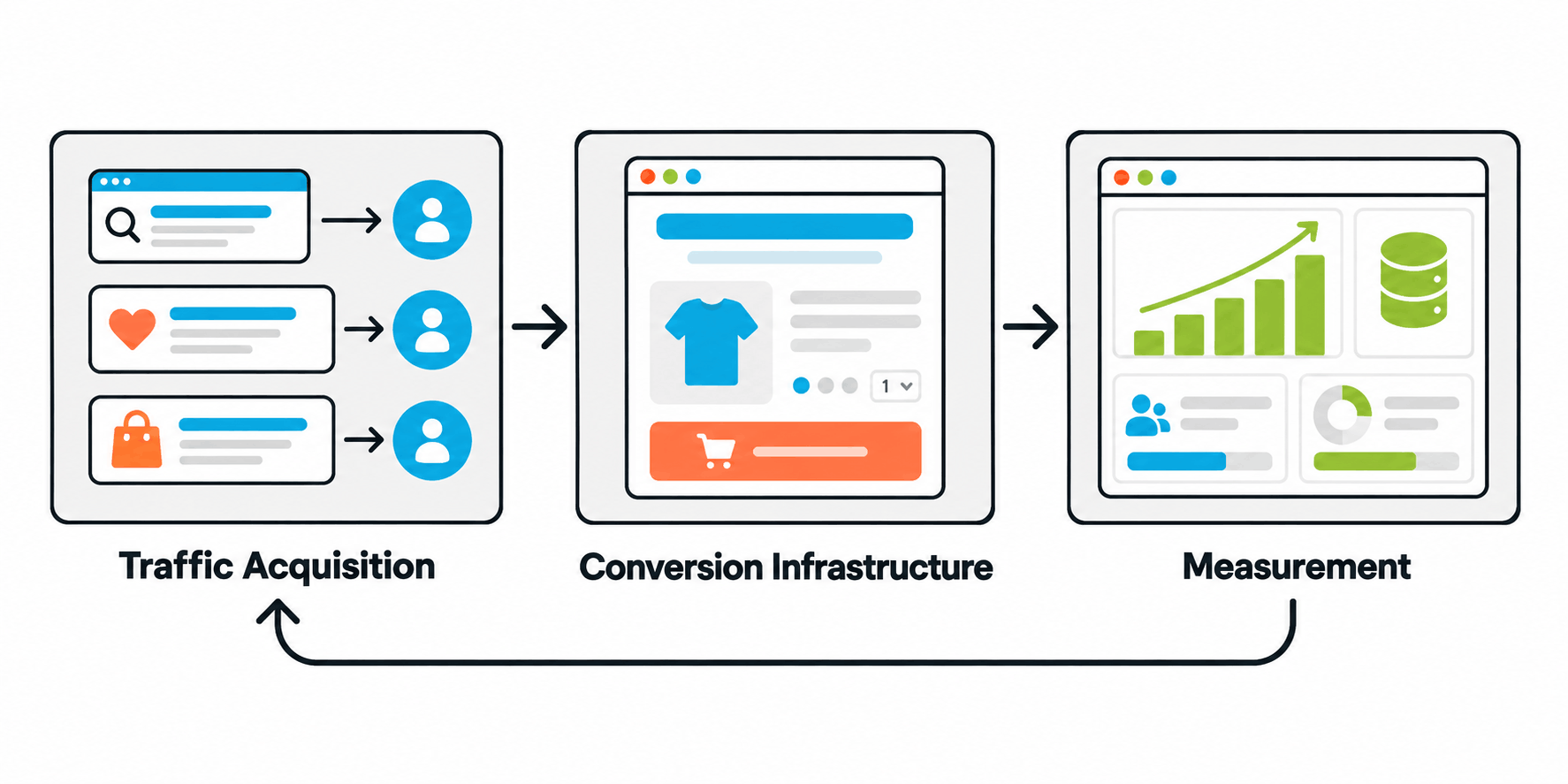
A performance marketing strategy usually combines three core components:
- Traffic acquisition
- Conversion infrastructure
- Measurement systems
Traffic acquisition
Traffic acquisition refers to the methods used to bring potential customers to a website or application. This often includes paid channels such as search advertising, social media ads, or marketplace listings, although organic traffic may also play a role.
Conversion infrastructure
Once visitors arrive, the strategy focuses on conversion. This typically involves landing pages, product pages, and checkout processes designed to guide users toward completing a desired action.
A landing page is a webpage created for a specific campaign and usually focuses on a single message or offer. If a page is difficult to navigate, slow to load, or unclear, visitors may leave before converting.
Research from Google shows that when page load time increases from 1 second to 3 seconds, the probability of a user leaving the page increases by about 32 percent, demonstrating how technical performance can affect conversion results.
Measurement systems
Marketers analyze campaign performance using metrics such as conversion rate, customer acquisition cost, and revenue generated from advertising.
Measurement systems may include:
- Analytics platforms
- Advertising dashboards
- Attribution tools
- CRM data
Campaign data helps identify what is working and what is not, allowing strategies to be adjusted over time.
The Performance Marketing Funnel in 2026
The traditional marketing funnel describes stages such as awareness, consideration, conversion, and retention. However, modern customer behavior does not always follow a straight path.
Research from Google describes the customer journey as a messy middle, where users move back and forth between exploration and evaluation before making a decision. Instead of a strict linear funnel, many marketers now use a more circular model, sometimes called a loyalty loop, where satisfied customers return, make repeat purchases, or recommend the product to others.
Typical stages still include:
- Awareness — users encounter a brand through ads, search, or social media
- Consideration — users compare options and gather information\
- Conversion — the user completes a purchase or signup
- Retention — customers continue using the product
- Advocacy — satisfied users recommend the brand
Because customers may enter or exit the journey at different points, performance marketing strategies often focus on continuous engagement rather than a single conversion event.
Key Metrics Used in Performance Marketing
Performance marketing relies on measurable indicators known as metrics. These metrics help marketers evaluate whether campaigns are operating efficiently, although no single metric provides a complete picture.
Conversion rate
Conversion rate measures the percentage of visitors who complete a desired action.
Examples include:
- Purchases
- Signups
- Downloads
- Form submissions
Industry benchmark studies suggest that average landing page conversion rates across many industries often fall between 2 percent and 5 percent, although results vary depending on audience quality and traffic source.
Customer acquisition cost (CAC)
Customer acquisition cost measures the average cost required to gain one new customer.
This includes advertising spend and sometimes additional marketing or sales expenses.
Lower acquisition cost may indicate better efficiency, but very low CAC can also mean campaigns are reaching smaller or easier audiences.
Return on ad spend (ROAS)
Return on ad spend measures how much revenue is generated for each unit of advertising spend.
For example, a ROAS of 4 means four units of revenue were generated for every one unit spent on advertising.
While ROAS is widely used, it does not always show whether a campaign is profitable because other costs may affect the final result.
Profit on ad spend (POAS)
Some marketers now use Profit on Ad Spend (POAS) as an alternative metric.
POAS attempts to measure profit instead of revenue by accounting for product cost, fees, and operational expenses.
Although POAS can provide a more accurate view of performance, it requires more detailed financial data and may not always be available in standard advertising reports.
Because each metric has limitations, performance marketing usually involves reviewing multiple indicators rather than relying on a single number.
Channels Commonly Used in Performance Marketing
Performance marketing strategies often combine multiple channels depending on goals, audience behavior, and budget. Each channel has different strengths, user intent levels, and payment models.
Paid Search Advertising
Paid search advertising allows ads to appear when users search for specific keywords on search engines. Because users are actively looking for information, this channel often reaches people with strong intent.
Advertisers typically bid on keywords, and ads may appear alongside organic search results. Competition for high-intent keywords can increase costs, making conversion optimization important.
Paid Social Media Advertising
Paid social media advertising displays ads within platforms such as Facebook, Instagram, TikTok, and LinkedIn.
Unlike search advertising, users are not always actively looking for a product, so campaigns often focus on generating interest or awareness before conversion.
Social platforms allow targeting based on:
- Demographics
- Interests
- Location
- Online behavior
Because these platforms rely heavily on visual content, performance is often influenced by creative quality and messaging.
Affiliate Marketing
Affiliate marketing involves third-party partners promoting products or services in exchange for a commission when a measurable action occurs.
Affiliates may use blogs, newsletters, social media, or comparison websites. Because payment is tied to results, affiliate marketing is often considered a performance-based model, although accurate tracking systems are still required.
Marketplace and Retail Media Advertising
Online marketplaces and e-commerce platforms allow sellers to promote products directly within shopping environments.
Sponsored listings may appear when users search for products, which means ads often reach customers who are already close to making a purchase decision.
Industry reports show that a growing number of consumers begin product searches directly on e-commerce platforms rather than search engines. Jungle Scout’s Q1 2024 Consumer Trends Report found that more than half of online shoppers start their product search on Amazon or other marketplaces, increasing the importance of retail media advertising.
Channel Comparison Table
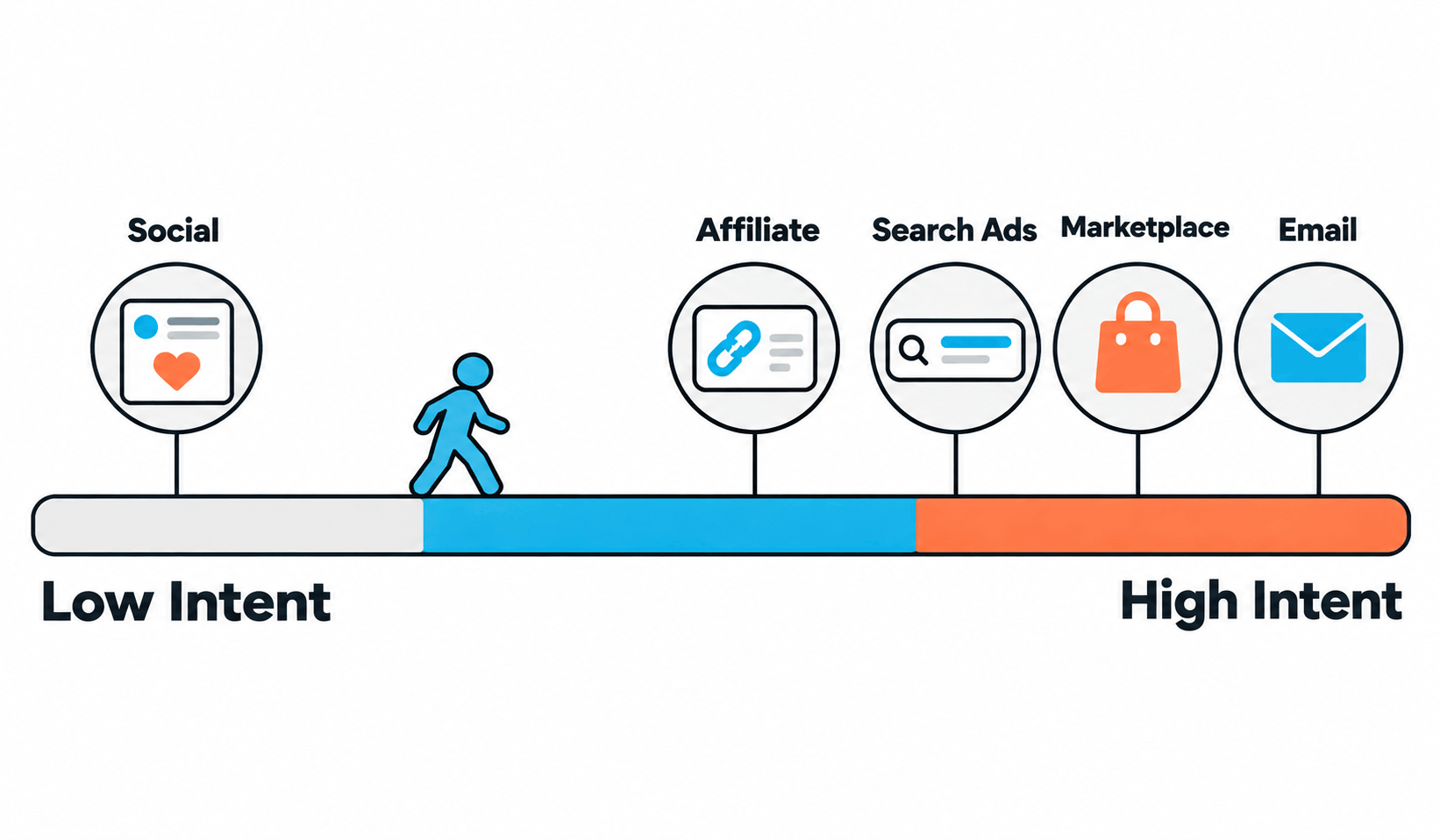
Because each channel performs differently, performance marketing strategies usually combine several sources of traffic rather than relying on only one.
The Role of Experimentation in Performance Marketing
Why Testing Is Necessary
Performance marketing relies heavily on experimentation because customer behavior is difficult to predict. Campaign results may vary depending on audience, platform, timing, and creative format.
Instead of assuming which campaign will work, marketers test different versions and compare results. Testing may include:
- Different ad creatives
- Different headlines
- Different landing pages
- Different audiences
- Different offers
Small changes can produce large differences in performance, which is why testing is often continuous.
A/B Testing
A common experimentation method is A/B testing, also called split testing. In an A/B test:
- One group sees version A
- Another group sees version B
- Results are compared
For example: headline A vs headline B, video vs image ad, long page vs short page. Testing allows marketers to make decisions based on data instead of assumptions.
Interpreting Results
Results from experiments must be analyzed carefully. Small sample sizes, short testing periods, or seasonal changes can affect outcomes.
Because of these factors, performance marketing is usually treated as an ongoing optimization process rather than a one-time setup. Studies in digital marketing show that even small improvements in conversion rate can significantly affect total revenue, especially in large campaigns.
Challenges Facing Performance Marketing in 2026
Privacy and Tracking Limitations
One of the biggest challenges in modern performance marketing involves changes in digital privacy rules.
Web browsers and mobile operating systems have restricted certain tracking technologies, including third-party cookies.
Apple’s App Tracking Transparency (ATT) update reduced the amount of user-level data available to advertisers, and some companies reported attribution signal losses of up to 30–40%. Because of these limitations, marketers may not always see the full path a user takes before converting.
Rising Advertising Competition
As more companies invest in online advertising, competition for keywords, audience segments, and placements continues to increase.
Higher competition can lead to:
- Higher cost per click
- Higher customer acquisition cost
- Lower return on ad spend
Industry reports show that digital advertising spending continues to grow each year. According to dentsu’s Global Ad Spend Forecasts, global advertising spend surpassed $1 trillion for the first time in 2026, growing 5.1% year-over-year—with digital advertising reaching $835.82 billion and accounting for 68.7% of total spend. Increasing competition for the same audience makes campaign efficiency more important than budget size alone.
Creative Fatigue
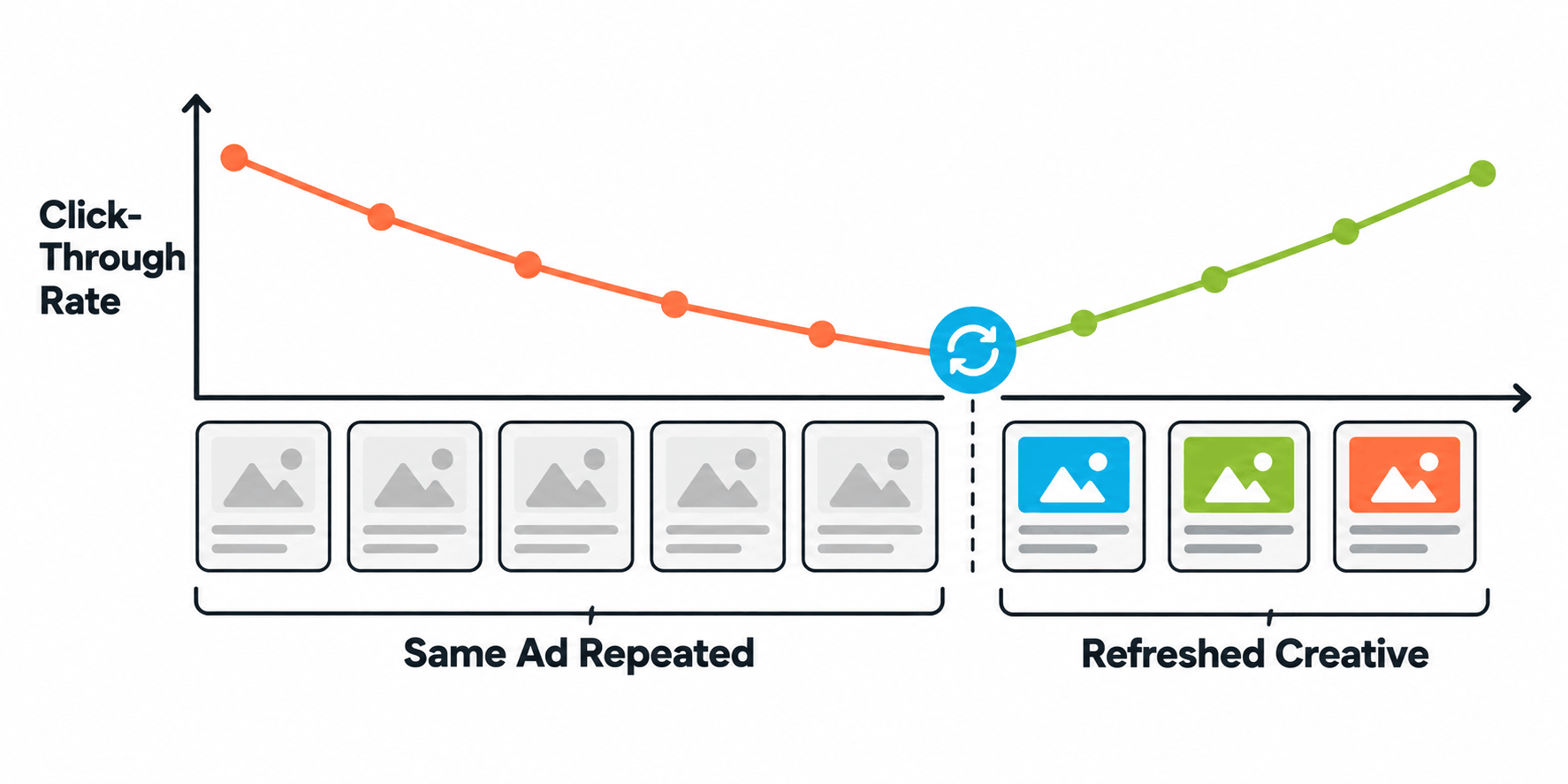
Users who see the same advertisement repeatedly may become less likely to interact with it.
This effect, sometimes called creative fatigue, can reduce click-through rate and conversion rate over time.
To reduce fatigue, marketers often:
- Refresh images and videos
- Change messaging
- Rotate ad variations
- Test new formats
Dependence on Advertising Platforms
Many performance marketing strategies rely heavily on a small number of large platforms.
Changes in algorithms, pricing, or policies can affect campaign performance even if the strategy itself has not changed. Because of this, some companies attempt to diversify traffic sources to reduce risk.
Common Misunderstandings About Performance Marketing
Running Ads Is Not the Same as Performance Marketing
Performance marketing involves defining goals, measuring results, and adjusting campaigns based on data. Simply running ads without measurement does not guarantee performance.
Increasing Spend Does Not Always Increase Growth
Larger budgets often reach broader audiences, which may reduce efficiency. As campaigns scale, customer acquisition cost may increase because the easiest conversions happen first.
Marketing Data Does Not Always Show the Full Picture
Tracking systems rarely capture every interaction that influences a purchase. Privacy changes—particularly Apple’s ATT—mean marketers may be missing 30–40% of the conversion picture. Reported results should often be treated as estimates rather than exact measurements.
Automation Does Not Replace Strategy
Advertising platforms provide automated tools for bidding and targeting, but these tools do not replace planning, testing, and analysis. Successful performance marketing usually requires both automation and human decision-making.
Final Thoughts
A performance marketing strategy is best understood as a continuous process rather than a fixed formula. Campaigns must be measured, tested, and adjusted over time as platforms, customer behavior, and technology change.
By understanding how channels work, how experiments are conducted, and how limitations affect data, marketers can evaluate performance more realistically and make better decisions about how campaigns should evolve in 2026 and beyond.
FAQs
What metrics are used in performance marketing?
Common metrics include conversion rate, CAC, ROAS, and POAS, along with click-through rate and cost per click.
Is performance marketing only paid advertising?
No. Performance marketing can include paid ads, affiliate marketing, email campaigns, and marketplace advertising, as long as results can be measured.
Why is tracking harder today than before?
Privacy restrictions such as Apple’s ATT, cookie limitations, and platform changes reduce the amount of data available for attribution.
What is the messy middle in marketing?
The messy middle describes how customers move back and forth between researching and evaluating options instead of following a simple linear funnel.
Read These Next

B2B Performance Marketing: 2026 Complete Guide